For Five Young New Jersey Patients, Sickle Cell No Longer Defines What Comes Next
Bone marrow transplants and gene therapy are changing what is possible for young people with sickle cell disease, bringing potentially curative treatment closer to home for NJ families.
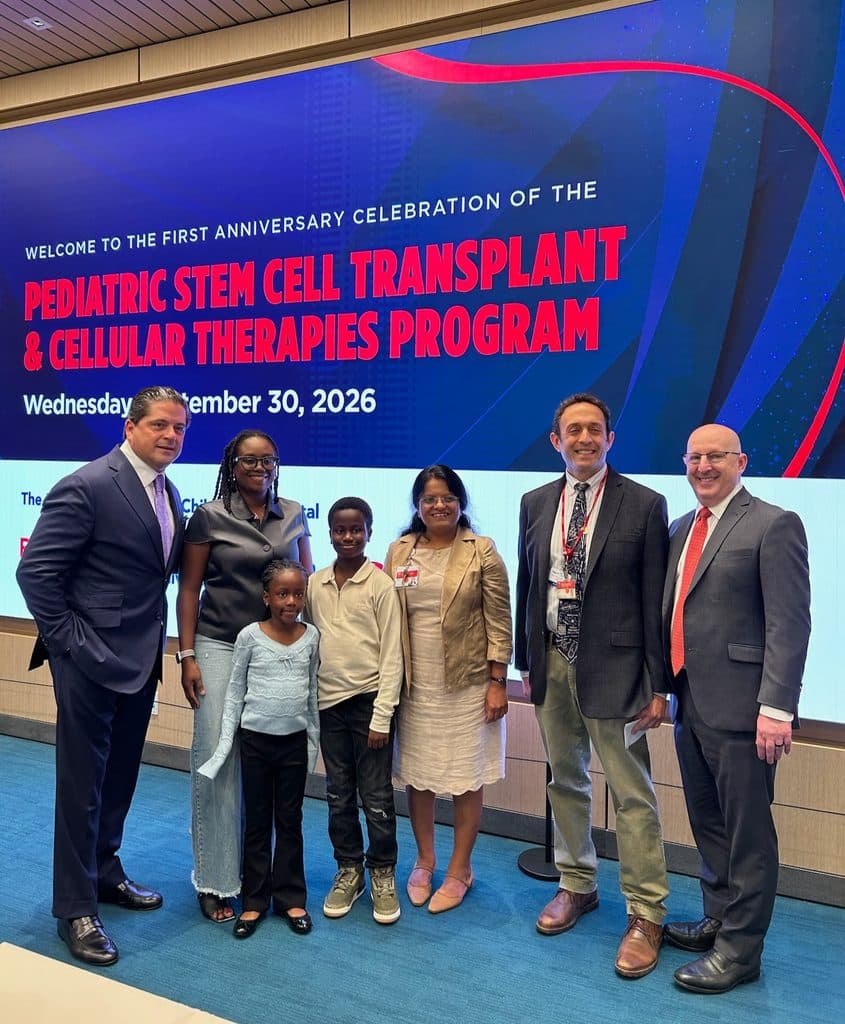
For six-year-old Tiaraoluwa “Tiara” Kunle-Lawanson, the ideal future consists of another day of school, more time to play or simply the chance to be a kid.
For Nathaniel Salako, 22, it can be his next engineering class at Rutgers University and the life he is building beyond college.
Neither dreams of the next sickle cell pain crisis, or another hospital stay thanks to groundbreaking new research that has changed their lives.
Kunle-Lawanson and Salako are among five young patients whose futures look different after receiving potentially curative treatments for sickle cell disease through a NJ program that, just a few years ago, did not exist.
The five children and young adults were recognized Sept. 30 at the Pediatric Sickle Cell Disease Celebration at the Jack & Sheryl Morris Cancer Center in New Brunswick. Patients, families, sibling donors and medical teams gathered to recognize four patients who received bone marrow transplants and one who received gene therapy.
The celebration offered a look at a larger shift in sickle cell disease (SCD) care. The inherited blood disorder, long treated by managing pain and other complications, now has treatments capable of addressing the disease at its source and potentially curing it for some patients. For New Jersey families, the expanding options also mean some advanced care that once required traveling to New York or Philadelphia is now available in-state.
The timing is significant. In July, the U.S. Food and Drug Administration (FDA) expanded approval of Casgevy, a gene therapy for SCD, to eligible patients as young as 2 with recurring vaso-occlusive crises, commonly known as pain crises. It became the first gene therapy approved for SCD patients that young.
From Managing Sickle Cell to Treating Its Cause
SCD is an inherited blood disorder that affects hemoglobin, the protein in red blood cells that carries oxygen throughout the body.
The disease can cause red blood cells to become rigid and sickle-shaped, blocking blood flow and causing severe pain. It can also lead to complications including anemia, infections, stroke, and organ damage.
About 100,000 people in the U.S. live with SCD, according to the Centers for Disease Control and Prevention (CDC). More than 90% are non-Hispanic Black or African American.
For decades, bone marrow transplantation (BMT) has offered a potential cure for some patients, but one of its limitations is finding a suitable donor.
Doctors often first look for a sibling whose tissue type closely matches the patient. The donor’s healthy blood-forming stem cells can then be used to replace the patient’s diseased blood-forming cells after chemotherapy prepares the patient’s bone marrow for the transplant.
For Kunle-Lawanson, that match was already in her family.
Her older brother, Kitan Kunle-Lawanson, donated the cells used for her transplant. Before treatment, Kunle-Lawanson’s childhood was repeatedly interrupted by fatigue, illness, hospital stays and blood transfusions. She has since returned to school and has not experienced another sickle cell pain crisis, according to an RWJBarnabas Health press release.
Her mother, Olamide Kunle-Lawanson, described the difference she has seen in her daughter since treatment.
“It’s like a miracle,” she said. “ She has more energy, she’s playful, you can see her being a six-year-old finally.”
Of the five people who underwent treatment, three others also found relief through BMT.
Salako took a different path.
Instead of requiring a donor, gene therapy uses a patient’s own blood-forming stem cells. The cells are collected and modified in a laboratory before the patient receives chemotherapy and the modified cells are returned through an infusion.
Salako became the New Brunswick program’s first SCD gene therapy patient in October 2025.
He said his life before treatment was marked by frequent hospital visits, blood exchanges, and limits on activities, including sports. After treatment, he said he can swim, hike with friends, and play basketball without the same concerns about fatigue.
“Before, I couldn’t live a full life,” Salako said. “I was always stuck in a box, stuck with constraints that stopped me from trying to live out my dreams and live out the life that I want to live.”
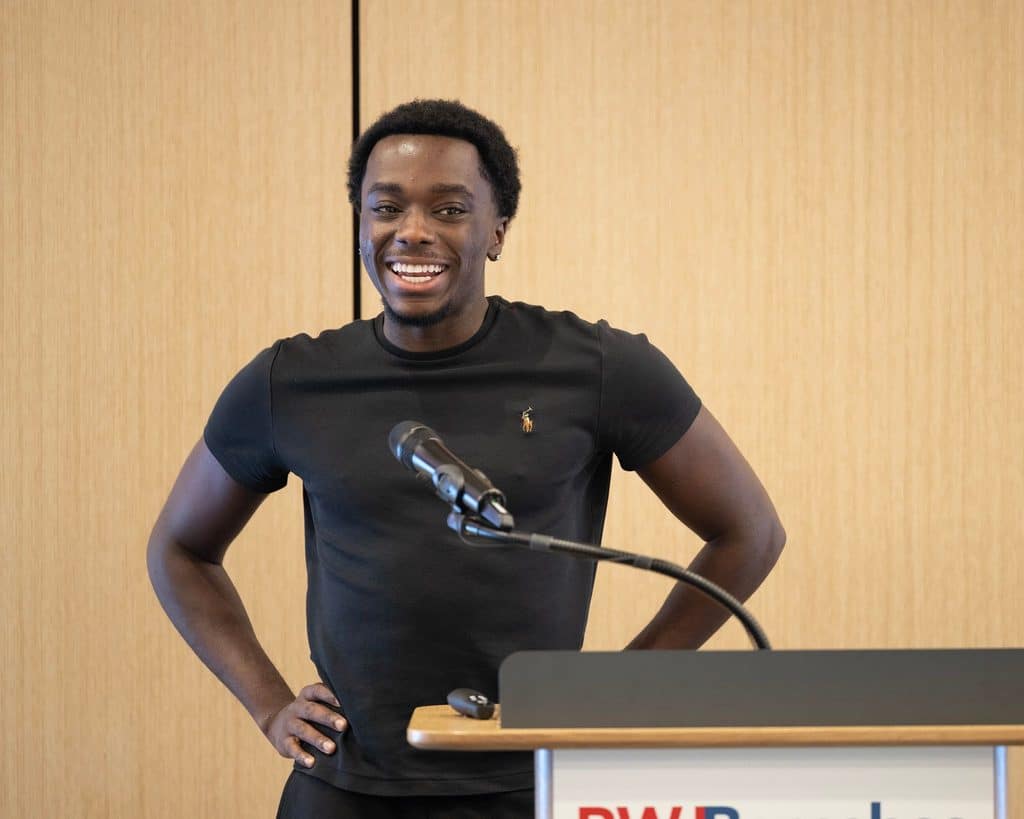
Standing at a podium during the celebration, Salako thanked his family and medical team before directing a message to other people living with SCD.
“I just want you to know that you’re not alone,” Salako said. “I’m just one small example of something that can happen and change your life.”
Why Treatment Close to Home Matters
It’s worth noting, however, that these treatments are not quick fixes.
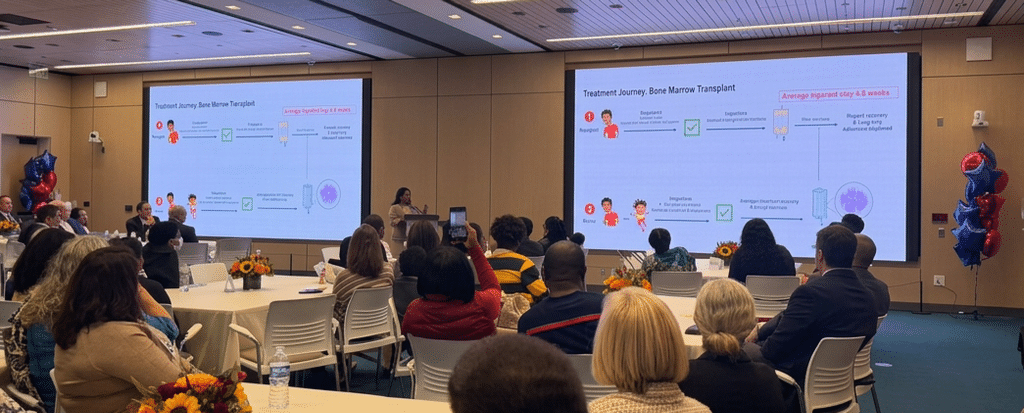
Dr. Niketa C. Shah, chief of pediatric bone marrow and stem cell transplantation and cellular therapies at Rutgers Cancer Institute and The Bristol-Myers Squibb Children’s Hospital, said BMT patients can spend about four to six weeks hospitalized. Gene therapy patients can remain hospitalized for six to eight weeks, followed by outpatient care.
That time commitment helps explain why location matters.
Before the New Brunswick program was established, Shah said families in Central and South Jersey often traveled out of state for advanced treatment. That could mean extended time away from jobs, schools, siblings, and family support.
Dr. Peter Cole, chief of pediatric hematology and oncology, remembered referring patients elsewhere when the treatment was not available locally.
“Families were looking at spending months in the hospital, out of state, away from their support systems, away from their support networks, away from work, away from family,” Cole said.
In written responses to NJ Urban News, Shah cited data from the National Marrow Donor Program and the Center for International Blood and Marrow Transplant Research, showing that 101 pediatric patients from NJ underwent bone marrow transplants out of state between 2016 and 2020.
Shah said that before the New Brunswick program was established, approximately 20 or more pediatric patients were referred out of state for bone marrow transplants each year from the health system’s Newark and New Brunswick campuses.
Hackensack University Medical Center in North Jersey also offers bone marrow transplants and gene therapy for patients with SCD. The New Brunswick program, which began in July 2023, gives families in Central and South Jersey another place to receive these treatments.
The five patients recognized at the Sept. 30 celebration received treatment in 2025. The program has since treated five additional patients in 2026, including three who underwent bone marrow transplants and two who received gene therapy, Shah confirmed.
Shah said the program also allows patients to continue receiving care from the doctors and medical teams they already know.
“This approach helps families remain connected to familiar care teams and local support systems throughout the treatment journey, while benefiting from the expertise of a specialized pediatric transplant and cellular therapy program,” Shah said.
Steven K. Libutti, director of Rutgers Cancer Institute and senior vice president of oncology services at RWJBarnabas Health, spoke about the importance of having these treatments available locally.
“It wasn’t long ago that patients and their families felt it was necessary to travel across bridges or tunnels to go to Philadelphia or Manhattan for this level of care,” Libutti said. “And now we have it right here in our own backyard.”
A Breakthrough Does Not Automatically Mean Access
Even as science advances, not every person with SCD will be able to receive these treatments.
Patients must meet medical eligibility requirements and gene therapy involves extensive preparation, chemotherapy, and follow-up care.
Cost is another barrier.
Casgevy was listed at $2.2 million per patient and another SCD gene therapy, Lyfgenia, at $3.1 million when the Centers for Medicare & Medicaid Services (CMS) developed its Cell and Gene Therapy Access Model. Between 50% and 60% of people living with SCD have Medicaid coverage, according to CMS.
NJ is among the states participating in the federal model, which was initially created to improve access to gene therapy for Medicaid beneficiaries with SCD. Under the program, drug manufacturers offer states discounts and must provide additional refunds if treatments do not work as expected.
The treatment itself is also only part of the financial burden. The chemotherapy required before gene therapy typically causes infertility, according to CMS, making fertility preservation an important consideration for young patients before treatment. The federal model requires participating manufacturers to cover certain fertility preservation services, along with related travel and lodging costs, for this reason.
Thankfully, NJ has taken its own strides to address accessibility for people with SCD.
A $10.2 million, three-year sickle cell disease pilot program established in 2024 supports comprehensive treatment programs and services through federally qualified health centers, which provide care in underserved communities. Priority is given to centers in Newark, Paterson, Jersey City, Plainfield, Trenton and Camden, among other communities with demonstrated need.
Together, those efforts point to the next challenge in sickle cell treatment: making sure medical progress can reach the people who may benefit from it.
A Community That Has Been Fighting Alongside Them
For years, patients, families, and community organizations have worked alongside medical institutions to raise awareness of SCD and support families living with the disease.
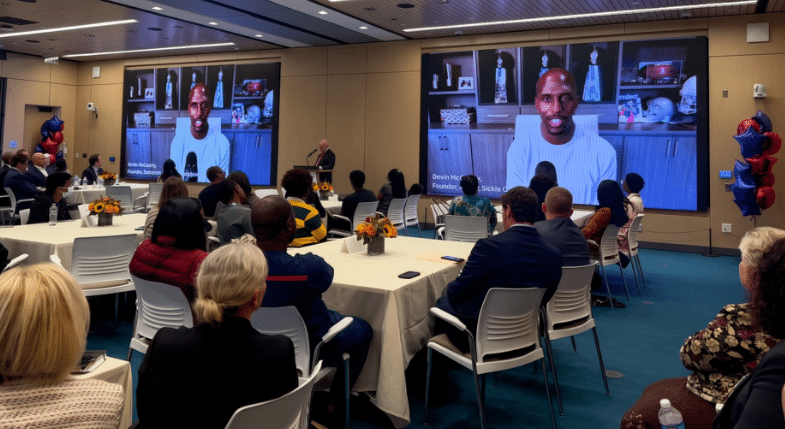
That community connection was seen at the event and reflected in a prerecorded message from former Rutgers football standout and three-time Super Bowl champion Devin McCourty.
McCourty and his twin brother, Jason, have supported sickle cell awareness after seeing the disease affect members of their own family. In 2013, the brothers partnered with New Brunswick-based Embrace Kids Foundation to launch Tackle Sickle Cell, a campaign focused on education, blood donations, fundraising and awareness.
“Your journey is always heard,” McCourty told the patients. “We appreciate it. We want to uplift you. We want to always be there to support.”
His message brought the celebration back to the people at the center of that progress: the five patients and the families who went through treatment alongside them.
What Comes Next
For Kunle-Lawanson, Salako, and others, the significance of that progress can be measured in moments far removed from laboratories and treatment rooms.
For the five patients and their families, potentially curative treatment has opened space to think about plans that are not centered on the next pain crisis or hospital stay.
That was a recurring theme throughout the Sept. 30 celebration.
Mark E. Manigan, president and CEO of RWJBarnabas Health, described it as the freedom to think about “the next class, the next game, the next playdate, the next birthday, the next ambition.”
The question now is how many more families can have that same opportunity.
Shah said the program’s next challenge is increasing awareness of BMT and gene therapy within the SCD community, expanding access and developing partnerships so more eligible patients know the treatments exist.
“We built the program. We demonstrated what is possible,” Shah said. “But now we need to, what is our next step? Increase the awareness in our community, increase the access, develop the partnership, and also develop more innovation.”
For generations, living with SCD has often meant planning around what the disease might interrupt.
The five patients celebrated in New Brunswick represent a different possibility: planning for what comes next.
Author
Related Articles
Lamp For Haiti Marks 20 Years Of Bringing Healthcare To Cité Soleil
The Haiti-focused nonprofit is celebrating two decades of providing healthcare in Cité Soleil as rising needs put new demands on its medical programs.
Have The Conversation
Why Black men should talk with their clinicians about prostate cancer risk before symptoms appear