A Second Chance Takes More Than a Clean Record: NJ Program Connects Legal Help With Financial Education
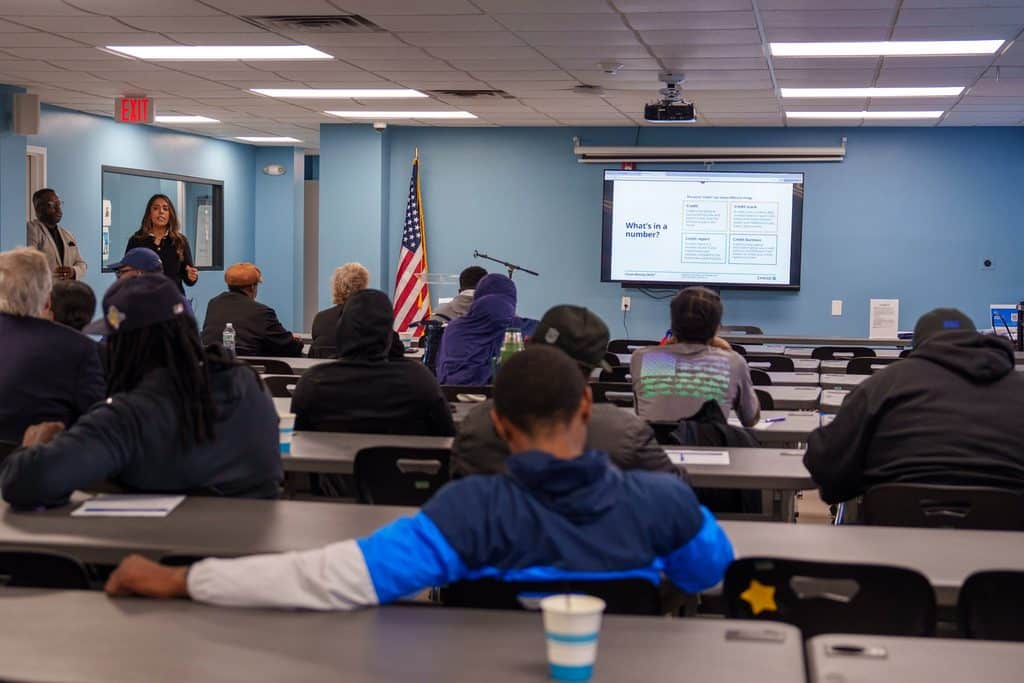
At an Oct. 15 clinic in Kearny, New Jersey Reentry Corporation and JPMorganChase offered free expungement assistance and financial education to residents working toward greater stability.
Clearing a criminal record can open doors to employment and housing. It cannot teach someone how to rebuild credit, manage debt or save for their first apartment.
For New Jersey residents navigating legal challenges, recovery from addiction, or other difficult circumstances, building a stable future means learning how to navigate several obstacles at once.
That was the focus of Pathways to Progress: Expungement Support & Financial Health, an Oct. 15 event at the Governor’s Reentry Training & Employment Center in Kearny. New Jersey Reentry Corporation (NJRC), a nonprofit providing legal, health and employment support, partnered with JPMorganChase, a global financial services company, to offer free expungement guidance and financial education.
A total of 78 people signed in at the event, according to Damon Watson, NJRC’s senior director of legal services and corporate development. Of those, 45 met with legal services coordinators for expungement eligibility screenings, and 16 were found eligible and had petitions filed on their behalf.
Former NJ Gov. Jim McGreevey, NJRC’s chairman and executive director, said the partnership reflects the organization’s approach to helping people overcome barriers to stability.
“The power of an expungement is the power of a second chance, a new beginning,” McGreevey said in a phone interview.
More Than a Reentry Program
Established in 2014, NJRC serves people returning from state prisons, county jails and addiction treatment centers, as well as veterans who need support transitioning to civilian life.
According to its website, the organization connects participants with health care, addiction treatment, housing assistance, identification documents, legal services and employment training. Its Veterans Justice Outreach Initiative provides additional support through benefits assistance, and housing and legal support, including for court-involved veterans who have not been incarcerated.
At the Oct. 15 event, support centered on helping attendees understand expungement, a court process that restricts public access to eligible criminal records.
Waheera Mardah, vice president and market manager of corporate responsibility at JPMorganChase, discussed the company’s efforts to reduce barriers to employment and economic opportunity during an interview at the event, Mackenzie Mills, an associate in U.S. regional communications at JPMorganChase, confirmed that the company has partnered with NJRC since 2023, providing philanthropic and programmatic support. The organizations have hosted two expungement clinics, with more than 200 participants attending combined.
JPMorganChase also provides pro bono legal assistance through attorneys who work with local nonprofits to help residents understand expungement eligibility.
Through the partnership, participants can receive guidance about expungement eligibility and the steps involved in filing a petition.
Watson said participants who were not eligible for expungement were informed when they might qualify or given information about applying for a gubernatorial pardon if their charges could not be expunged. In one case, NJRC successfully advocated for a participant with an outstanding warrant and an active case, resulting in the warrant being recalled and a new court hearing scheduled.
Since its founding in 2014, NJRC has served 42,176 participants, secured 874 expungements, obtained 7,119 birth certificates and helped restore 2,806 driver’s licenses, according to figures confirmed by Watson.
For participants, obtaining identification documents can be just as important as receiving legal assistance, particularly when applying for jobs or accessing essential services.
NJRC’s assistance continues beyond the event. Watson said existing participants can follow up with their assigned case managers and legal services coordinators, while new participants can be referred to an NJRC location in their county. Services include social work assessments, employment assistance, identification documents, driver’s license restoration and additional legal support.
When the Record Is Cleared, but the Past Remains
NJ has taken steps to reduce delays in processing expungements.
In September, the New Jersey Office of the Public Defender, the state agency representing eligible residents in legal matters, announced the resolution of litigation involving approximately 46,000 unprocessed expungement orders.
The settlement requires New Jersey State Police to process most court-approved expungement orders within 120 days at maximum, while aiming for a goal of 90 days. The agency reported that processing times had fallen to approximately 60 to 90 days for most orders during the monitoring period.
McGreevey said outdated and incompatible government information systems have contributed to the delays.
“When it’s your application, it’s never quick enough,” he said.
He also pointed to a challenge that expungement laws cannot always resolve: information about someone’s past may remain accessible on the internet even after official records have been cleared.
“The internet has had an impact on expungements. One that candidly, I would not have predicted,” McGreevey said.
One Participant’s Next Step
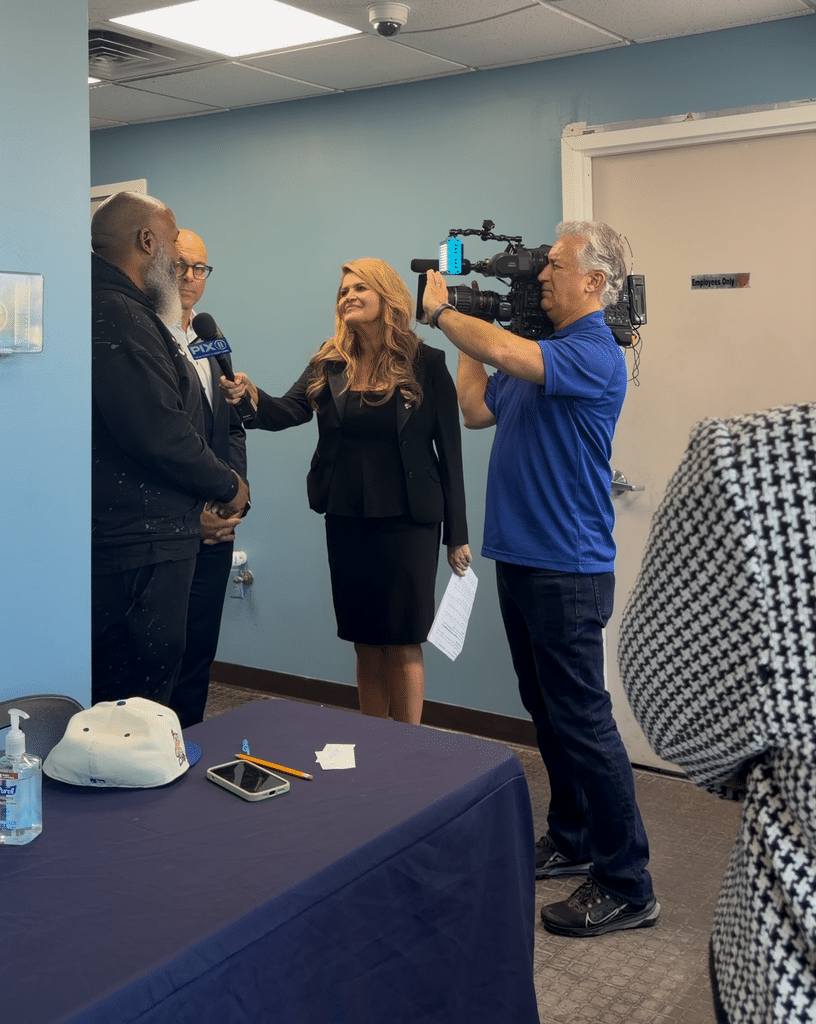
For Montrell Vinson, an NJRC participant, the Oct. 15 clinic brought an opportunity he once thought might never come.
During the event, Vinson spoke with PIX11 reporter Monica Morales about his experience seeking expungement and his hopes for the future. Their conversation was featured in Morales’ Oct. 19 Monica Makes It Happen report.
Vinson told Morales that people should not be judged solely by poor decisions they made in the past. He said NJRC had helped him recognize opportunities he previously thought were unavailable and expressed interest in returning to help others through similar experiences.
During the same interview, Watson confirmed that Vinson was eligible for expungement and that his petition had been filed that day.
At the time of the interview, Vinson’s record had not been cleared.
“It feels magnificent,” Vinson told Morales.
Vinson explained that he had previously believed his criminal record would follow him throughout his life. Learning that he could pursue expungement changed how he viewed his future.
He now hopes to become a longshoreman at the Port of Newark and has already obtained a Transportation Worker Identification Credential, commonly called a TWIC card, after passing a federal background check.
Vinson described the credential as another step toward his career goals.
Watson, who also discussed his own experience with the justice system during Morales’ interview, said his background helps him understand the challenges participants face.
He explained that not everyone qualifies for expungement. Some participants may have offenses that are ineligible or may not have completed the required waiting periods.
However, Watson said NJRC can still help individuals identify outstanding cases, fines, warrants and other legal matters that may be preventing them from moving forward.
Vinson encouraged others facing similar challenges to seek assistance rather than assume their circumstances cannot change.
Financial Education Without a Banking Requirement
Alongside the legal assistance, Chase representatives offered a Money Skills workshop covering credit, budgeting and financial decision-making.
Melissa Prashad, vice president and community manager at Chase Bank, said in an interview at the event that participants can learn how to understand their credit reports, manage debt and collections, protect themselves from identity theft and create financial goals.
“Credit and budgeting go hand in hand,” Prashad said.
She emphasized that participants do not need to be Chase customers to attend financial education workshops or receive one-on-one guidance.
McGreevey said offering those resources without requiring a banking relationship makes the partnership particularly meaningful.
“Chase is meeting people where they’re at in real time,” he said.
The workshops also introduce participants to everyday banking tools, including checking and savings accounts, which can help them manage income and prepare for future expenses.
Mills confirmed that Chase offers Money Skills workshops at NJRC locations throughout NJ, including regular sessions in Newark, Carteret and Elizabeth.

Building a Future Beyond the Clinic
JPMorganChase’s work also extends to second-chance hiring, an initiative intended to expand employment opportunities for qualified applicants with criminal records.
According to Mills, the company hired more than 23,000 people nationwide from 2019 to 2025 whose criminal records had no bearing on the requirements of their positions.
Nearly 10% of the company’s new U.S. hires over the past seven years had low-level criminal records that did not pose a risk to safety or soundness, according to JPMorganChase.
NJRC’s support also includes career training through its Kearny center, where participants can pursue industry-recognized credentials in fields including construction, heating and air conditioning, commercial driving and health care.
McGreevey said these credentials help employers evaluate applicants based on demonstrated skills and qualifications.
Residents seeking legal assistance, employment training or other services can visit NJRC’s website. Those interested in financial education can explore Chase’s financial education resources.
For McGreevey, the goal is to help participants build futures that are not defined by their past.
Author

Related Articles

Newark Advocates to Join Nationwide March for Nolan Wells on Nov. 1
People’s Organization for Progress will join demonstrators calling for answers, transparency and accountability following the 18-year-old’s death in Mississippi.