Lamp For Haiti Marks 20 Years Of Bringing Healthcare To Cité Soleil
The Haiti-focused nonprofit is celebrating two decades of providing healthcare in Cité Soleil as rising needs put new demands on its medical programs.
Twenty-one years ago, Dr. James Morgan saw a young boy, no more than about 5 years old, walking through what looked like a heap of trash near the Caribbean Sea in Cité Soleil, Haiti.
The child wore a T-shirt and small sandals. Nearby stood makeshift homes with metal roofs and siding pockmarked by rust. His mother was off to the side.
The scene stayed with Morgan.
“There was just something wrong with that,” he recalled.
Morgan, a New Jersey physician who first traveled to Haiti in 2001, returned in 2005 hoping to do more than make another short-term trip. But the scale of what he encountered initially left him wondering whether the problems were too large for one person to address.
“I thought, boy, I don’t think I can do this,” Morgan said. “This is just too much for me.”
Instead, those early experiences helped lead to the creation of Lamp for Haiti, the nonprofit Morgan co-founded and now serves as board chair. The organization is marking 20 years of providing healthcare and humanitarian assistance in Haiti.
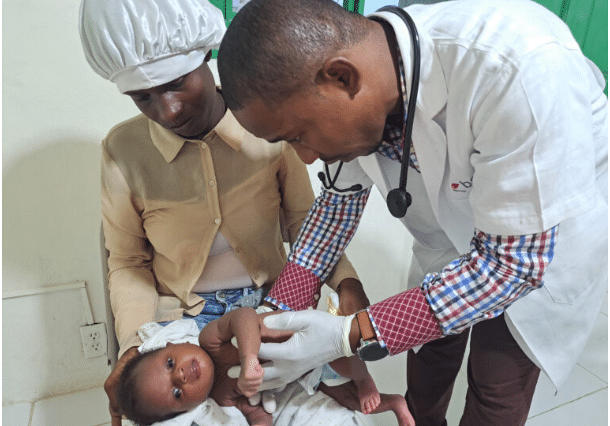
What began with a Haitian physician providing care two half-days a week has grown into an organization that has recorded about 320,000 patient visits over two decades, according to Lamp for Haiti Executive Director Henry Reimer. That includes 262,000 physician consultations and 114,000 visits for children. Lamp has also treated 3,270 malnourished children through its Child Nutrition Program and provided an estimated $6.8 million worth of medicine, most of it donated by pharmaceutical companies.
Residents Chose Healthcare
Lamp’s roots stretch back to Morgan’s first trip to Haiti. At the time, Morgan was working in the emergency department at St. Vincent’s Hospital in Greenwich Village, which closed in 2010 after 160 years of operation.
By 2005, Morgan and a friend decided they wanted to establish something more permanent.
But Morgan said they did not want to decide for residents what their community needed.
Instead, they met with local leaders in Cité Soleil and asked what would be most beneficial. Residents named clean water, safer neighborhoods, schools for their children, and, most notably, healthcare.
In response, Lamp started small, hiring a Haitian physician to provide care two half-days each week and a Haitian manager to help run the operation.
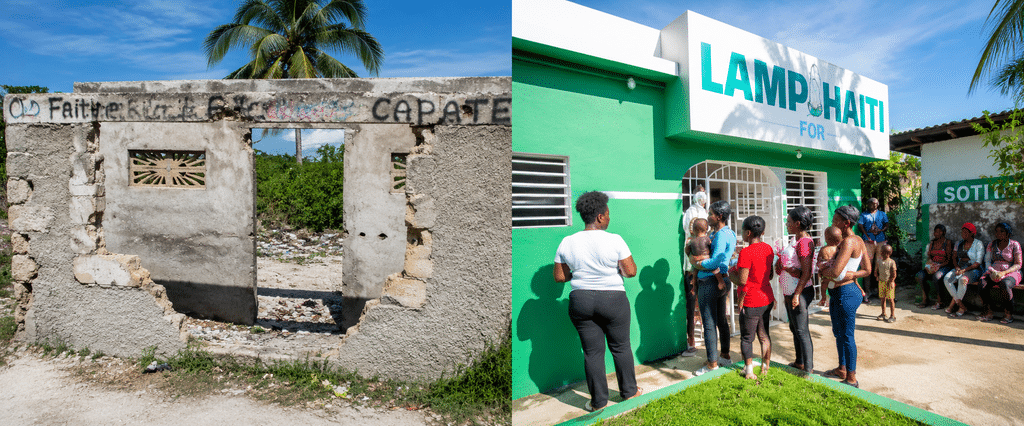
After serving the community for a year, the organization was formally incorporated and received nonprofit status in 2006. Lamp’s healthcare services have since expanded to include primary care, pediatrics, women’s health, laboratory services, a pharmacy, X-rays and ultrasound, community health workers, and nutrition programs.
Its primary health center operates in Bwa Nèf, a neighborhood within Cité Soleil. Lamp also operates a second medical site in Clercine, near Port-au-Prince’s international airport.
The Clercine site opened in November 2023 as Lamp expanded its services in response to declining access to medical care in the area, according to the organization. It operates within a compound maintained by Haiti Communitere, a nonprofit that provides space and resources for community and humanitarian organizations.
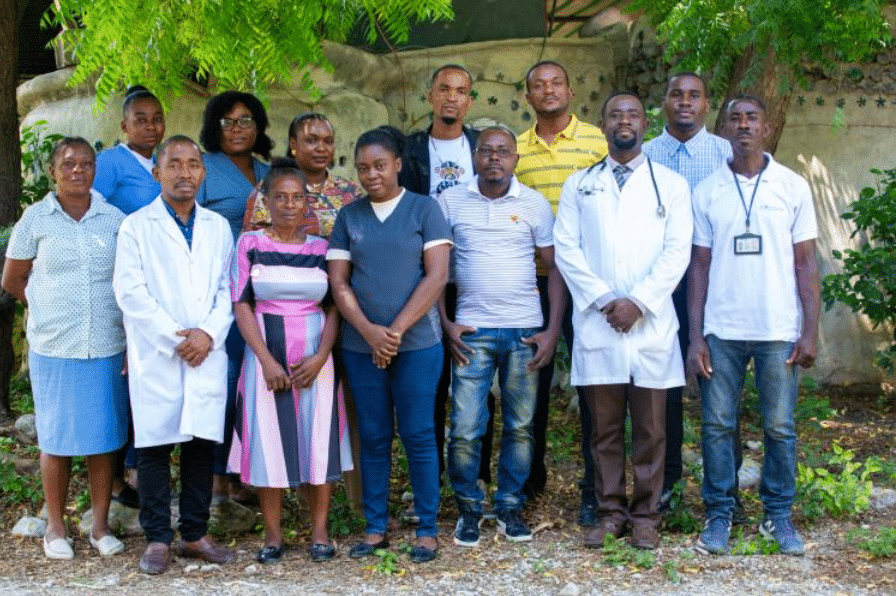
Lamp currently employs 20 people in Haiti, including three doctors, two nurse-midwives, and two other nurses, according to Reimer. In the United States, the organization has two employees: an executive director and a part-time director of development.
Twenty Years Later, the Need is Growing
After serving the community for two decades, the demand for quality, culturally competent care has only grown.
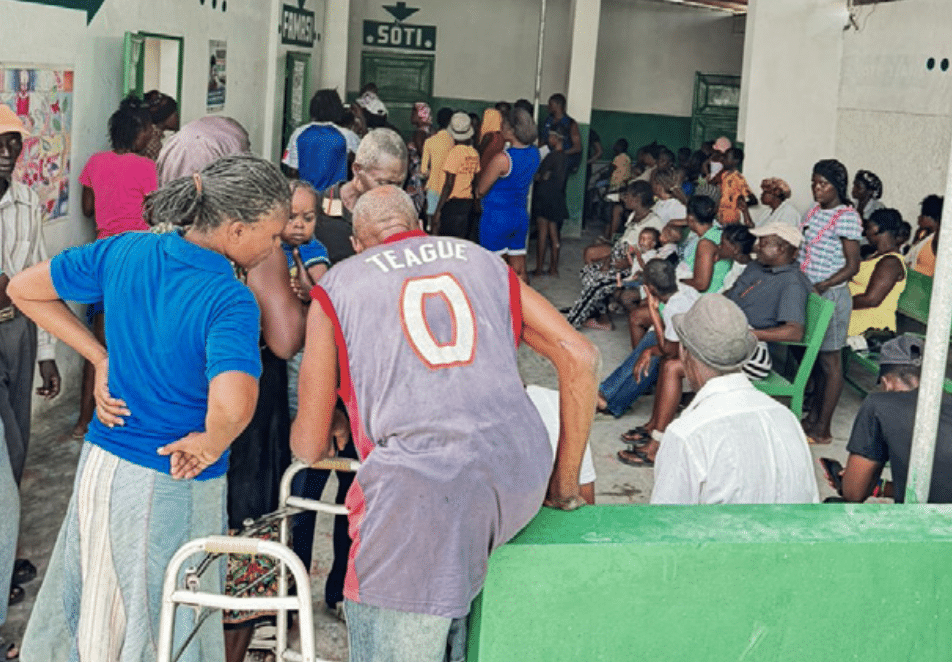
Morgan said Lamp’s Child Nutrition Program typically treated about 200 children annually. This year, the organization projects it will treat approximately 700 children.
Similarly, Lamp has recorded approximately 250,000 patient visits involving women and girls, including 51,000 visits for expectant mothers over its 20-year history.
Morgan connected the increases to insecurity and the declining availability of healthcare providers in and around Cité Soleil. Originally, roughly six similarly sized organizations were providing healthcare in the area, but that number has since declined as some organizations suspended services or left. Lamp, however, remains the only general healthcare clinic in Cité Soleil widely known for providing free care.
Additionally, traveling outside the area for care can be difficult for patients and families, Florestal said. He identified greater access to medications and laboratory equipment among the community’s biggest healthcare needs.
Lamp has adapted to this need, in part, by operating its second site in Clercine, giving staff another location from which to provide care when conditions interfere with services in Cité Soleil.
Florestal said the Clercine location allows Lamp to continue serving patients when conditions prevent staff from safely reaching Cité Soleil.
On a typical week staff may work three days in Cité Soleil and two in Clercine, depending on security conditions.
“We can sort of flex that,” Morgan said. “Depending on the security or insecurity in one of those two areas, we can always shift our services to the other place.”
Haitian Staff Keep the Clinics Running
Morgan emphasized that Lamp’s work on the ground is carried out by Haitian professionals.
“They’re really the crux of the whole thing,” he said. “If we don’t have them doing it, then we can’t.”
Keeping those clinics operating also means continually assessing whether staff can safely reach Cité Soleil.
“It takes courage and determination, which our staff have,” Florestal said.
He said staff members have developed trust in Lamp’s approach to security over the years because “they know their security is our priority.”
Lamp uses a 14-person van that follows designated routes through Port-au-Prince to pick up employees at different stops and transport them to work. Navigating those routes can itself become dangerous, he said.
Morgan recalled how one of Lamp’s former medical directors found himself struggling to balance treating patients and responding to imminent threats immediately outside of the clinic walls.
He explained that the doctor might be actively treating someone with heart failure while simultaneously being informed that armed gang members are involved in a confrontation outside. In these cases, physicians are forced to attempt to diffuse the situation, and then seconds later reassure staff and patients that service delivery will continue.
“That ability to juggle many different skills within not just weeks, but often within the same day, is really remarkable,” Morgan said.
He said he wants supporters in the U.S. to understand that their contributions are making a difference in people’s lives and that Lamp’s Haitian staff remain committed despite the conditions they face.
Twenty Years of “Showing Up”
Lamp will commemorate its 20th anniversary on Oct. 9 with its “Twenty Years of Showing Up… Together” gala at Glen Ridge Country Club in NJ. The event will run from 6 to 11 p.m.
The organization has set a $140,000 fundraising goal for the gala, with all funds going towards supporting the organization’s work overall.
Brian Concannon, co-founder and executive director of the Institute for Justice and Democracy in Haiti, a Haiti-focused human rights organization, is scheduled to deliver the keynote address.
Lamp will also present its first Humanitarian Award to Dr. Barrère Hyppolite, who served as the organization’s medical director in Haiti for 11 years. Hyppolite is scheduled to participate in the gala via Zoom.
Florestal has spent 15 years working with Lamp and helping oversee its operations in Haiti.
“It means a lot that Lamp is celebrating its 20th anniversary,” he said. “I’m happy I have contributed to the progress and the growing of this marvelous organization.”
Tickets and additional information are available through Lamp for Haiti’s 20th Anniversary Gala page.
[INSERT IMAGE #6 Lamp for Haiti gala, 5K or NJ community fundraising event]
Author

Related Articles
For Five Young New Jersey Patients, Sickle Cell No Longer Defines What Comes Next
Bone marrow transplants and gene therapy are changing what is possible for young people with sickle cell disease, bringing potentially curative treatment closer to home for NJ families.
Have The Conversation
Why Black men should talk with their clinicians about prostate cancer risk before symptoms appear