
As NJ Families Face Rising Costs, Kean and Van Drew’s Records Come Into Focus Ahead of Midterms
New Jersey Citizen Action is challenging two Republican lawmakers over federal policies affecting household budgets, while both representatives point to proposals aimed at providing financial relief.
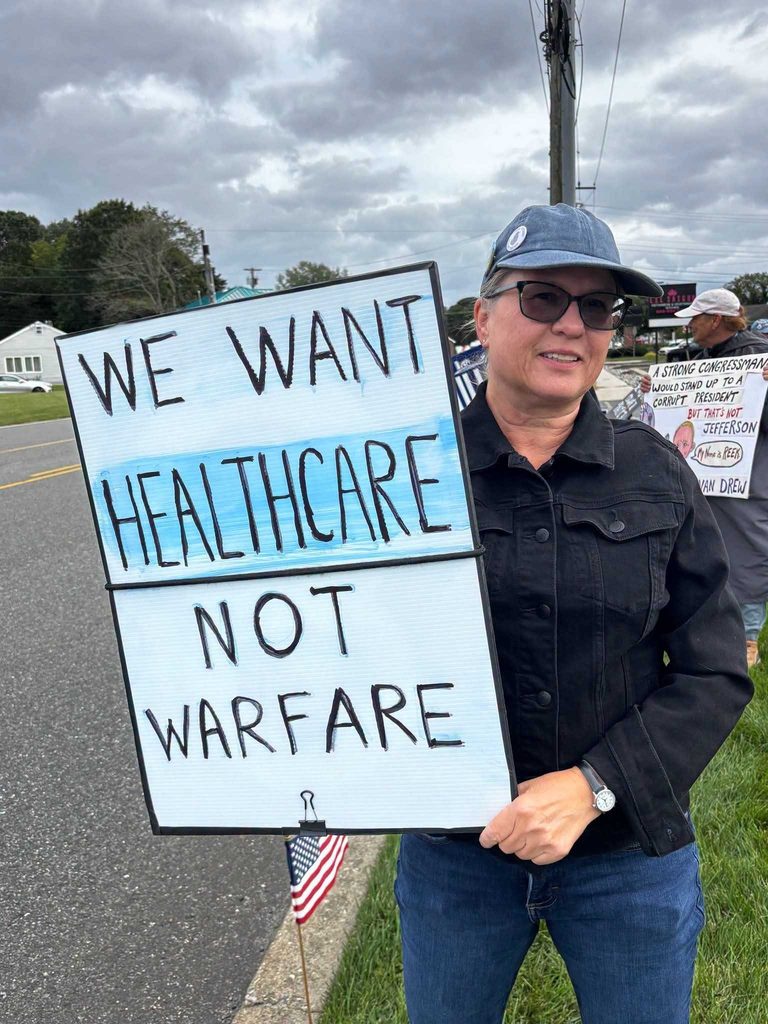
For New Jersey families struggling to make ends meet, the pressure is not limited to one expensive bill. Groceries, gasoline, utilities and health care compete for the same paycheck, forcing some households to reconsider even routine purchases.
With the Nov. 3 midterm elections approaching, New Jersey Citizen Action (NJCA), a statewide nonprofit organization that advocates for economic and social justice, is urging residents to examine how decisions made in Washington affect their household expenses. The organization is questioning the U.S. Reps. Tom Kean Jr. and Jeff Van Drew in particular over their support for federal legislation that reduces federal spending on Medicaid and food assistance programs while changing eligibility requirements for both.
For voters in NJ’s 2nd and 7th Congressional Districts, the debate raises questions about whether their representatives are doing enough to address rising costs.
Liz Glynn, NJCA’s director of organizing, said the financial strain extends beyond any single household expense.
“It’s just this cumulative effect,” Glynn said, describing the difficulty of balancing health care expenses with food, transportation and housing costs.
The Cost of Everyday Necessities
Glynn said residents across NJ frequently identify gasoline, groceries and electricity as major financial concerns.
Some families are reconsidering how often they drive or planning meals around constrained budgets. Others are concerned about home heating expenses as winter approaches, particularly those who rely on heating oil.
“We hear it all over the state that people are struggling,” Glynn said.
Through its housing counseling, financial counseling and health insurance enrollment services, NJCA works with residents throughout the state.
The Economic Security Project’s Affordability Dashboard, tracks the changing costs of essentials such as housing, groceries, gasoline, child care and health care.
The dashboard uses data from several government agencies, including the Federal Reserve, which tracks the economy, the U.S. Bureau of Labor Statistics, which tracks changes in prices, and the U.S. Census Bureau, which collects information about households. It also uses research from KFF, an independent nonprofit organization that studies health care costs and insurance coverage.
The enhanced federal premium tax credits that helped many people purchase coverage through the Affordable Care Act expired at the end of 2025. According to KFF, their expiration reduced financial assistance for many marketplace enrollees in 2026, increasing what some households pay each month. Others lost eligibility for premium assistance altogether.
Nearly 69,000 fewer residents were enrolled in health insurance through Get Covered New Jersey as of April 15 compared with the end of January, according to an April 21 report from the NJ Department of Banking and Insurance. The department linked the decline to rising premiums following the expiration of enhanced federal financial assistance.
Laura Waddell, health care program director at NJCA, said the organization’s health insurance enrollment office has seen families struggling to afford coverage following the expiration of enhanced federal subsidies. Some have turned to plans with higher deductibles or more limited coverage, while others have decided they can no longer afford health insurance.
KFF’s 2026 marketplace analysis also found that the average deductible increased by approximately $1,000 per person nationally, as more consumers moved into plans with higher out-of-pocket costs.
In NJ, KFF reported an average monthly benchmark marketplace premium of $545 in 2026. That figure represents a benchmark plan premium before accounting for an individual’s financial assistance, not the amount every enrollee pays.
Glynn said some residents seeking NJCA’s enrollment assistance have faced difficult decisions between monthly premiums and plans with higher deductibles.
She also warned that mounting expenses can lead households to rely on high-interest loans or installment payment plans to cover necessities, potentially creating additional debt.
A Federal Law at the Center of the Debate
Much of NJCA’s criticism focuses on the One Big Beautiful Bill Act, a major federal tax and spending law signed by President Donald Trump in July 2025.
Both Kean and Van Drew voted for the legislation on July 3, according to the official House voting record. The bill passed the House by a narrow margin, with 218 lawmakers voting in favor and 214 voting against it.
The law changes federal taxes and rules for Medicaid, a government health insurance program for people with limited incomes, and the Supplemental Nutrition Assistance Program (SNAP), which helps eligible households buy groceries.
In a Sept. 25 statement, NJCA raised concerns about the federal law’s impact on food assistance and the Child Tax Credit.
The organization initially cited more than 35,000 NJ residents in its SNAP-related figures. Glynn later said updated figures from the Center on Budget and Policy Priorities suggested more than 53,000 residents had lost SNAP benefits.
NJCA also reported that 46,000 children in Van Drew’s district and 21,000 in Kean’s district were excluded from receiving the full Child Tax Credit. Glynn clarified that these figures refer to children whose families do not qualify for the maximum credit, rather than children who lost the benefit entirely.
Additionally, according to the NJ Department of Human Services, some immigrants who are not U.S. citizens may no longer qualify for NJ FamilyCare, the state’s public health insurance program, beginning Oct. 1, 2026, because of new federal restrictions.
Similarly, beginning Jan. 1, 2027, certain adults ages 19 to 64 will have to work, volunteer or attend school to qualify for or keep their NJ FamilyCare coverage. Some will also have to renew their coverage every six months instead of once a year. The requirements do not apply to everyone, and some people qualify for exemptions.
Supporters of the law have highlighted its tax benefits, including an increase in the limit on state and local tax deductions, known as SALT, from $10,000 to $40,000 for eligible taxpayers in 2025. This allows qualifying taxpayers to deduct more of their state and local taxes when filing federal income taxes, although income limits and other rules apply.
Kean has promoted the change as a benefit for NJ homeowners. His official congressional website identifies expanding SALT relief as one of his priorities.
The debate highlights how the law could affect NJ households differently. Some may benefit from the tax changes, while others could face new requirements or lose access to certain health care and food assistance benefits.
The state has also published information about how the law could affect Medicaid and SNAP benefits.
Waddell said NJCA is calling on state and federal lawmakers to lower health care costs, expand coverage options and simplify access to care.
She said the organization also supports U.S. Sen. Andy Kim’s MediKids Act and the Medicare at Home Act.

What Kean and Van Drew Say They Are Doing to Lower Costs
Kean and Van Drew have also supported legislation intended to reduce everyday expenses.
On Sept. 21, they joined Democratic Rep. Laura Gillen of New York in introducing the Lower Commuting Costs Act of 2026.
The bipartisan proposal would establish a federal income tax deduction for eligible commuting expenses, including gasoline, public transportation and tolls.
In a Sept. 23 announcement, Kean said the measure would help workers retain more of their earnings by allowing them to deduct certain commuting costs.
Van Drew similarly argued that traveling to work can place a significant financial burden on families and that workers should receive tax relief for those expenses.
The proposal was introduced in Congress and referred to the House Ways and Means Committee. It is not an enacted tax benefit.
Neither Kean’s nor Van Drew’s office responded to requests for comment before publication.
Kean has also promoted proposals addressing housing affordability and tax relief for renters. His congressional economic policy page lists measures introduced in 2026, including a proposal allowing eligible renters to deduct one month’s rent and legislation involving a housing affordability tax credit.
The proposals have not become law, so their potential benefits are not yet available to residents.

September Events Bring Affordability Concerns to Congressional Offices
As part of The Price Is High Week of Action, a national campaign organized by Economic Security Project Action (ESP-A) from Sept. 23-30, NJCA representatives spoke with residents in downtown Clinton, Hunterdon County, on Sept. 23 about rising costs and federal policies.
Glynn said she and one volunteer distributed fact sheets during the outreach effort. She also delivered 200 constituent postcards to Kean’s office.
The following day, approximately 30 constituents from NJ’s 2nd Congressional District rallied outside Van Drew’s Northfield office in Atlantic County, according to Glynn.
The documents argue that both lawmakers supported federal policies that threaten health care and food assistance while providing substantial tax benefits to higher-income households.
Glynn said NJCA’s September campaign was intended to inform residents about congressional decisions rather than encourage them to vote for particular candidates amid upcoming midterm elections.

Who Is Running in November?
Both representatives are seeking reelection Nov. 3.
Kean, a Republican first elected to Congress in 2022, represents the 7th Congressional District, covering Hunterdon County and portions of Morris, Somerset, Sussex, Union and Warren counties.
He faces Democrat Rebecca Bennett and independent candidate Seamus Patrick O’Toole, according to the NJ Division of Elections’ amended candidate certification.
Kean’s campaign emphasizes his work on taxes, affordability and bipartisan legislation. His voting record and the proposals he has introduced are central to the debate over whether he has delivered economic relief to constituents.
Van Drew, who was first elected to Congress as a Democrat in 2018 and later joined the Republican Party, represents much of southern NJ, including Atlantic, Cape May, Cumberland and Salem counties and portions of Gloucester and Ocean counties.
He faces Democrat Zack Mullock, the mayor of Cape May, and independent candidate Ramon Mora Jr., according to the state’s official candidate certification.
Van Drew’s public statements emphasize economic development, transportation and lowering costs for South Jersey residents.
Affordability and the Midterm Elections
The midterm elections will determine who represents NJ’s 12 congressional districts in the U.S. House of Representatives.
Residents can find official candidate information, election dates and voting resources on the NJ Division of Elections’ website.
For NJ families struggling to make ends meet, the question is whether lawmakers’ decisions and proposed solutions will help ease the cost of everyday necessities.
Author

Related Articles

Why We Brunch: Kamala Harris Joins Black Women Nationwide to Flex Our Collective Political Power
From the brunch table to the ballot box, Black women are mobilizing their communities and flexing their collective political power ahead of Election Day


NJ 2026 Midterm Elections: A County-by-County Voter Guide
From congressional and local races to early voting, mail-in ballots and election resources, here’s what New Jersey residents need to know before heading to the polls Nov. 3.