Newark Community Garden Works to Address Food Insecurity and Expand Access to Fresh Produce
Giving One Tenth Community Garden is working to provide fresh, culturally relevant produce while bringing Newark residents together through gardening, education, and volunteer opportunities.
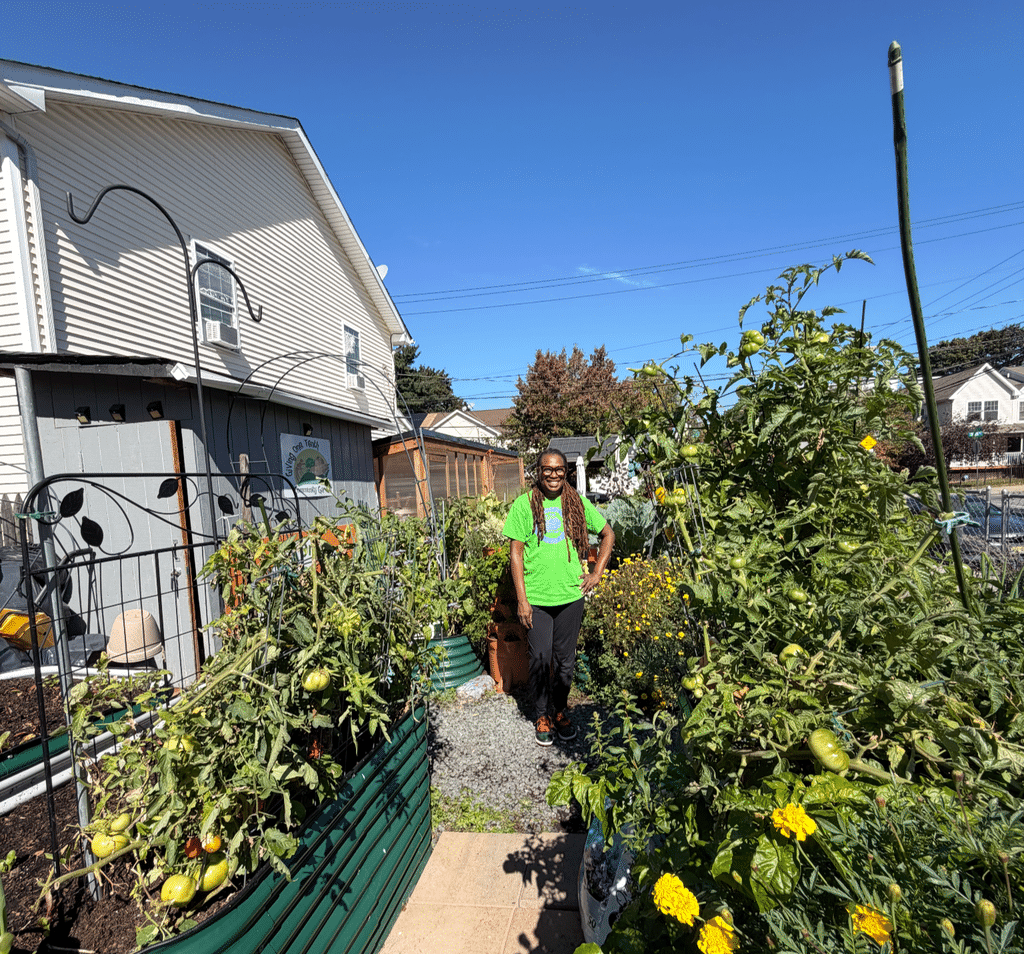
Green tomatoes hang from towering vines, yellow marigolds bloom between vegetable beds and fragrant herbs grow along gravel pathways at a Newark garden that was once an illegal dumping site.
Nearly a decade ago, Charmaine La Fortune set out to transform the neglected lot on South 20th Street. Today, her nonprofit organization, Giving One Tenth Community Garden grows everything from collard greens and eggplants to Caribbean herbs, while welcoming residents for gardening lessons, wellness activities and community gatherings.
Since its founding in 2017, Giving One Tenth has expanded to two Newark locations. In 2026, the organization harvested approximately 2,900 pounds of produce,hosted five high school interns and one student completing an independent senior project, and recorded more than 1,000 volunteer hours, according to figures provided by La Fortune.
Growing Food That Reflects the Community
La Fortune began developing the garden through Newark’s Adopt-A-Lot program, which helps residents turn vacant land into productive community spaces.
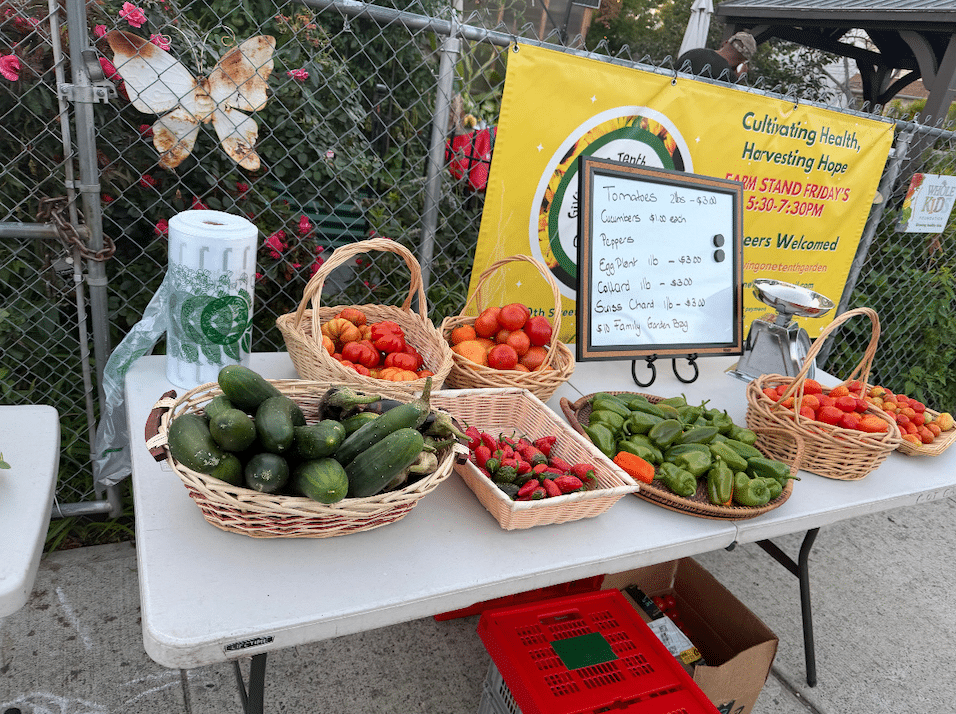
Located at 715-717 S. 20th St., the garden grows vegetables and herbs that reflect the cultural backgrounds and cooking traditions of Newark residents, including callaloo, collard greens, okra, bitter melon, eggplant, peppers and tomatoes.
La Fortune, who is originally from Trinidad, said providing culturally familiar produce is an important part of making healthy food accessible.
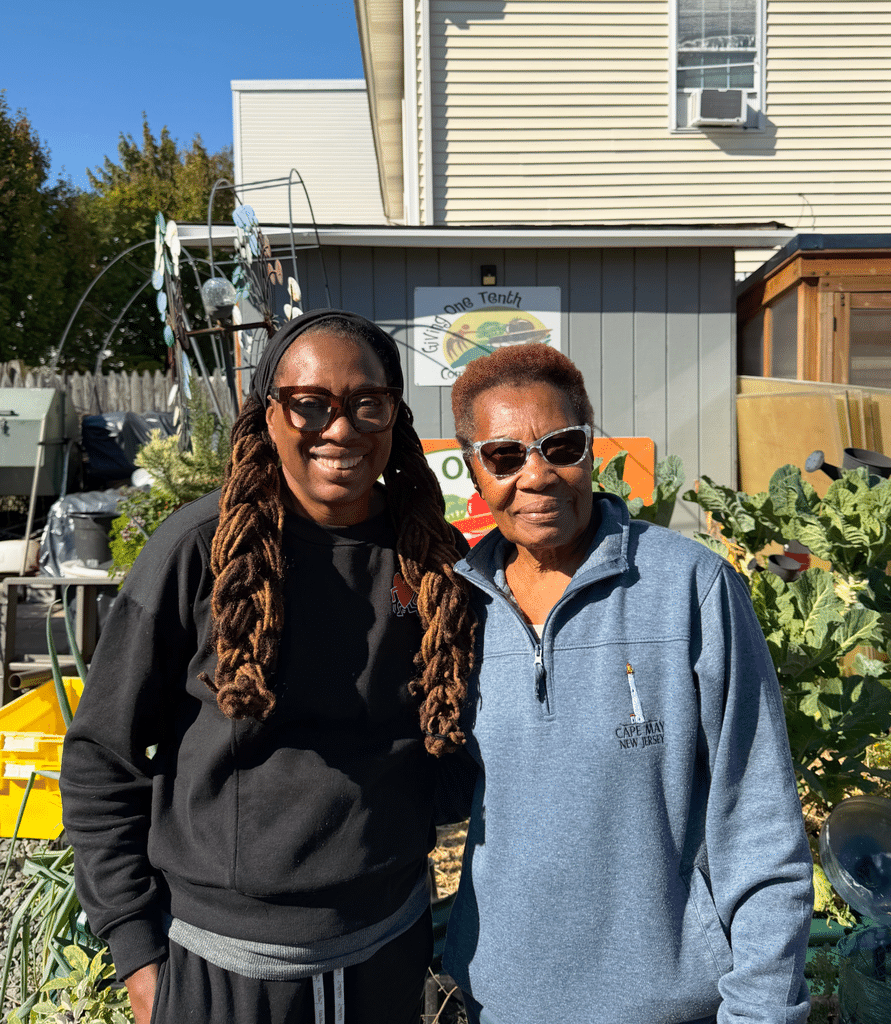
La Fortune’s connection to gardening began in Trinidad, where her family grew fruit trees and vegetables around their home. Her mother, Lydia La Fortune, comes from a farming family and has helped maintain Giving One Tenth since its founding in 2017.
La Fortune said those childhood experiences influenced her relationship with food. Even while living in apartments before starting the garden, she grew tomatoes on her patio and herbs on her kitchen windowsill.
La Fortune said the garden initially grew vegetables she enjoyed eating, but its selection expanded as residents from different cultural backgrounds began requesting familiar crops. Some residents from Nigeria and Ghana brought seeds and asked whether the garden could grow them.
“This is how I started incorporating more and more different, diverse vegetables in the garden, because the community requested it,” she said.
The garden also teaches residents how to grow food in smaller spaces, including containers, raised beds and indoor growing setups. La Fortune said residents do not need a large yard to start growing vegetables or herbs.
According to figures she provided, Giving One Tenth grew approximately 1,000 pounds of produce in 2025 and received another 2,200 pounds through farm donations. Thanks to these additional food contributions, including from HelloFresh, a meal-kit delivery company, the organization served an estimated 100 to 150 families monthly during its main growing months that year.
La Fortune reported that produce was distributed through community donations, local buyers and a seasonal farm stand.
About 1,300 pounds of produce were donated to residents, volunteers, Kinney Garden, a local community garden, and the Church of the Oranges, a Seventh-day Adventist congregation, for its Thursday food pantry.
Outside the South 20th Street garden, a blue community pantry provides another source of food for nearby residents. Established during the COVID-19 pandemic, the pantry is accessible year-round, allowing anyone to take or leave food at any time.
The box holds items such as canned goods, cereal and fresh produce. La Fortune said neighbors help keep it stocked, often contributing food they received elsewhere but could not use. She recalled residents asking when the pantry would return after it was temporarily removed following an incident involving expired food and vandalism.
La Fortune said the experience reinforced how much residents depended on the pantry, including people who sometimes had little food available at home.
Produce was also sold to the Urban Agriculture Cooperative, a local food distribution cooperative, and Greater Newark Conservancy (GNC), an environmental nonprofit, for local distribution.
The garden generated approximately $3,750 from produce sales in 2026, according to La Fortune.
Those sales help support operations, but she said the organization continues to rely heavily on volunteers, grants and community partnerships to sustain their efforts.
A Second Garden Expands Newark’s Growing Space
Giving One Tenth expanded to a second location at 27 Morris Ave. in 2025, with its first full growing season beginning in 2026.
The second garden was developed in partnership with Phillips Metropolitan Community Corporation, an organization affiliated with Phillips Metropolitan CME Church. La Fortune said the partnership began after a church member contacted her about volunteering at the original garden. She later approached church leaders about establishing another growing space at the Morris Avenue location.
A $5,000 grant through Newark’s Love Your Block program, a neighborhood improvement initiative, helped pay for garden beds, soil, irrigation supplies, tools and other equipment.
According to La Fortune, 104 volunteers contributed 631 hours toward developing the space, which grows crops including tomatoes, beans, bitter melon, kale, collard greens, zucchini, okra and eggplant.
The partnership also allows Giving One Tenth to share harvested produce with the church community and nearby residents.
More Than a Place to Garden
Food production is only one part of Giving One Tenth’s work.
The organization reported hosting 36 community events and activities from January through Oct. 21, 2026, seeing 568 attendees across its programming.
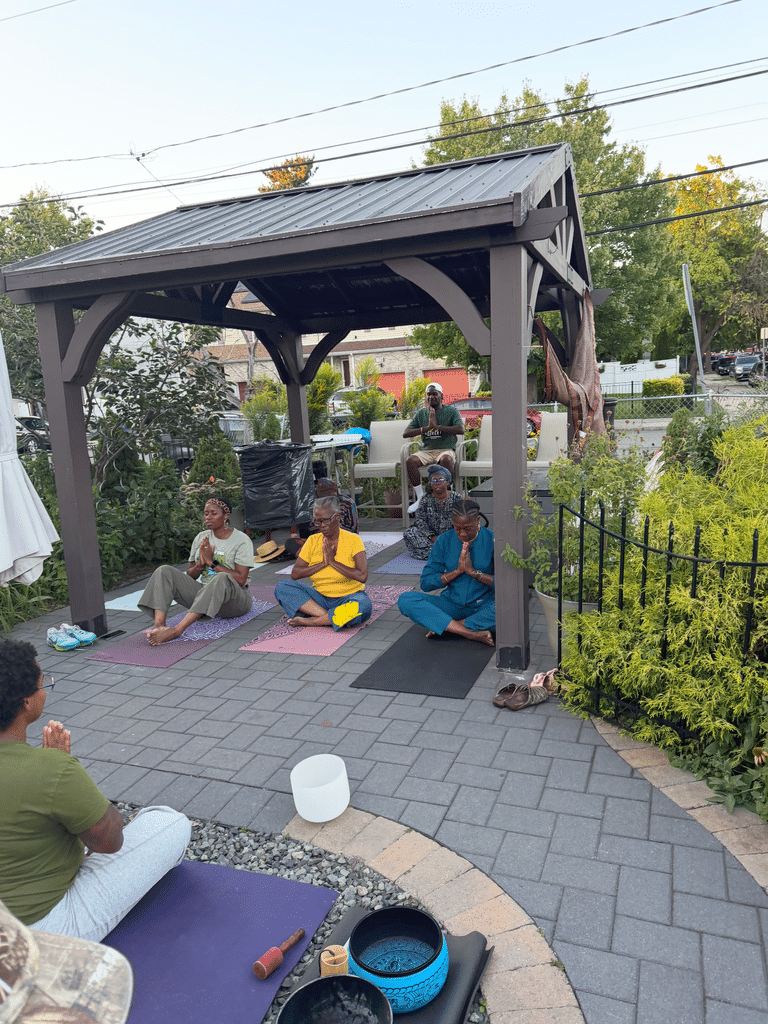
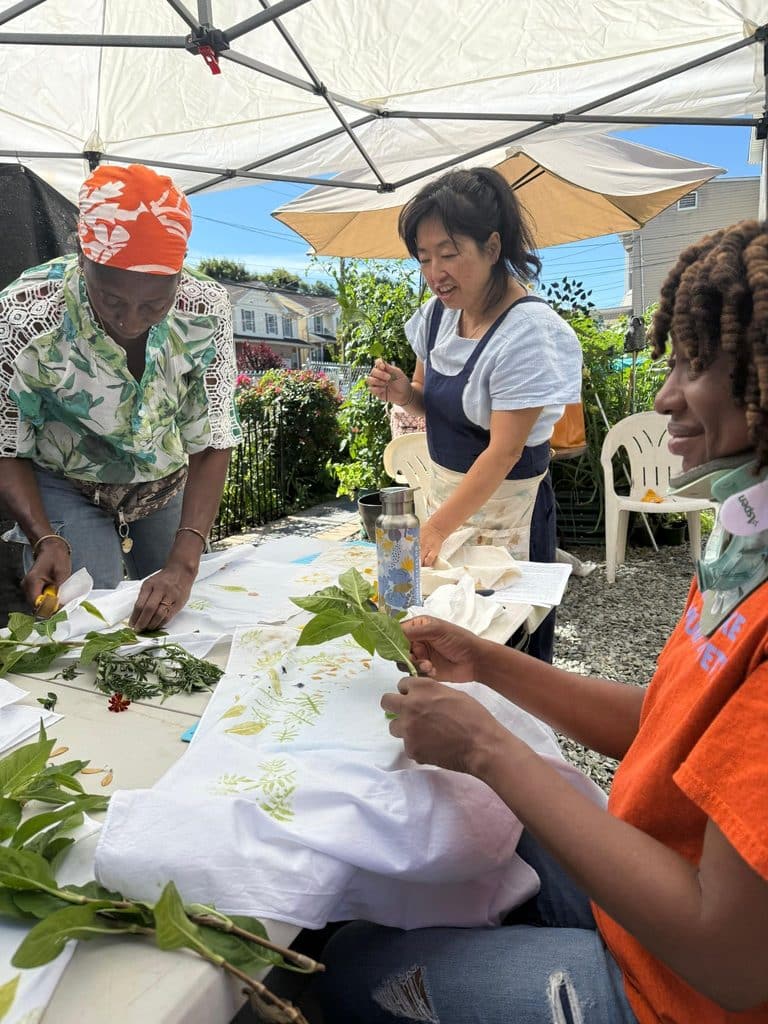
Activities included seed-starting classes, composting workshops, cooking demonstrations, yoga, jazz performances, botanical dyeing, eco-arts activities and a Juneteenth celebration.
Leslie Hernandez, founder of I’m So Yoga, a Newark-based yoga and meditation business established in 2014, has supported the garden’s wellness programming through yoga sessions and community outreach.
Hernandez’s work focuses on making yoga and mindfulness practices accessible to people of different backgrounds and experience levels.
Hernandez said practicing yoga outdoors encourages participants to connect with nature and one another.
“I have noticed that people are more likely to start a conversation with one another,” Hernandez said. “When they’re outside something about nature creates a level of calmness that sometimes being inside four walls doesn’t allow.”
She also hopes participants recognize that wellness can be accessible in everyday spaces.
“Wellness does not have to be difficult. Nature does not have to be far. Nature can be found in small spaces,” Hernandez said.
The space has also been designed with accessibility in mind. Improvements funded through the Whole Cities Foundation, a nonprofit supporting community food access, include paved pathways and elevated growing beds intended to make gardening easier for people with mobility challenges.
Young People Learn by Getting Their Hands Dirty
During the 2026 growing season, Giving One Tenth hosted five high school interns and one student completing an independent senior project.
Five students from Donald M. Payne School of Technology participated in the garden’s paid internship program, while a sixth student from The Pingry School completed an independent senior project in May.
Students learned about the internship through Amarilys Olivo-Mockabee, the school’s work-based learning coordinator, who shared the opportunity with them.
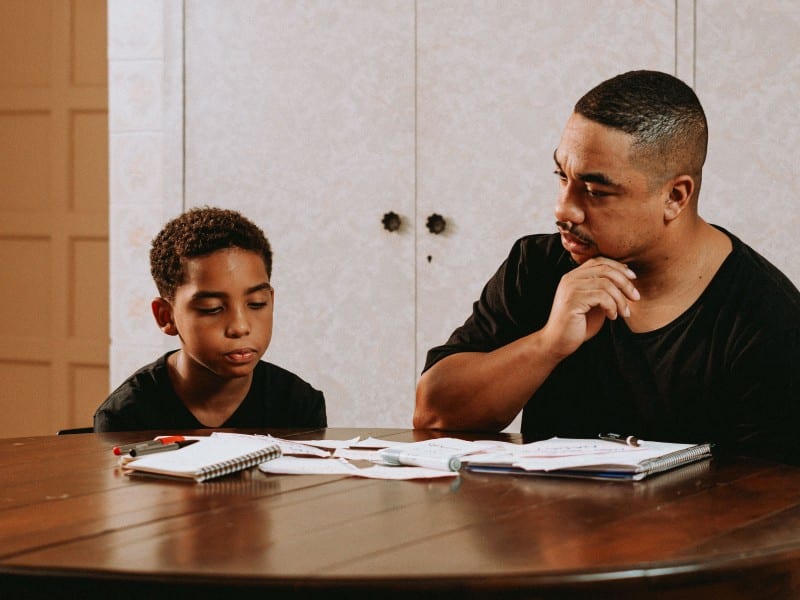
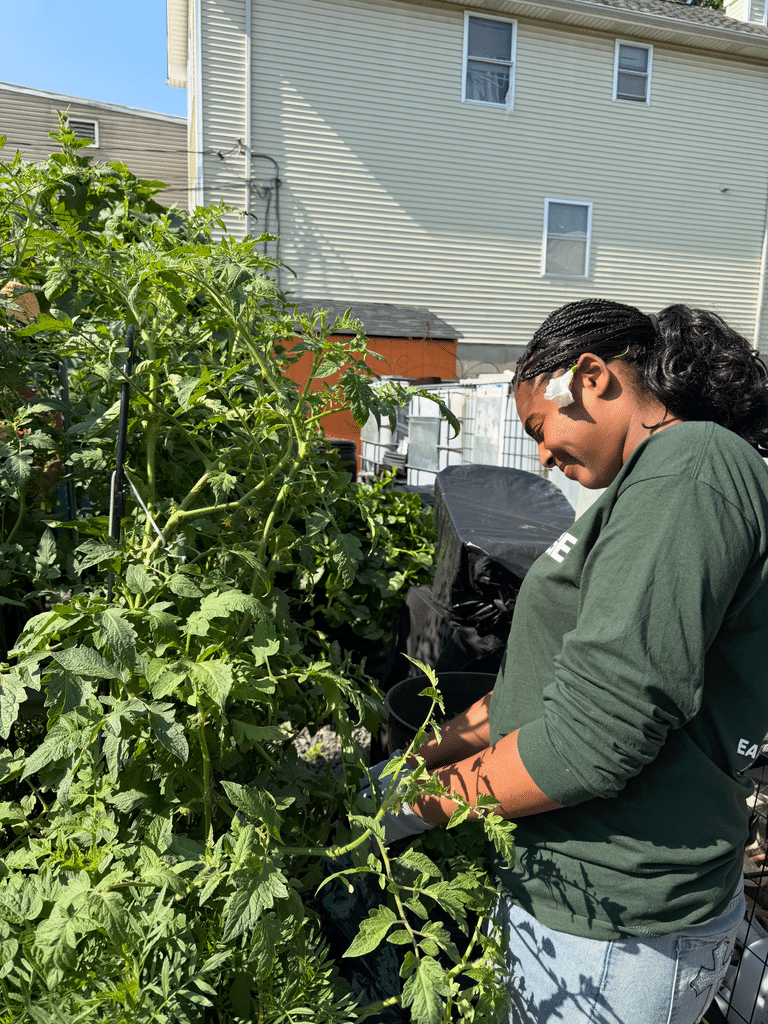
The interns rotated responsibilities, including watering, pruning, harvesting and weighing produce. They also learned about composting, garden safety, companion planting and the role of insects in maintaining healthy crops.
Tatiana Kouanda, 17, a rising senior during the internship, said she especially enjoyed daily garden walkthroughs, where students identified plants, learned about different varieties of mint and distinguished beneficial insects from those that could damage crops.
Janelle Ukeglou, also 17 during the internship, recalled a cooking demonstration where students prepared gnocchi with pesto made using ingredients from the garden.
“I really feel like that’s what the internship was about, like going out of our comfort zone,” Ukeglou said.
Stephanie Nkumaliyi, 17, said she enjoyed learning about companion planting, including the role of marigolds and basil, and making moss-covered plant arrangements during a workshop.
The experience also changed how the students viewed fresh produce. Kouanda and Nkumaliyi said they learned that vegetables grown in community gardens may have unusual shapes or appearances while remaining suitable to eat.
For Kouanda, the internship reinforced the importance of supporting the community that provides food and other resources.
“I learned how important it is to pour into your community that also feeds you, sustains you,” she said.
Volunteers Keep the Garden Growing
From Feb. 1 through Oct. 21, Giving One Tenth recorded 261 volunteers contributing a combined 1,046 hours of service, according to organizational figures. Volunteers helped plant and harvest crops, maintain growing spaces and support food distributions.
Among the longtime volunteers is La Fortune’s mother, who has helped plant, harvest, water and maintain the garden since its founding. Her responsibilities grew during the 2026 season when La Fortune was unable to perform some of the physical work herself.
La Fortune said her mother’s gardening experience allowed her to oversee much of the work without additional instruction.
“I think without her support, the success that we had this year wouldn’t have been successful as it is,” La Fortune said.
The organization also participated in Greater Newark Conservancy’s Plot-It-Fresh program, which connects residents with community gardening opportunities.
Ten people registered to participate at Giving One Tenth, with four actively taking part during the season, La Fortune said.
Unlike programs that assign individual plots, Giving One Tenth uses a communal model. Participants help care for shared growing spaces and can take home available produce.
La Fortune credited the continued involvement of volunteers and partners with keeping the gardens operating through periods when staffing and resources were limited.
Funding Challenges Shape What’s Next
Despite its expansion, Giving One Tenth faces ongoing challenges with staffing, equipment and produce storage.
Giving One Tenth received a $50,000, two-year subaward through Food Equity and Economic Development in New Jersey, a state initiative supporting food access and food security. According to La Fortune, the funding was part of a collaborative grant effort led by GNC.
Of that amount, $45,188 was allocated to personnel, providing employment opportunities for staff who helped maintain the garden’s 27 Morris Ave. location and increase food production during its first full growing season. The remaining $4,812 was designated for community programming.
La Fortune emphasized that the funding supported specific activities rather than the organization’s broader operating needs. Without the grant, she said, Giving One Tenth could not have supported those positions, and revenue from produce sales alone would not be enough to cover staff salaries.
Previous foundation support helped fund a greenhouse, garden beds, accessible pathways and equipment for solar power, hydroponics and drip irrigation.
La Fortune said the solar panels, hydroponic equipment and drip irrigation system have not yet been installed or made operational. The systems are intended to work together, with solar power supporting equipment that could automate watering and reduce the physical labor required to maintain the gardens.
She said the installations had been planned for 2026 but were delayed while she dealt with health-related limitations. Giving One Tenth now hopes to complete the work in 2027.
The Newark Fire Department also helps sustain the garden by filling its water tanks during the growing season, La Fortune said.
For 2027, the organization hopes to secure funding for refrigeration, a produce washing station, harvesting equipment and installation of its irrigation and solar systems.
Those improvements could help reduce food waste and increase the amount of produce available for distribution.
Giving One Tenth also hopes to expand its programming, strengthen its online presence and reopen its seasonal farm stand around July 2027.
How Residents Can Get Involved
Residents interested in volunteering or attending future events can follow Giving One Tenth Community Garden on Facebook and Instagram, where the organization posts registration information, volunteer opportunities and program announcements.
Operating hours vary by season and scheduled activities. Groups of more than 15 volunteers are encouraged to email givingonetenth@gmail.com in advance.
With the 2026 growing season ending, La Fortune is preparing for winter maintenance and the next planting season.
For La Fortune, the garden remains a meaningful part of her life.
“I consider this my happy place,” she said.
Author

Related Articles
Newark Nonprofit Leaders Get A Greater Say In Where Philanthropic Dollars Go
The Newark Nonprofit Leadership Resilience Fund is putting local nonprofit leaders at the center of funding decisions as it rolls out $405,000 in capacity-building investments