Newark Nonprofit Leaders Get A Greater Say In Where Philanthropic Dollars Go
The Newark Nonprofit Leadership Resilience Fund is putting local nonprofit leaders at the center of funding decisions as it rolls out $405,000 in capacity-building investments
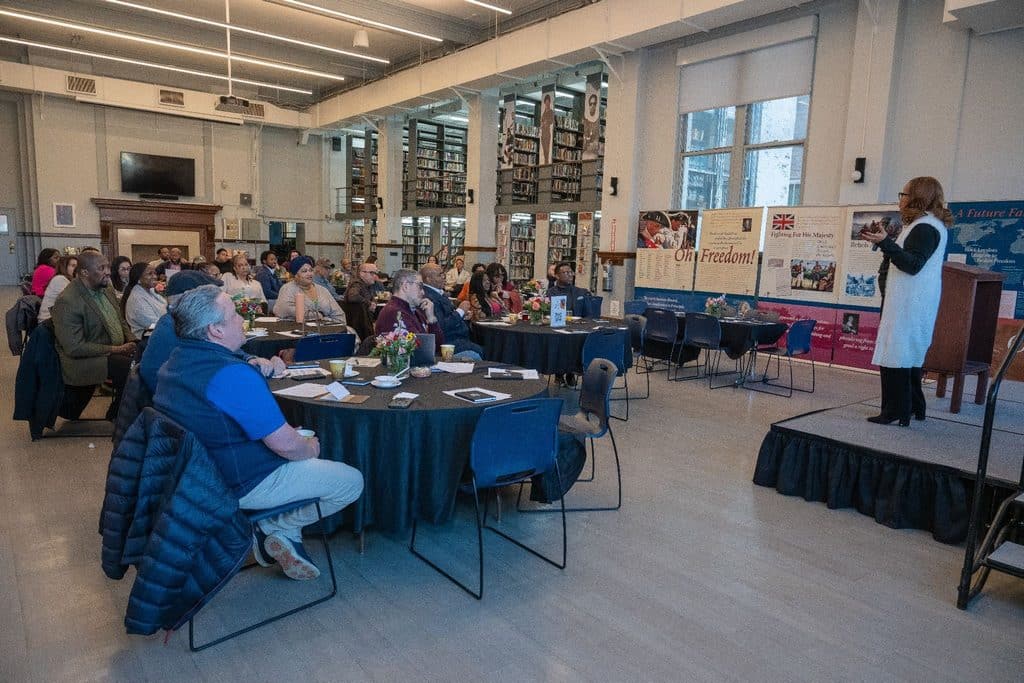
Newark nonprofits aim to help residents who are facing housing insecurity, rising food costs and other financial challenges. But behind those services, the organizations themselves must find ways to pay employees, manage expenses and secure funding that does not always arrive when they need it.
Khaatim Sherrer El, executive director of Clinton Hill Community Action (CHCA), a Newark nonprofit focused on neighborhood development, sees those pressures firsthand.
“The needs are outpacing the resources available to address those needs,” Sherrer El said.
The Newark Nonprofit Leadership Resilience Fund (NNLRF) is attempting to address those pressures by investing in the organizations behind the services.
Established in March 2025, NNLRF has secured more than $1.7 million in funding commitments over three years. Its first-year report, The Fund That Newark Built, outlines $405,000 in announced investments, including a board development initiative involving 12 Newark nonprofits.
The fund focuses on strengthening nonprofit leadership, governing boards and overall financial stability, rather than funding individual programs alone. Its nine-member Governance Committee also gives nonprofit leaders a majority voice in deciding where resources go.
Although its first major program is underway, whether these investments will produce lasting improvements remains to be seen.
The Financial Challenges Behind Nonprofit Services
At CHCA, the pressures facing nonprofits are closely connected to the needs of residents in Newark’s South Ward.
The organization provides housing advocacy, financial education and programs addressing food insecurity. Its work includes Our Community Grocery Store, a resident-led grocery initiative that provides affordable food through a mutual aid model.
“Nonprofit organizations are businesses, and we have the same sort of business challenges that any business would have,” Sherrer El said.
CHCA employs approximately 30 people, many entering their positions without any direct experience and requiring the organization to provide training alongside daily operations.
Sherrer El explained that government grants and contracts often require nonprofits to document expenses before receiving reimbursement. Organizations may have to cover payroll, rent and other operating costs while waiting for those payments.
“Payroll doesn’t care if your state funding is late,” he said.
Nicole K.F. Butler, CEO of Willow Bees Group, a consulting and leadership advisory firm that administers NNLRF, also serves as the fund’s lead. She said nonprofit leaders are struggling with unpredictable funding, limited savings and growing demand for their services.
Leadership transitions are another concern. When longtime executives retire or leave their positions, newer leaders may inherit organizations without governing boards prepared to support them.
These concerns helped shape NNLRF’s decision to invest in organizational leadership and governance.
How the Fund Was Created
NNLRF grew out of conversations that began in late 2023 among Newark nonprofit leaders and philanthropic organizations about leadership, fundraising, governance and long-term organizational stability.
In March 2025, those discussions led to the establishment of the fund. Butler began managing NNLRF later that year, and its Governance Committee held its first meeting in November.
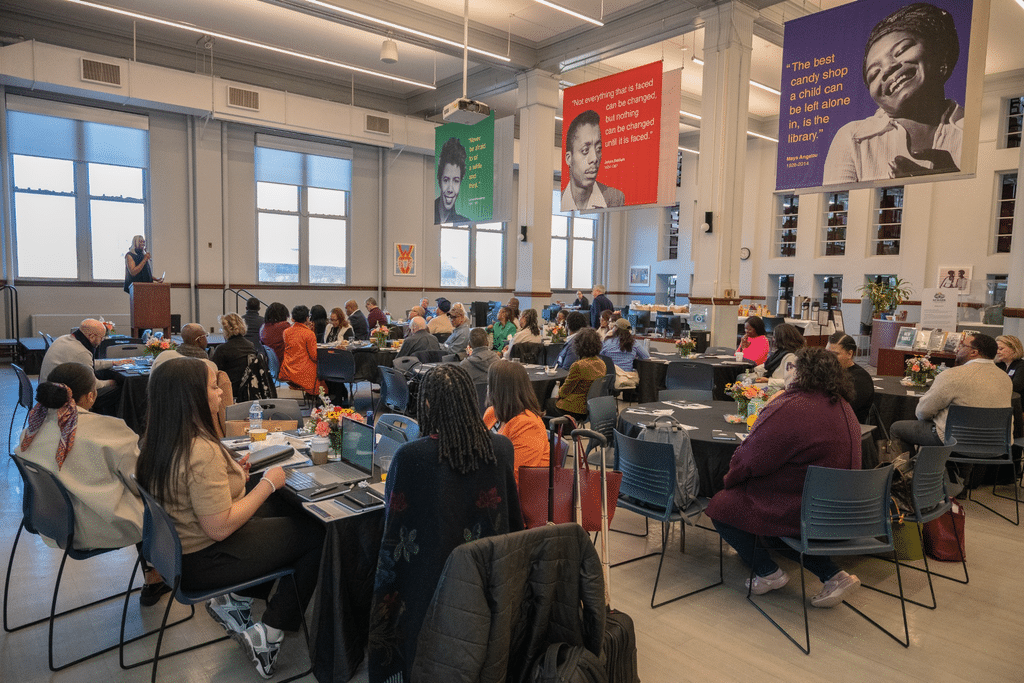
In March 2026, BoardSource, a national nonprofit that helps organizations strengthen their governing boards, held six listening sessions with 46 Newark nonprofit leaders to help shape the fund’s first major program.
According to NNLRF’s Sept. 30, 2026, press release, participants included 28 executive directors and CEOs and 18 board members.
The sessions identified challenges including inconsistent board participation, unclear responsibilities, communication gaps between board members and executives, and difficulty following through on organizational decisions.
Those findings helped shape NNLRF’s Board Transformation Community of Practice, a program designed to help participating nonprofits improve board governance and leadership.
Giving Nonprofit Leaders a Voice in Funding Decisions
Unlike many traditional funding arrangements, NNLRF gives nonprofit leaders a direct role in deciding how money is used.
Five nonprofit leaders hold seats on the fund’s nine-member Governance Committee, alongside four representatives from philanthropic organizations.
Butler said the committee’s guidelines require nonprofit representatives to hold at least 51% of its seats.
The committee has also opted out of having a chairperson to ensure decisions are made through consensus.
Alongside Sherrer El, nonprofit representatives include Nayibe Capellan, CEO of Programs for Parents, a nonprofit supporting child care access and families, and Mark Comesañas, executive director of My Brother’s Keeper Newark, an initiative of Newark Opportunity Youth Network focused on expanding opportunities for young people.
The remaining nonprofit representatives are Vesta Godwin Clark, CEO of St. James Social Service Corporation, a Newark social services nonprofit, and Peter Rosario, president and CEO of La Casa de Don Pedro, a Newark organization providing housing, education and family support.
The four philanthropic representatives are Jared Boone of the Schumann Fund for New Jersey, René Deida of the Prudential Foundation, Sharnita C. Johnson of Victoria Foundation and Aaron Turner of the Community Foundation of New Jersey.
He said committee members are learning to build trust by openly discussing problems and allowing nonprofit leaders to challenge funders’ ideas when making decisions.
“I would say the fund has really knocked down that superficial wall in a lot of ways,” Sherrer El said.
Where the $405,000 Is Going
The NNLRF has announced $405,000 in investments across two programs designed to strengthen nonprofit governance.
Of that amount, $285,000 supports the Board Transformation Community of Practice, which began in June 2026 and is working with 12 Newark nonprofit organizations.
The remaining $120,000 has been designated for the Governance Deepening Fund, which will allow participating organizations to apply for implementation grants of up to $10,000 each to carry out their board improvement plans.
The $405,000 represents announced investments, not money that has necessarily been fully distributed.
How the Board Transformation Program Works
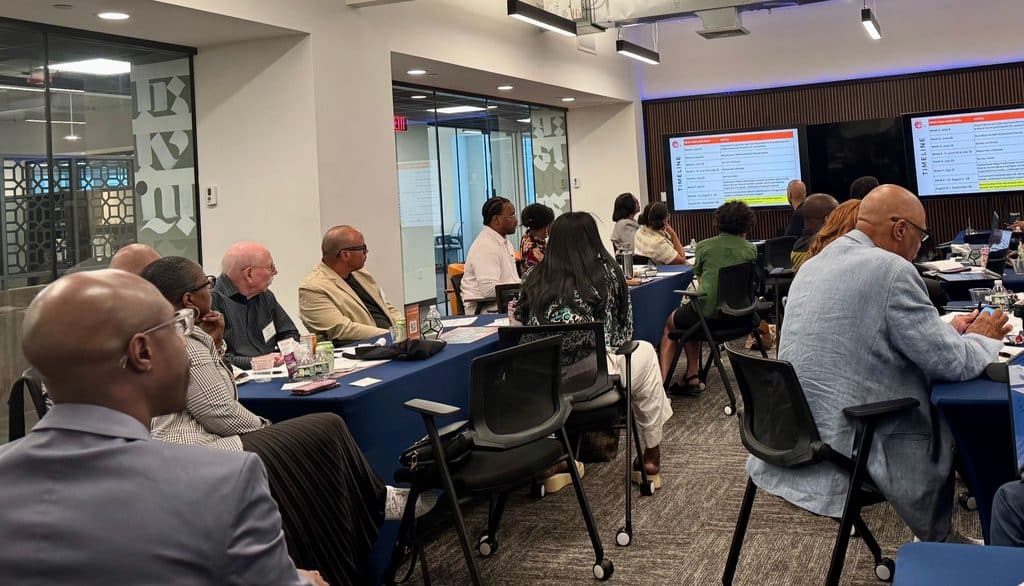
The Board Transformation Community of Practice provides board assessments, governance training, individualized consulting, peer learning and assistance with board development and recruitment.
BoardSource helps nonprofits evaluate and train their boards using its Purpose-Driven Board Leadership framework, which encourages boards to focus on their organization’s mission, fairness and community needs.
The Nonprofit Professionals of Color Collective, an organization supporting nonprofit professionals of color through leadership development and peer connections, coordinates the participating cohort and individualized consulting.
Across the 12 participating organizations, the program is expected to provide more than 144 hours of individualized consulting support.
Leadership Newark, a nonprofit leadership development organization, provides board training, recruitment assistance and matching services.
Willow Bees Group oversees administration and coordination across the initiative.
Butler said combining national expertise with local consultants is intended to strengthen participating organizations while developing professionals who can continue supporting Newark nonprofits.
Nearly 50 organizations were invited to apply for the first cohort, 13 submitted applications and 12 were selected.
Sharnita C. Johnson, vice president of strategy, impact and communications at Victoria Foundation and a member of NNLRF’s Governance Committee, said the committee did not expect all invited organizations to participate because the program requires a substantial time commitment from executive directors, board chairs and other board members.
She said the selected cohort includes both newer and established nonprofits with different budgets and missions, allowing leaders to learn from organizations at different stages of development.
Butler said applicants were judged equally on four factors: their community connections, organizational needs and readiness, potential for improvement, and willingness to learn from other nonprofits.
Each organization participates through its executive director or CEO and board chair, bringing the total to 24 participating leaders.
The 12 participating organizations are:
- Brothers Building A Better Nation
- Greater Newark Conservancy
- Ironbound Community Corporation
- La Casa de Don Pedro
- Lincoln Park Coast Cultural District
- New Community Corporation
- Newark Symphony Hall
- Newark Youth Career Pathways
- St. James Social Service Corporation
- South Ward Environmental Alliance
- The Gem Project
- Unified Vailsburg Services Organization
The organizations work across areas including youth development, housing, environmental advocacy, arts and social services.
Johnson said the committee considered several possible investments before choosing board development because it could benefit nonprofits regardless of their size or budget.
She said strong governing boards help executive directors carry out organizational goals, and larger nonprofits do not necessarily have more effective boards.
Butler said improving governance could also help participating organizations become more competitive for funding from larger national foundations.
Early Progress Among Participating Nonprofits
Butler said 11 of the 12 participating organizations have completed their board assessments and are working with consultants to identify priorities and develop improvement plans.
Some participants have also reported better communication between executive directors and board chairs, particularly when discussing responsibilities and organizational decisions. Those observations remain preliminary, with a formal program evaluation still to come.
For The Gem Project, a Newark nonprofit focused on youth leadership and civic engagement, the fund’s Board Transformation Community of Practice arrived during a leadership transition.
Amanda A. Ebokosia, founder and CEO of The Gem Project, said all four board directors and Ebokosia completed the BoardSource assessment, achieving 100% participation.
The assessment affirmed strengths in the board’s trust, respect, mission, vision and strategy, according to Ebokosia. It also identified opportunities to strengthen financial reporting, governance structures and board members’ connections to the young people the organization serves.
In September, The Gem Project welcomed three new directors through its own recruitment process: Jeff Furman, Zandi Zungu and Anthony Frasier. Ebokosia said the additions brought the board to six directors.
Furman leads Social Ventures and previously served nearly 40 years on the board of Ben & Jerry’s. Zungu brings more than 16 years of experience in social service organizations and a background in finance. Frasier, a Newark native, is the founder and CEO of ABF Creative, a podcast network, and the founder of Brick City Tech.
Beginning in October, the organization started providing weekly updates to its board, governance consultants and, at times, foundation partners. Ebokosia said the updates help keep participants informed about the organization’s work as it develops more regular financial reporting practices.
Ryan Williams, founder and principal consultant at Sabali LLC, serves as The Gem Project’s governance consultant through the Nonprofit Professionals of Color Collective.
Ebokosia said the organization is still early in the process, with its full board action plan expected to go before the board in December. The fund plans to assess the cohort’s results at its January 2027 convening.
What Happens Next for the First 12 Organizations?
As of Butler’s October responses, no money from the Governance Deepening Fund had been disbursed.
Participating organizations are expected to apply for implementation grants beginning in late November, after completing their board action plans.
Ebokosia said The Gem Project plans to apply for funding through the Governance Deepening Fund to continue training its board members and developing stronger committees.
She said additional support would help the organization build on changes already introduced and prepare its board for future leadership transitions.
NNLRF plans to hold a culminating event at the end of January 2027, when it aims to announce grant awards and review the program’s progress.
The evaluation will look at what organizations learned, how their boards and leaders are working together, and whether they completed plans to improve their operations.
The fund also intends to assess whether local consultants have strengthened their ability to provide governance support.
Butler said the format and timing for publicly sharing the evaluation findings have not yet been determined.
Johnson said the evaluation will also examine which resources participants found useful, what was missing and what could be improved.
The Governance Committee plans to evaluate its own decision-making process, including whether nonprofit and philanthropic representatives feel their ideas are heard and respected.
Johnson said the fund intends to share findings publicly, although the timing and format have not yet been determined.
The longer-term question is whether organizations will continue using those practices after the initial training and consulting support ends.
Expanding Support Beyond the First Cohort
While the board transformation initiative is limited to 12 organizations, NNLRF is developing additional opportunities for nonprofits across Newark.
Its Resilience in Practice series will offer three training sessions addressing financial, organizational and strategic challenges.
The first session, Resilience in Practice: Financial Management in Uncertain Times, is scheduled for Nov. 13, 2026, from 10 a.m. to 4 p.m. at Equal Space, 17 Academy St. in Newark.
Johnson said the training is open to nonprofits serving Newark, including those based outside the city, although space is limited.
Led in partnership with BDO, an accounting and advisory firm, the workshop will help nonprofit executives and staff assess financial health, manage revenue uncertainty, develop budgets and prepare for funding changes.
Butler said NNLRF plans to survey participants afterward to find out whether they used what they learned and took advantage of additional free resources offered by BDO.
The series will continue March 19, 2027, with a session on people and organizational resilience, followed by strategic resilience and adaptability on June 4, 2027.
NNLRF is also considering a separate program to help prepare future nonprofit leaders.
Newark nonprofits can visit NNLRF’s resource directory for board training and other support tools. They can also visit the fund’s website to join its mailing list and learn about upcoming programs.
Building Stability Beyond Three Years
NNLRF’s philanthropic supporters include the Community Foundation of New Jersey, Prudential Foundation, Schumann Fund for New Jersey, Henry S. & Agnes M. Truzack Foundation and Victoria Foundation.
Johnson said Victoria Foundation has committed $750,000 to the fund over three years, representing a portion of its more than $1.7 million in funding commitments.
Butler said the fund had received $930,000 toward those commitments as of October 2026. Of that amount, $652,000 had been disbursed or allocated for programming and administration.
Butler said the Governance Committee has not yet decided how all remaining funds from its three-year commitments will be allocated.
She said the fund is taking a phased approach, beginning with the Board Transformation Community of Practice and the Resilience in Practice training series.
“The full three-year commitment gives us a longer-term planning framework, while specific allocations are determined as the committee develops and approves subsequent investments,” Butler said in an Oct. 22 email.
Lessons from those initial investments and priorities identified by Newark nonprofit leaders will help guide future funding decisions, she said.
Johnson said the Governance Committee is gaining a clearer understanding of program expenses as the fund’s first major initiative progresses. She described its approach as a collaborative process in which nonprofit and philanthropic leaders can learn from what works and adjust future investments.
“We’re gonna try some things, and some things may not work, and we may pivot,” Johnson said.
She said the committee also wants to evaluate whether its governance structure is working as intended, including whether nonprofit representatives have meaningful opportunities to contribute to decisions.
Johnson said the fund intends to share findings from its work publicly, although the timing and format have not yet been determined.
Butler said NNLRF hopes to secure additional funding beyond its initial three-year commitment to continue supporting nonprofit leadership and organizational development across Newark.
Sherrer El said federal funding cuts are putting more pressure on nonprofits, and private foundations cannot make up for all the lost funding. He believes nonprofits need to find other ways to keep their programs running, including calculating their full operating costs and exploring services they could charge for to bring in revenue.
Future investments could focus on executive leadership, succession planning, fundraising and organizational capacity, according to NNLRF’s plans.
As NNLRF approaches the next phase of its three-year commitment, participating organizations are preparing to put their board improvement plans into practice.
The program’s first evaluation in 2027 will offer an early indication of whether its investments are translating into stronger nonprofit leadership and governance.
For Sherrer El, demonstrating the value of nonprofit organizations is just as important as strengthening their operations.
“Somehow or another, we have to remind people about the critical role that nonprofits play in holding our communities together,” he said.
For Newark residents who depend on these organizations for food, housing assistance and other services, the larger question is whether those improvements will help nonprofits continue meeting community needs.
Author