
Beyond the Garden Tour: Newark Growers Cultivate Food, Wellness and Community
Newark’s annual citywide garden tour opened farms and green spaces to residents for a week, while highlighting the year-round work to expand fresh food access and keep community gardens rooted in their neighborhoods.
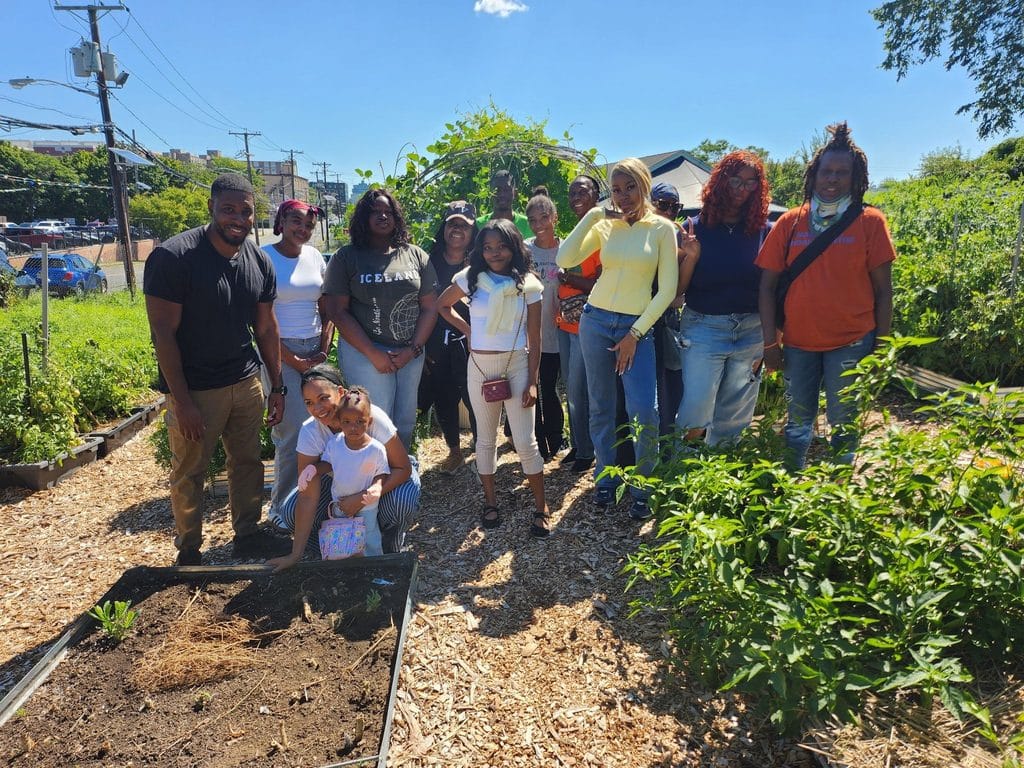
Tomatoes, kale, collard greens, peppers, and herbs grow on a quarter-acre urban farm along Broadway in Newark’s North Ward, where rows of produce share space with fruit trees and chickens. A 500-gallon cistern collects rainwater for the farm, while a three-way compost system turns organic waste into material that can be returned to the soil.
On Sept. 11, that farm, A Healing Sanctuary, became both a classroom and marketplace. Residents volunteered during “Heal, Learn & Grow” hours, while the Artisan Farmers Market offered fresh produce and locally made goods.
A few miles away, about 30 people gathered among the plants at Rabbit Hole Farm Newark for a workshop focused on herbal education and wellness.
Both were stops during Newark’s Harvest: A Citywide Garden Tour, held Sept. 6-12 under the theme “Connecting Communities to Sustainable Food Systems.” More than 600 people attended 30 activities across 16 garden sites, according to organizer Tobias Fox. The week brought residents into Newark’s gardens through volunteer opportunities, farmers markets, workshops, environmental education and a food-system policy summit.
But behind the produce, greenery and workshops are larger questions about how these spaces serve Newark.
The gardens are part of a larger effort to make fresh food, environmental education, and green space available in Newark neighborhoods throughout the year. Keeping these spaces accessible year-round comes with challenges. Organizers and growers pointed to transportation and food affordability, limited funding, and uncertainty over the future of gardens built on land they do not own.
The garden tour lasts only one week, but the work to keep Newark’s local food system growing continues year-round.
Growing a Local Food System
Tobias Fox, founder and managing director of Newark Science and Sustainability (Newark SaS), started the citywide garden tour during Newark’s 350th anniversary in 2016.
“I decided to write a proposal and submit a proposal to highlight Newark’s agricultural landscape through the citywide garden tour,” Fox said.
The Newark Community Food System, founded in 2018 by Fox and other community leaders, now connects more than 20 active urban gardens and farms. The network works to involve residents in Newark’s food system, which includes how food is grown, distributed, sold, and made accessible to people.
Newark SaS also operates a community-supported agriculture program (CSA). In a CSA, members receive a regular share of food sourced from farms instead of buying each item separately at a grocery store.
Fox said Newark’s program began with 20 families in 2018. Support from the Nourishing Newark Community Grants Program helped expand the program to 100 families.
“We are not a food pantry,” Fox said. “This is a farm share program.”
Bringing Fresh Food Closer to Residents
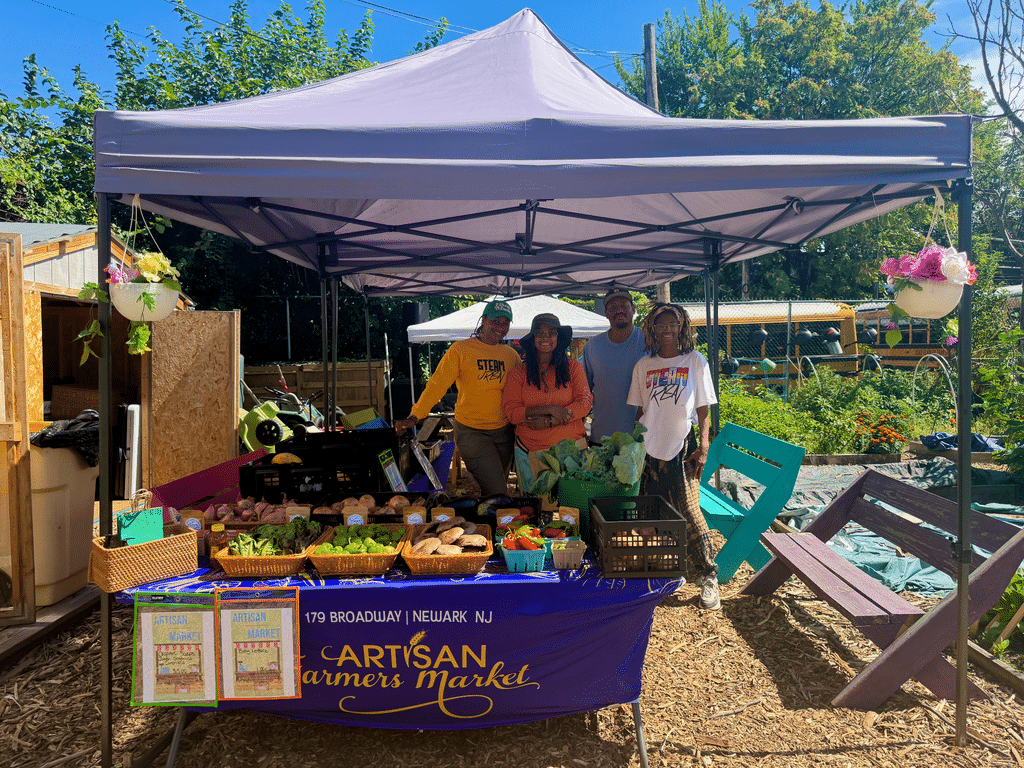
At A Healing Sanctuary, Fallon Ayaan is founder and CEO of STEAM Urban, a Newark-based nonprofit that combines science, technology, engineering, arts and mathematics (STEAM) education with community and environmental programming. The organization operates the farm and brings fresh food into places residents already visit.
The Artisan Farmers Market sells produce grown at A Healing Sanctuary and sourced from local farmers, along with goods from local artisans. STEAM Urban has also brought its market into WIC offices and other community locations in Newark, East Orange, and Plainfield.
The market accepts the Supplemental Nutrition Assistance Program (SNAP) through Electronic Benefits Transfer (EBT), which allows eligible households to use SNAP benefits to purchase food. It also serves participants in the Special Supplemental Nutrition Program for Women, Infants and Children (WIC) and participates in Good Food Bucks, a nutrition incentive that helps SNAP shoppers stretch their benefits when purchasing fresh produce.
From June 16 through Aug. 20, STEAM Urban held 38 markets and reached 467 people, according to data provided by Ayaan. That included 188 WIC clients, 144 general customers and 135 community walk-ins. Ayaan said the markets serve about 50 people per week.
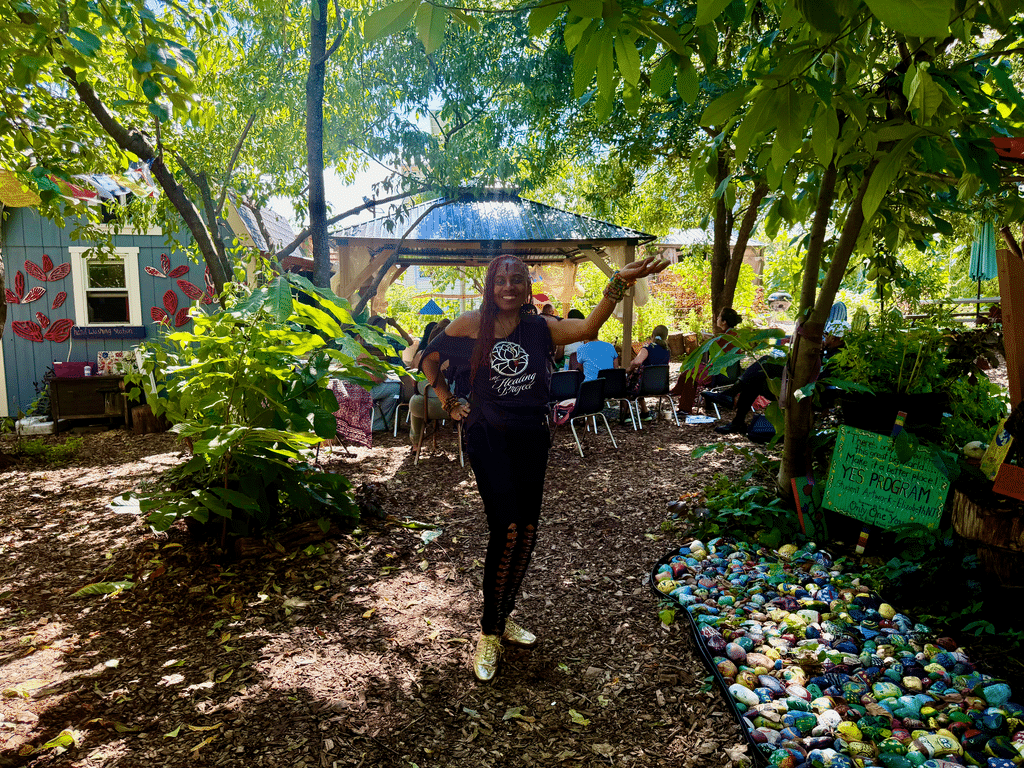
Ayaan said bringing food into places residents already visit is one way STEAM Urban is trying to make fresh food more accessible, but gaps remain in who the organization is able to reach.
“We’re still missing seniors,” Ayaan said.
Ayaan said the organization wants to build stronger connections with senior centers and housing communities to reach residents who may have difficulty traveling to farmers markets.
A Greater Offer Than Just Food
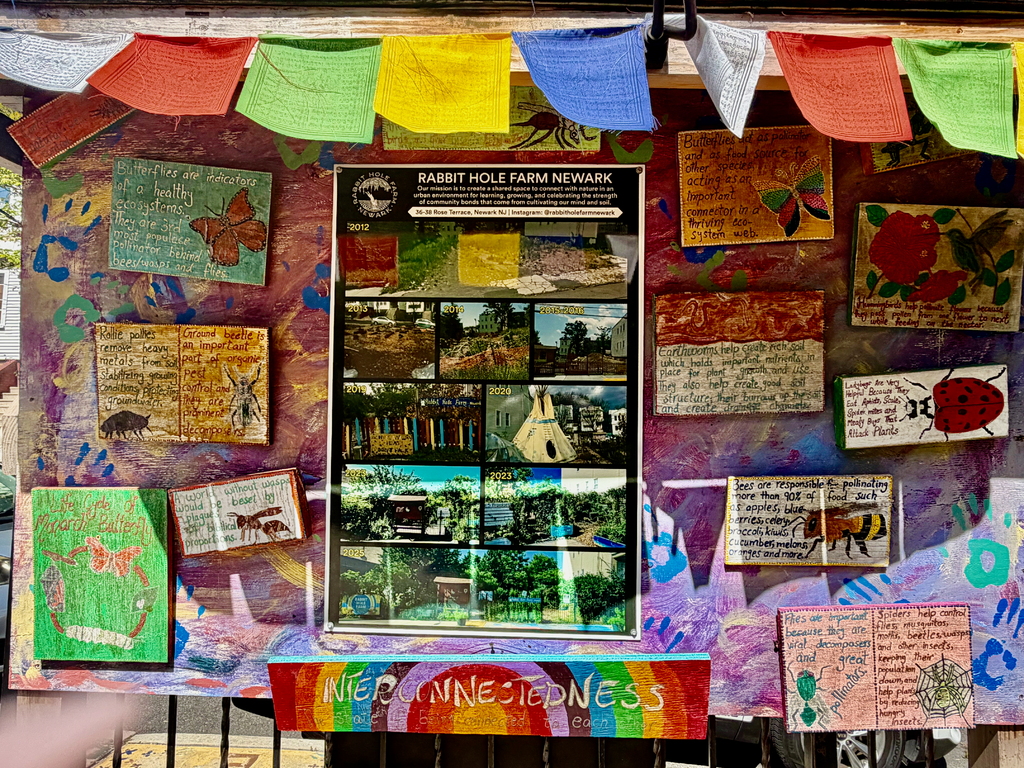
At Rabbit Hole Farm Newark, the garden itself tells a story about what vacant land can become.
The Rose Terrace property began as an abandoned lot in 2012. Rabbit Hole says the space has since developed into an urban farm producing fresh herbs, tea blends, tinctures, culturally significant seeds and produce. Over the years, the farm has also hosted permaculture apprenticeships, yoga classes, meditation circles, community herbalism workshops, drum lessons, art installations, and other activities centered on learning and wellness.
The Newark Community Food System says Rabbit Hole uses property through Newark’s Adopt-A-Lot Program, meaning the garden operates on land it does not own.
During the Sept. 11 garden tour stop, 30 people attended “Flower Essences: Medicine for Your Soul,” led by Carolyn Jones, clinic coordinator for the Herbalists Without Borders Healing Project Mobile Clinic. The workshop introduced participants to flower essences and included hands-on wellness activities. Derrick Trent, a doctor of acupuncture, provided auricular acupressure, also known as ear acupressure, during the event.
Jones said the mobile clinic brings activities such as flower essences, medicine-making demonstrations, acupressure and foot soaks into community settings, with an emphasis on education and stress reduction.
“Healthy food systems are not exclusively about what we grow and eat,” Jones said. “We are reminded that we are responsible for tending to ourselves and each other within a community setting.”
Jones, a holistic health educator, said the mobile clinic seeks partnerships with community and urban gardens because the spaces support wellness education, community connection and hands-on learning about herbs, food and plant-based self-care. Her work at Rabbit Hole is part of a broader relationship with Newark, where she has previously participated in programming connected to Newark SaS.
Jones said she plans to return to Newark for another upcoming event with Fox.
Growing Food on Uncertain Ground
The question of who owns Newark’s garden land extends beyond Rabbit Hole.
Bilal Walker, founder and principal consultant of Al-Munir LLC and chief program officer of Urban Seeds Grow, said his organizations spent about six years stewarding two formerly vacant properties through Newark’s Adopt-A-Lot program: Jannah on Grafton, a community micro-farm and educational hub, in the North Ward and Eden’s Farm Cooperative, an urban farm, in the South Ward.
During that time, Walker said the organizations invested in programming and agricultural infrastructure on land they did not own.
“Access to vacant land is not the same as secure land tenure,” Walker said.
Across the two sites, Walker said more than 30 raised growing beds have supported food production and community programming. In 2025, the farms operated a 20-family CSA and worked with 10 youth apprentices. More than 300 people also participated in free agriculture, nutrition, wellness, and arts programming that year.
After years of temporary stewardship and a formal redevelopment process, Urban Seeds Grow acquired both properties in May 2026. Walker said ownership provides long-term control but brings new costs, including environmental and site assessments, architecture, engineering, infrastructure, and financing.
Fox said changing how people view Newark’s gardens is also part of the challenge.
“They look at it as just some pastime hobby,” Fox said. “It’s cute. It’s nice, but they don’t see it as part of community development.”
What Remains After the Tour
The questions raised during the week do not end with the tour.
Fox said 14 of the 16 participating garden leaders received $1,000 mini awards. Funding also included $5,000 from the City of Newark and grant support from the New Jersey Economic Development Authority’s Food Equity and Economic Development program.
Organizers are also considering transportation for future tours, particularly for seniors and residents who may have difficulty traveling between gardens. Fox said Barbara Weiland, founder and executive director of Kids in Business and creator of Kinney Community Garden, advocated for transportation for seniors.
The tour may bring residents through the gates for a week. The larger challenge is ensuring Newark’s gardens remain accessible, supported and rooted in their neighborhoods after it ends.
Author

Related Articles
NJ Bill Would Ban Using Green Acres Funds For Artificial Turf Fields
A New Jersey bill that would prohibit Green Acres funds from being used for artificial turf fields advanced unanimously from an Assembly committee, with environmental advocates and turf industry representatives offering opposing views.

NJ Goes Green with New Law Providing Easier Access to Solar Energy
Thanks to new legislation, New Jersey will help renters and low-income residents access cleaner, more affordable energy.