Track and Field Champions Bring Air Quality Lessons to Jersey City Families
Joetta Clark Diggs and her daughter, world champion sprinter Talitha Diggs, joined families at Liberty Science Center for hands-on activities and conversations about how air pollution affects respiratory health.
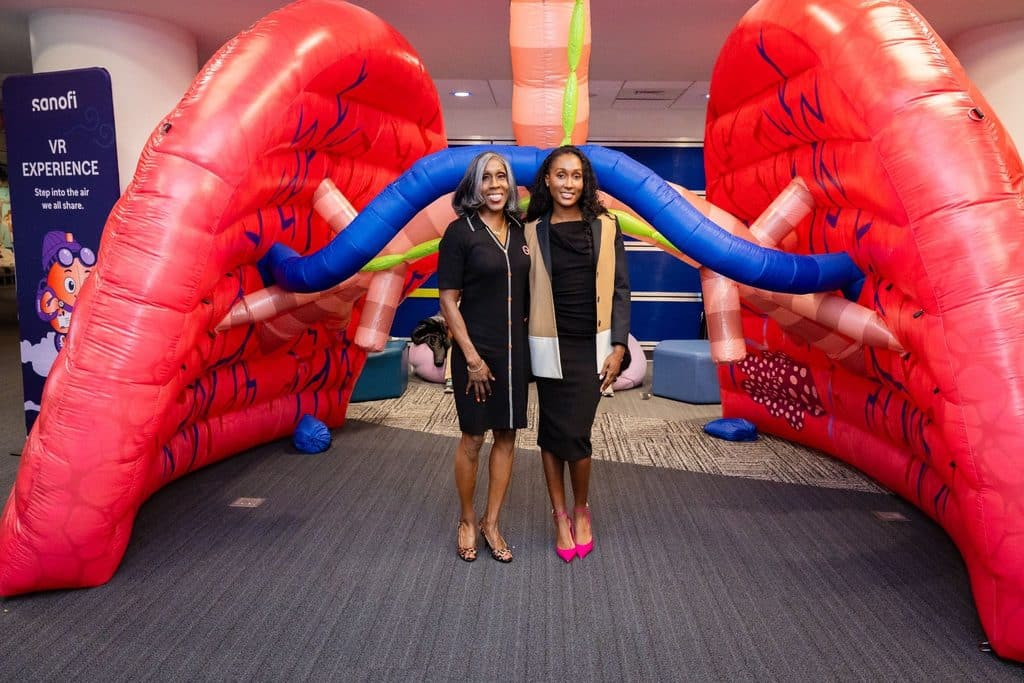
Four-time Olympian Joetta Clark Diggs knows how much breathing matters on the track. Her daughter, world champion sprinter Talitha Diggs, knows it, too. But when the two athletes participated in The Air We Share at the Liberty Science Center (LSC) on Oct. 7, their message wasn’t just for runners. It was for all New Jerseyans breathing the same air.
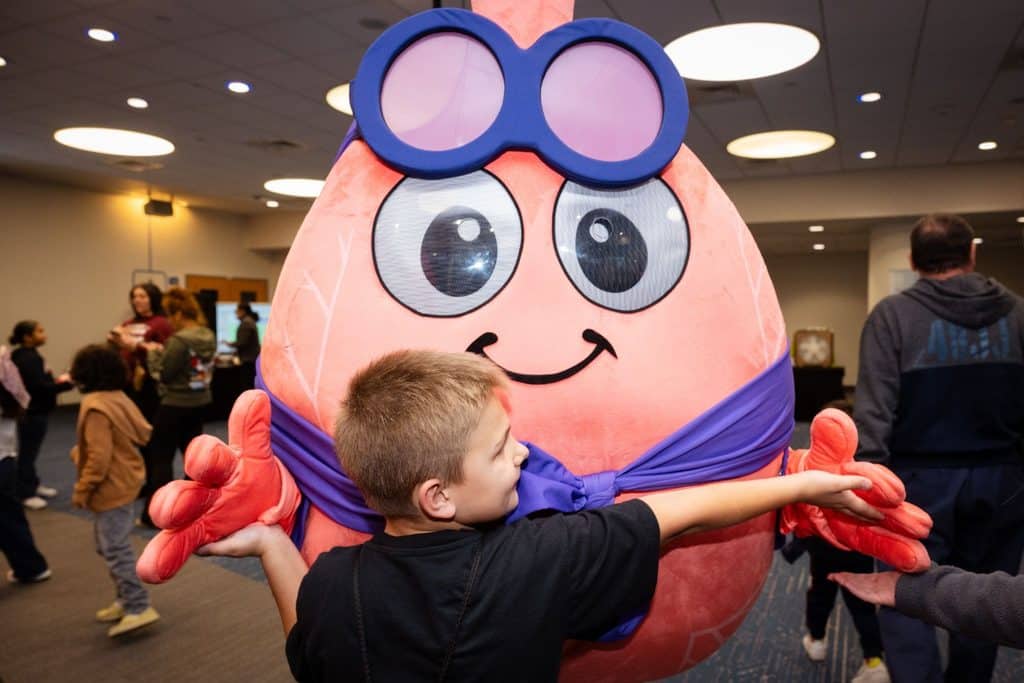
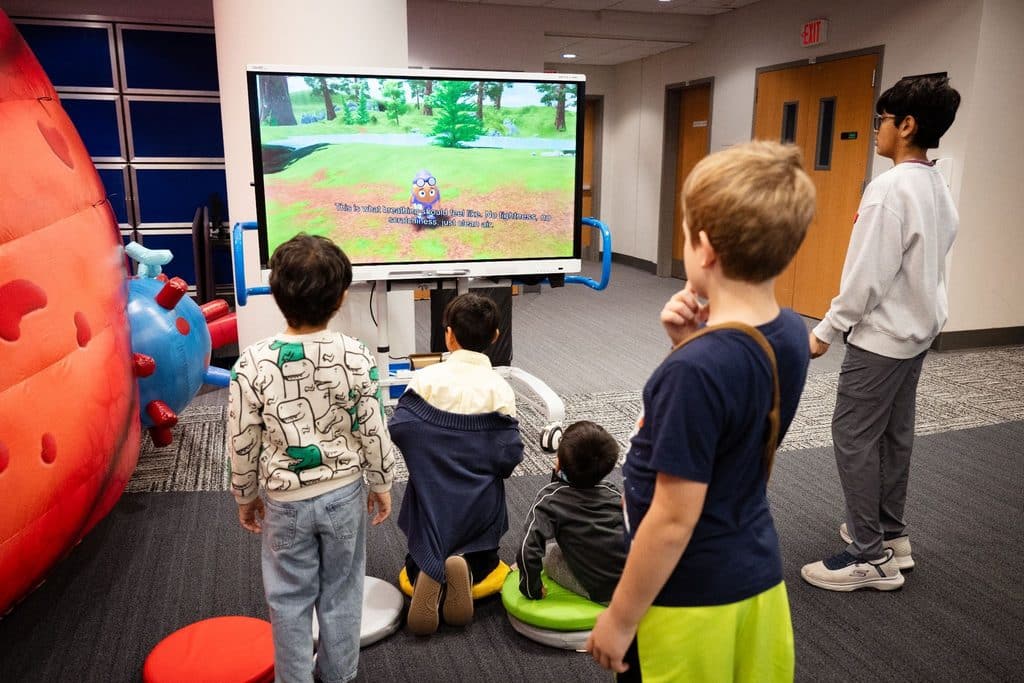
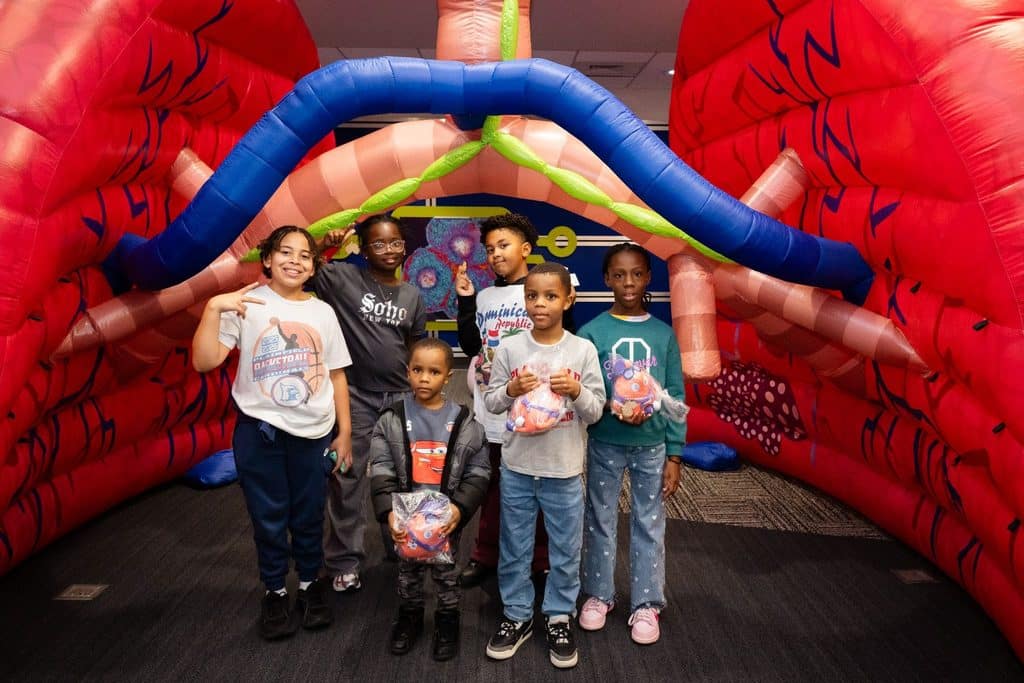
At the event, children explored a giant inflatable pair of lungs, tried virtual reality experiences, and learned about air pollution through microscopes and hands-on demonstrations. Others met Lungston, a smiling lung-shaped mascot wearing purple glasses, and discovered how the air around them can affect their health.
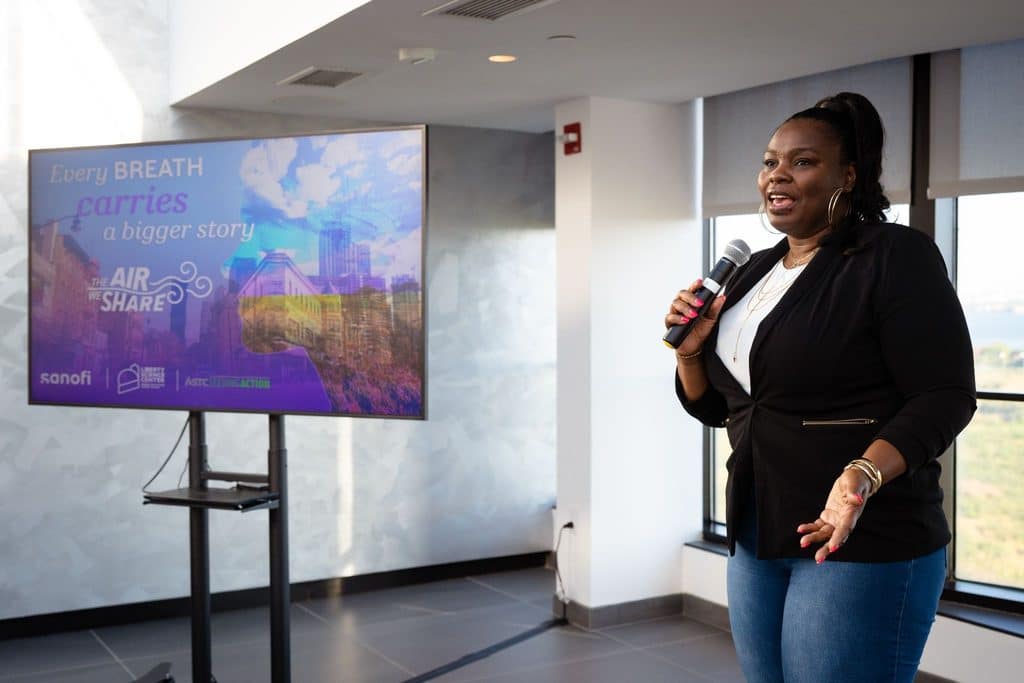
The Air We Share is a national initiative developed through a partnership between pharmaceutical company Sanofi and the Association of Science and Technology Centers (ASTC) through its Seeding Action program.
LSC in Jersey City is one of three anchor institutions helping bring the initiative to communities across the country, alongside the Museum of Science in Boston and the Franklin Institute in Philadelphia. The initiative includes 14 science centers and museums nationwide.
The Oct. 7 activities took place during LSC’s existing Community Evening, which offers free admission to families from qualifying school districts. According to Ivory Williams, LSC’s vice president of STEM education, 780 guests, including students and their families, attended the event.
For NJ families, the lessons went beyond the museum. From highway traffic and industrial pollution to wildfire smoke and extreme heat, air quality remains a concern in communities across the state. Through the event and additional programs planned for 2027, organizers hope to help children and parents better understand those risks and what they can do to protect their health.
Why Air Quality Matters in NJ
The event comes as air pollution remains a concern across NJ, particularly in urban communities near major highways, industrial facilities and other sources of emissions.
The NJ Department of Environmental Protection has identified environmental justice as a statewide priority, focusing on communities that face disproportionate exposure to pollution and other environmental hazards.
Williams said Jersey City’s environmental conditions made the museum a fitting location for The Air We Share.
“Jersey City, like many urban areas in New Jersey and across the country, experiences poor air quality, particularly from vehicle and industrial pollution,” Williams said.
The program also aligns with NJ’s climate change education standards, adopted in 2020, when the state became the first in the nation to incorporate climate change education across multiple subject areas.
Williams said the museum’s role as an educational partner makes the connection between environmental conditions and respiratory health a natural extension of its work with schools.
A Champion’s Lesson: Listen to Your Body
During a fireside chat inside the museum’s Jennifer Chalsty Planetarium, moderated by Tasha Wright, Sanofi’s director of U.S. volunteer programs and corporate social responsibility, the athletes discussed how environmental conditions can affect physical activity.
Born in East Orange and raised in Newark and South Orange, Clark Diggs attended Columbia High School before building a track career that took her to four Olympic Games between 1988 and 2000. The retired middle-distance runner competed primarily in the 800 meters and was inducted into the NJ Hall of Fame in 2013.
Her daughter, Diggs, was born in New Brunswick and raised in Pennsylvania. She followed the family’s track and field tradition, winning gold with the U.S. women’s 4×400-meter relay team at the 2022 World Athletics Championships and competing collegiately at the University of Florida.
“Being from New Jersey, we know firsthand how [environmental conditions] affects us, and you know what we can do to make it better,” Clark Diggs noted.
Throughout her career, Clark Diggs learned to adjust her training based on the weather conditions around her. Heat, humidity and poor air quality can influence whether athletes should train outdoors, change their routines or take a break.
Her message to young athletes was to speak up when something does not feel right.
“Don’t be afraid to sit out of a game for a quarter, 15 minutes, whatever the time is, for you to recover,” she said.
Diggs offered a perspective from a younger generation of professional athletes.
Having trained in different environments across the country, she said athletes should pay attention to local conditions before outdoor competitions.
She also acknowledged that air quality is something she wants to think about more often.
“It’s honestly something that I need to be more considerate of, and something that I need to think about more because it’s so important,” she said.
Diggs encouraged athletes to prioritize their health and speak up for themselves and others.
“When you get to advocate for yourself, it also allows you to do so for others,” she said.

Interactive Exhibits Put Lung Health in Focus
Before the fireside chat, families moved through interactive stations designed to make air pollution and respiratory health easier to understand.
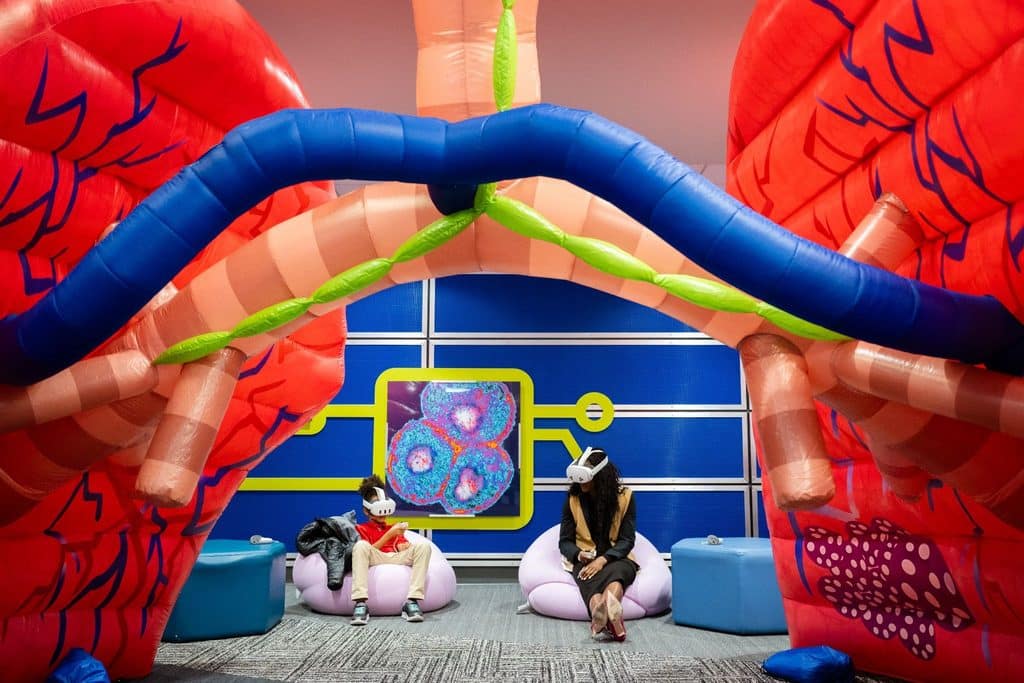
One of the evening’s largest attractions was a giant inflatable model of human lungs. Inside the exhibit, visitors wore virtual reality headsets to explore an immersive experience about breathing and the respiratory system.
Nearby, children gathered around a screen featuring mascot Lungston, who explained what healthy breathing should feel like and how pollution can affect the lungs.
Other activities gave families a closer look at the science.
At a do-it-yourself air cleaner station, visitors saw cardboard boxes fitted with fans and air filters. A demonstration explained different filtration designs and how they can help reduce particles in indoor air.
Microscope stations allowed visitors to examine samples collected from different locations around the science center. Another display showed healthy human lung tissue and explained how tiny air sacs called alveoli help oxygen enter the bloodstream while removing carbon dioxide.
Educational materials also compared healthy lungs with lungs damaged by smoking and explained how airborne particles can contribute to inflammation and respiratory problems.
At another station, families received handouts explaining the Air Quality Index (AQI), a color-coded system used to communicate air pollution levels and associated health concerns.
According to the U.S. Environmental Protection Agency, exposure to air pollution can aggravate asthma and other respiratory conditions. Children are particularly vulnerable because their lungs are still developing and they often spend time playing outdoors.
The handouts encouraged families to check local air-quality conditions and consider precautions during periods of unhealthy air.
Visitors could also participate in an interactive pledge activity, sharing actions they could take to protect the air around them.
The evening also featured a meet-and-greet with Clark Diggs and Diggs, allowing visitors to interact with the athletes outside the planetarium discussion.
Measuring the Reach of Air Quality Education
A 2026 national survey published by ASTC found that many parents are concerned about air quality but do not regularly monitor it.
The survey, conducted in collaboration with Sanofi, found that 87% of parents were concerned about how air quality affects their family’s health, but only 37% said they regularly checked air-quality reports.
The findings also showed that 63% believed their children had already experienced negative health effects from poor air quality, while 84% wanted to do more to address it. Another 31% said they had not taken action because they did not feel informed enough.
Concern about children’s respiratory health was highest among urban parents, at 93%, compared with 84% of suburban parents and 85% of rural parents.
The findings reflect parents’ reported experiences and perceptions, rather than independently verified medical conditions.
Wright said the initiative was designed to help families better understand air quality and how environmental conditions can affect their health.
“We didn’t want to do a one-size-fits-all because that doesn’t help everybody,” Wright said during an interview.
Participating museums develop activities based on environmental concerns affecting their communities, including wildfire smoke, extreme heat and indoor and outdoor pollution.
Wright emphasized that the initiative is focused on education and awareness rather than directly eliminating pollution.
Sanofi has not disclosed a specific funding amount for The Air We Share nationally or in NJ. However, ASTC’s public announcement states that participating museums receive funding, program resources and communications support.
According to Wright, the company plans to measure the initiative’s reach through visitor participation, engagement with activities, and feedback from museum partners. Evidence of long-term changes in participants’ knowledge or behavior is not yet available.
LSC Plans More Programs for NJ Students
Although the Oct. 7 event lasted one evening, LSC has additional activities planned under The Air We Share initiative through 2027.
On Oct. 29, LSC will offer air-quality and respiratory health activities during its MiniMed Day, an educational program for middle and high school students.
In March 2027, LSC plans to host an eight-hour Air We Share Vibeathon, a student challenge facilitated by the museum and several partner universities.
According to Williams, up to 50 teams of middle and high school students, with two to four students per team, will be invited to create public service announcements about how climate change affects air quality and respiratory health.
The challenge will focus on communication rather than requiring students to have coding experience. Academic, industry and media professionals will help participants develop messages that educate the public or encourage community action.
Winning projects will be featured on LSC’s website, during show previews and through its social media channels. Students will also receive their completed projects to share with schools and municipalities. Members of winning teams will receive yearlong family memberships to LSC.
Registration has not yet opened, Williams said.
LSC also plans to work with a third-party evaluator to measure student learning through surveys or interviews before and after the challenge.
In summer 2027, LSC plans to open a temporary Air We Share exhibit featuring a virtual reality experience inside a giant inflatable lung, similar to the attraction available during the Oct. 7 event. The exhibit will include hands-on activities encouraging visitors to explore air quality and ways to protect respiratory health.
Separately, Sanofi and ASTC are developing a broader national Sanofi STEM Challenge. The national program describes two-day local hackathons in which high school students will develop solutions to air-quality problems, with winning teams advancing to a national competition in Boston in 2027.
LSC’s planned eight-hour Vibeathon and the national two-day challenge have different formats and requirements.
Sanofi, which has operated in NJ for more than 50 years, opened a $130 million U.S. office facility in Morristown in May 2025. The company also supports STEM education through partnerships including Students 2 Science and STEM in Baseball Days with the Somerset Patriots.
For Diggs, the message she wanted young people to leave with was simple: the air around them is something everyone depends on, whether they are competing on a track, playing outside or going about their daily lives.
“No one owns the air, so it’s for everyone,” she said.
“The air that I have now is the same air that people in the future have to breathe.”
Author

Related Articles

Gov. Sherrill Pursues New Nuclear Energy For New Jersey Amid Ongoing Controversy
Gov. Mike Sherrill wants New Jersey to go nuclear, and local leaders and organizations have expressed concern over the potential financial and environmental impact.