Op-Ed: NJ Must Continue To Lead On Climate Change Education
Lauren Madden (NJ Spotlight)
In 2020, New Jersey made history, becoming the first state in the U.S. to include climate change in learning standards across subject areas and grade levels. This trailblazing effort, designed to prepare children for the economy of the future, takes children’s thoughts and experiences seriously. Studies have consistently shown that well-structured education about our changing climate reduces eco-anxiety in children. Additionally, it prepares children to think about complex interconnected global issues and sets them up for successful problem solving in all areas.
Educating all K–12 students about climate change is a climate solution that has magnified ripple effects well beyond the classroom. Predictive studies suggest that education programs and strategies have the potential to reduce carbon emissions on scales similar to widespread adoption of solar panels and use of electric cars. UNESCO refers to climate change education as an adaptation lever or tool for connecting scientific knowledge and theory with actionable emission reduction and mitigation strategies for addressing the effects of climate change head on.
But there are new threats to the initiative that must be addressed, including the need for funding and other support to maintain the programs.
New Jersey’s initiative was groundbreaking and forward-thinking and it is essential that we continue to emphasize its importance if we hope to maximize its benefits, bring it to scale, and serve as a model to other states and countries just beginning to address this important topic.
New Jersey’s efforts in climate change education went far beyond simply writing learning standards. The state supported teachers and schools with funding for curricular materials and professional learning. They established a Climate Change Education Unit in the Department of Education, appointed dedicated staff to support the rollout of the new initiative, and set up and funded a comprehensive network of Climate Change Learning Collaboratives (CCLCs). The CCLCs are partnerships of institutions of higher education, K–12 school districts, and nonprofit community-based organizations that work together collectively to provide free support for schools across the state, ensuring all children in New Jersey have access to the kind of learning that builds the kind of thinking needed to innovate solutions to the problems that plague our planet now and in the future.
The CCLCs are now in their third year of operation, and have had adequate time and experience to identify successful strategies and troubleshoot struggles. They have built meaningful networks of supportive professionals and established expertise in this growing field of inquiry. Yet, their funding has been reduced, and this threatens their ability to continue to provide teachers and students with the support they need for excellent climate change teaching and learning.
Our state’s work to lead the nation in climate change education has been emulated by many others including Connecticut, New York, and Illinois, where similar initiatives to include climate change in learning standards have also begun. National conversations among educational researchers have looked to New Jersey’s example as a benchmark.
However, it is uncertain whether we will ever know the true impact of this important work if the state ceases to financially support the initiative. We have an opportunity to create a generative and innovative solution in collaboration with a historic initiative that garnered the world’s attention.
Education Commissioner Laux: please maintain the momentum that set New Jersey on a course to lead the world in climate change education with continued funding and opportunities for teachers and students across our state. Our children, and planet, deserve it.
This story was originally published by NJ Spotlight News through the NJ News Wire.
Related Articles
More Than Just Rain: Understanding South Jersey’s Flooding Problem
Communities need to prepare to avoid future disasters.
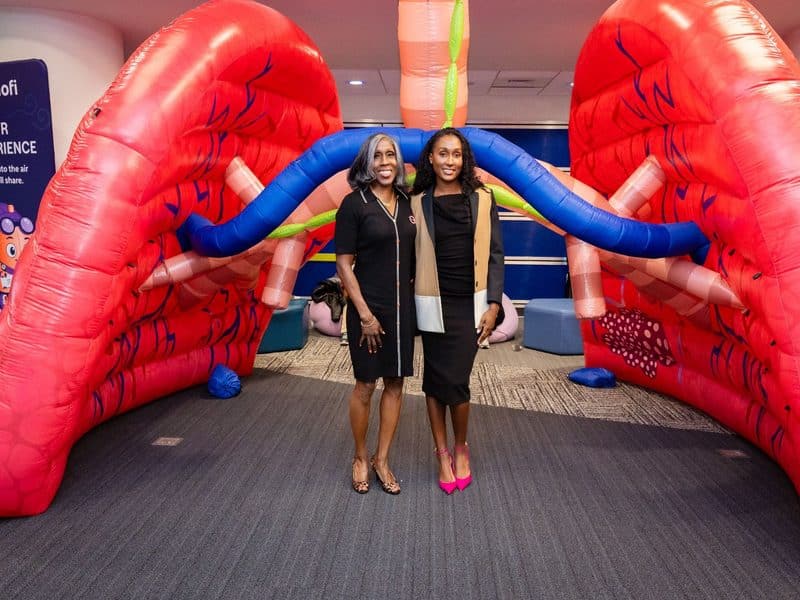
Track and Field Champions Bring Air Quality Lessons to Jersey City Families
Joetta Clark Diggs and her daughter, world champion sprinter Talitha Diggs, joined families at Liberty Science Center for hands-on activities and conversations about how air pollution affects respiratory health.