
After 100 Years, Victoria Foundation Looks To Newark Residents To Shape Its Next Chapter
The Newark-based foundation, which awarded $14.3 million through more than 100 grants in 2025, is focusing on community power, economic justice, youth and neighborhood priorities as it enters its second century.
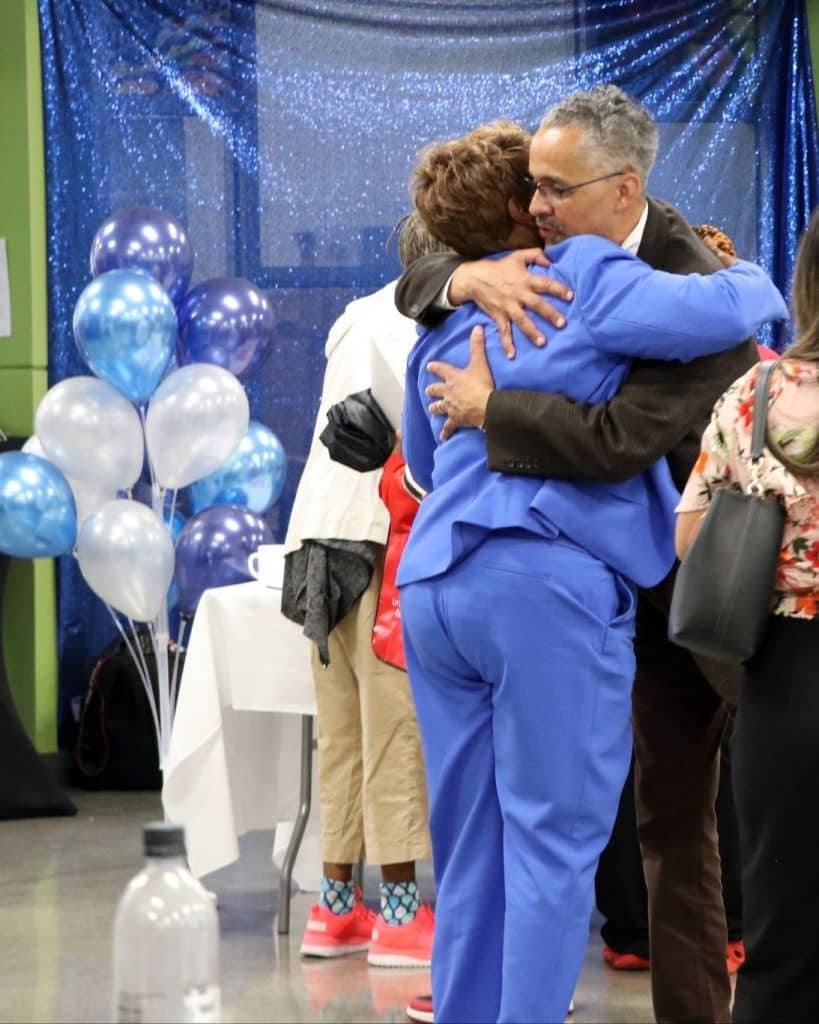
Long before Craig Drinkard became Executive Officer of Victoria Foundation, he was a child growing up in Newark benefiting from its positive impact on his community.
Drinkard grew up in a family with limited resources and had moved nearly six times by the time he was just 13. A subsidized membership allowed him to participate in the Boys & Girls Club, and, at 14, his family found stable housing through New Community Corporation.
Both organizations received support from Victoria Foundation.
“I know what poverty feels like, and I know one of my definitions of poverty is the lack of choices,” Drinkard said.
Today, Drinkard leads the Newark-based private foundation that once helped support him and his family.
Victoria Foundation has invested in Newark-based organizations for decades. In 2025 alone, the foundation awarded $14.3 million to various recipients through more than 100 grants.
Now, its primary goal goes beyond how money is invested into the community; it’s become more important to focus on who has a voice in deciding what Newark communities need.
The foundation prioritizes encouraging residents to use voice, and have a say in creating more economic opportunities, supporting young people, and addressing urgent needs. Victoria Foundation has been meeting with these residents to demonstrate their commitment to hearing their perspectives and allowing them into the rooms that help decide how grant money is allocated.
For Drinkard, who joined the foundation as a program officer before becoming executive officer, Victoria Foundation’s role is not necessarily to be the most visible institution in the room.
“We don’t need to be seen,” Drinkard said. “We need the groups that we support to be vibrant and active and the best form of themselves.”
A Long History in Newark
Hendon Chubb founded Victoria Foundation in 1924 and named it after his mother, Victoria Eddis Chubb. The foundation’s early work focused on healthcare, including opening a Children’s Heart Unit in Morris Plains, before it shifted its focus to funding organizations and community programs.
Its relationship with Newark deepened during the 1960s, when, in 1967, following the Newark Rebellion, Victoria Foundation shifted the majority of its grantmaking focus to the city.
Over time, the foundation became a longtime supporter of Newark-based organizations centered on education, housing, youth development, civil rights and neighborhood revitalization. According to Drinkard, some of those relationships stretch back more than half a century.
By its 100th anniversary in 2024, the Victoria Foundation reported having awarded more than $380 million in grants since its founding.
As the Victoria Foundation entered its second century, Drinkard said the foundation began questioning how it could have an even greater impact. That included looking beyond funding programs that respond to poverty and inequality and considering some of the broader issues that contribute to them, including access to affordable housing, economic opportunity, education, and resources for young people.
“What more can we be doing?” he said.
Asking Newarkers What They Need
One answer has been to spend more time listening.
Through its Thriving Neighborhoods Initiative, Victoria Foundation is focusing on Upper Clinton Hill, Fairmount, and Lower Broadway. Its work in Fairmount and Upper Clinton Hill with Local Initiatives Support Corporation (LISC) New Jersey, a nonprofit that supports community and economic development, dates back to 2016.
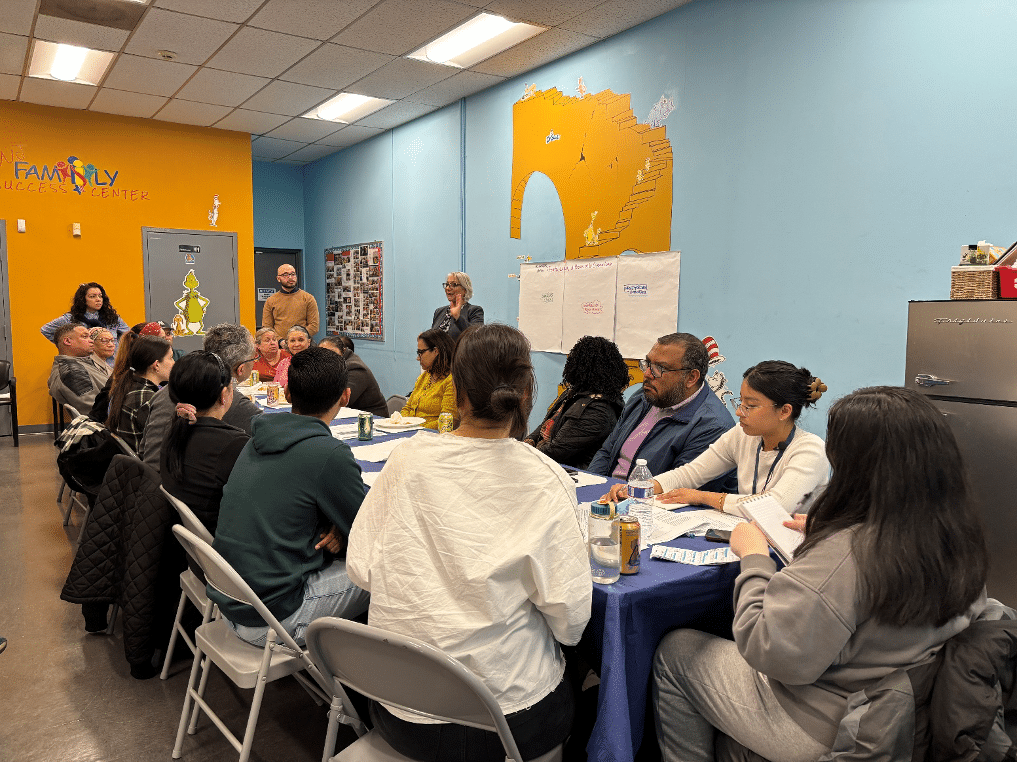
Drinkard said the foundation has held more than 20 meetings with residents and nonprofit partners as it develops its work in the three neighborhoods.
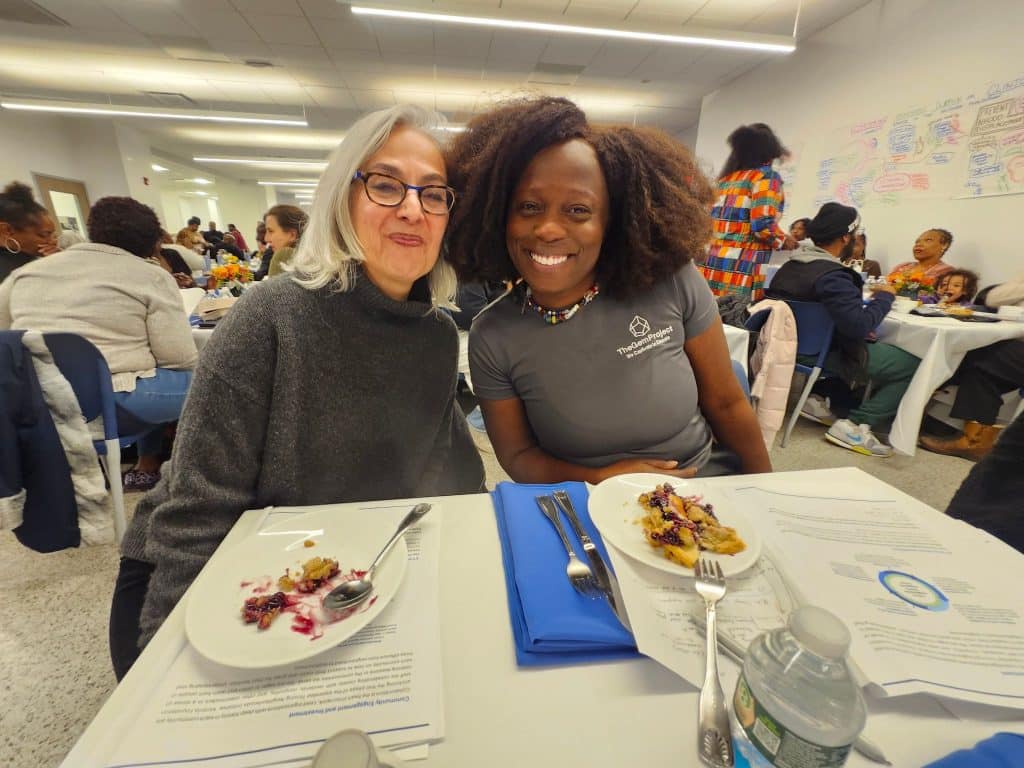
Rather than deciding what those communities need, he said Victoria Foundation wants residents to help shape how its resources are used.
“We’re not in the doing it to people business,” Drinkard said. “We’re trying to do things with the people.”
Those conversations have brought several concerns to the forefront, with housing as one of the leads.
Drinkard said residents have asked for what he described as “real affordable housing,” meaning affordable housing based on what Newark residents actually earn, rather than affordability standards that may remain out of reach for lower-income families.
While many residents who already live independently have expressed interest in more affordable rental housing and homeownership opportunities, young people, in particular, have raised another need of their own: third spaces.
Drinkard said youth have described wanting a “third space,” which is a place outside of home and school where they can spend time with other young people, explore their interests, build community, and have a say in the activities and programs offered there.
Residents have also raised concerns about access to higher education and pathways to careers that offer more than simply getting by.
People want jobs with “thriving wages,” Drinkard said, meaning enough income to move beyond living paycheck to paycheck, pay for opportunities for their children and put money aside.
Housing costs remain a challenge for many Newark residents. The city says more than 75% of residents are renters and that most tenants spend 35% or more of their monthly household income on rent. Newark’s median household income is about $52,000, while median gross rent is $1,392 a month, according to the U.S. Census Bureau.
Dominique Lee, CEO of BRICK Networks, an education and neighborhood improvement nonprofit, and a partner in the Thriving Neighborhoods Initiative, said residents his organization works with have raised similar concerns.
“Through our work in Newark’s South Ward, residents have been clear that they do not simply want programs,” Lee said. “They want access to stable careers, higher wages, quality housing, better health care, and the opportunity to build a stronger future for their families.”
Another Thriving Neighborhoods partner, Maritza Aráuz, executive director of FOCUS Hispanic Center for Community Development, said her organization has helped engage residents in Lower Broadway.
She said residents have consistently raised concerns about economic opportunities, affordable housing, workforce development, youth programming and access to community resources.
“Residents have also emphasized the importance of having a stronger voice in decision-making processes that affect their neighborhoods and the future of their families,” Aráuz said.
Putting Some Funding Decisions in Residents’ Hands
Victoria Foundation is also experimenting with giving residents a direct say in the grant review process. Through Neighbors Helping Neighbors, a partnership between Victoria Foundation and LISC NJ, Newark residents help review applications and determine which neighborhood projects receive small grants.
In July, the program awarded $45,000 to five resident-led projects across Upper Clinton Hill, Fairmount Heights, and Lower Broadway.
The latest round attracted 55 applications. Individual awards ranged from $2,500 to $5,000.
Since launching in 2018, Neighbors Helping Neighbors has awarded more than $300,000 to more than 50 projects, according to Victoria Foundation.
Drinkard said Victoria Foundation plans to continue the program for several cycles before deciding whether changes are needed based on what it learns from residents and community partners.
“We want to learn from the Neighbors Helping Neighbors grantmaking process,” he said in a written follow-up. Quadeer Porter, a Newark resident and founder and executive director of Brothers Building A Better Nation, a mental health and mentorship nonprofit, experienced the program from both sides. After receiving a Neighbors Helping Neighbors grant in 2024, Porter later participated in reviewing applications from organizations in Lower Broadway.
Porter said residents had a meaningful voice in the grant selection process.
“Having residents help determine where resources are invested ensures that funding decisions are informed by people who understand their neighborhoods, the challenges residents face, and the organizations doing meaningful work on the ground,” Porter said.
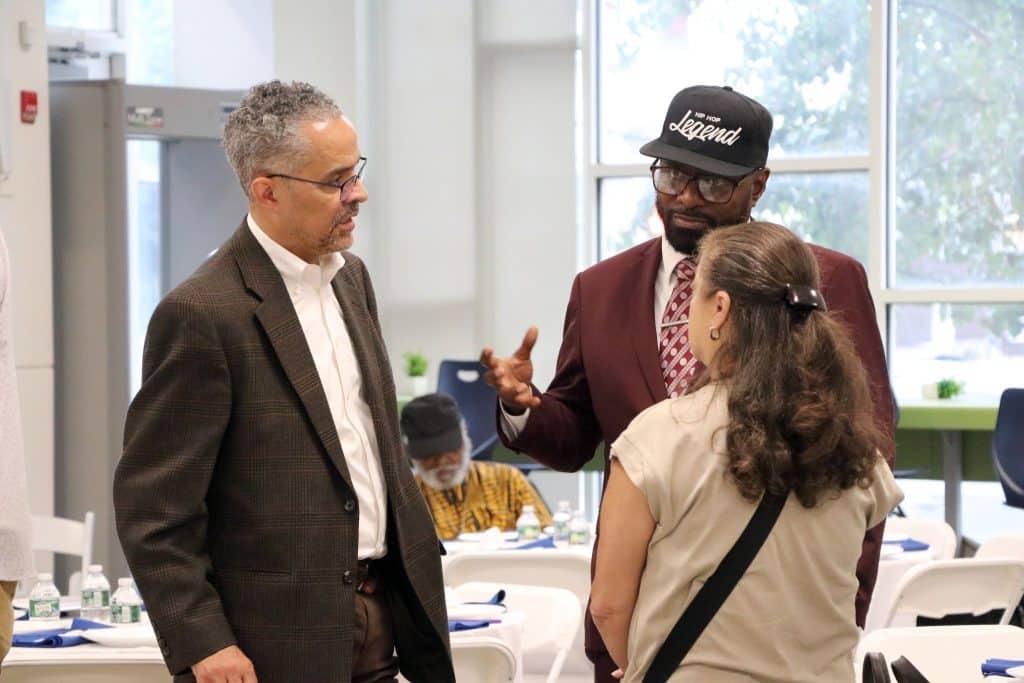
Victoria has also experimented with giving young Newarkers a role in funding decisions.
In 2023, Victoria Foundation’s NextGen Grantmakers gave nine Newark youth a role in deciding how $50,000 in grants would be distributed. Working with The Gem Project, they developed the funding criteria, application, and selection process. From 24 applications, they selected three Newark nonprofits, awarding $20,000 each to Maroon Theatre Project and SHE Wins, Inc., and $10,000 to Leaders of the 21st Century.
Drinkard said Victoria Foundation has not yet determined whether NextGen will return. The foundation’s broader youth work now falls under its Youth Self-Determination strategy, which focuses on giving young people a greater voice in shaping opportunities and decisions that affect them.
In July, Victoria Foundation hired Sanaz Hojreh as its new Youth Self-Determination Strategy Officer. Drinkard said the foundation expects to share more as Hojreh shapes the direction of the work.
Longtime Partnerships Across Newark
Victoria Foundation’s focus on its three priority neighborhoods does not mean it has stopped funding organizations serving other parts of Newark.
Drinkard said the foundation continues to support longtime community organizations whose work reaches residents across the city.
Victoria Foundation’s legacy includes relationships with organizations such as New Community Corporation, La Casa de Don Pedro, Ironbound Community Corporation, the Urban League of Essex County, and Unified Vailsburg Services Organization.
One of its longest relationships is with FOCUS Hispanic Center for Community Development. Aráuz said FOCUS’s relationship with Victoria Foundation dates back to 1969, two years after FOCUS was established.
“Our experience with Victoria Foundation has evolved beyond a traditional funder-grantee relationship into a true partnership grounded in mutual trust, open communication, accountability, and a shared commitment to Newark,” Aráuz said.
Drinkard said maintaining those relationships through periods of growth and difficulty is one of the things that drew him to the Victoria Foundation when he joined 20 years ago.
“We strive to do our philanthropy with dignity,” Drinkard said.
He said Victoria Foundation does not need its name on buildings, recognition at galas or attention for the work its partners carry out.
Instead, he said, the goal is to help give residents more choices and opportunities for themselves and their families.
What Comes Next
Victoria Foundation’s work is still evolving.
The foundation plans to bring residents from its three priority neighborhoods together again in December, following earlier meetings where community members expressed a desire for more opportunities to remain connected. An exact date has not been finalized yet.
At the upcoming gathering, Drinkard says the foundation plans to report on what it heard from residents, explain how resources will be mobilized in response, and discuss upcoming initiatives.
Victoria Foundation is also planning to develop a neighborhood engagement calendar for 2027, which will help establish goals for the next several years and determine how progress should be measured.
Porter said one challenge is not necessarily a lack of resources in Newark, but how well those resources are connected across housing, education, workforce development, behavioral health and other services.
“We are resource-rich but often coordination-poor,” Porter said. He said stronger collaboration among organizations and service providers could help residents better access the support available to them.
Drinkard said the process is expected to involve residents and community partners, including creating ways for them to tell Victoria Foundation when it is falling short of its promises.
“We still got to hear from partners saying, ‘Ah, you’re not really doing that. You said this, but you’re really not living into that yet,’” Drinkard said.
For a foundation that has operated for more than a century, Drinkard said the next stage will continue to involve learning and making mistakes.
But he said Victoria Foundation does not want those mistakes to come from assuming it knows better than the communities it serves.
“Where we are today is one, but we’re not satisfied or resting on where we are now,” Drinkard said. “How do we continue to grow and learn with the community?”
Author
Related Articles
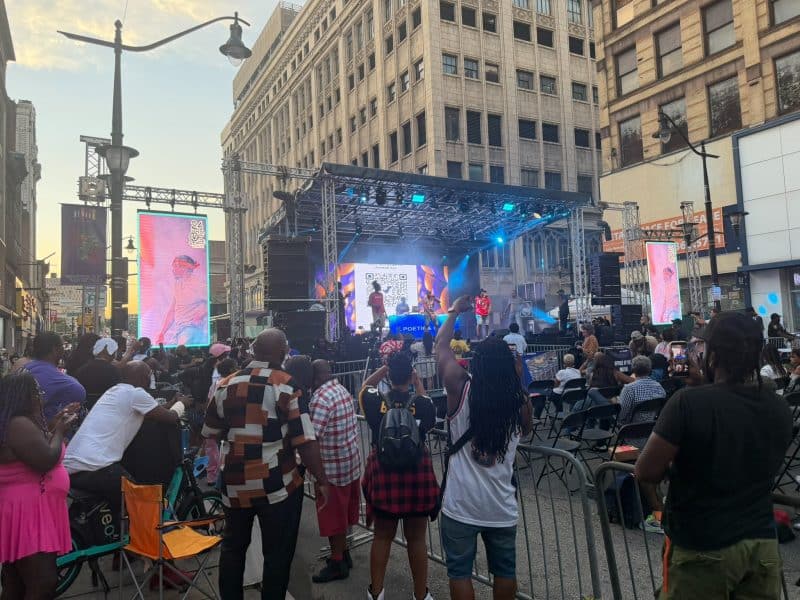
Newark’s 24 Hrs. of Peace Brings Music, Resources and Community Together
The 16th annual event capped Newark Peace Week with special performances and local business and community spotlights as the city reports a sharp decline in homicides.
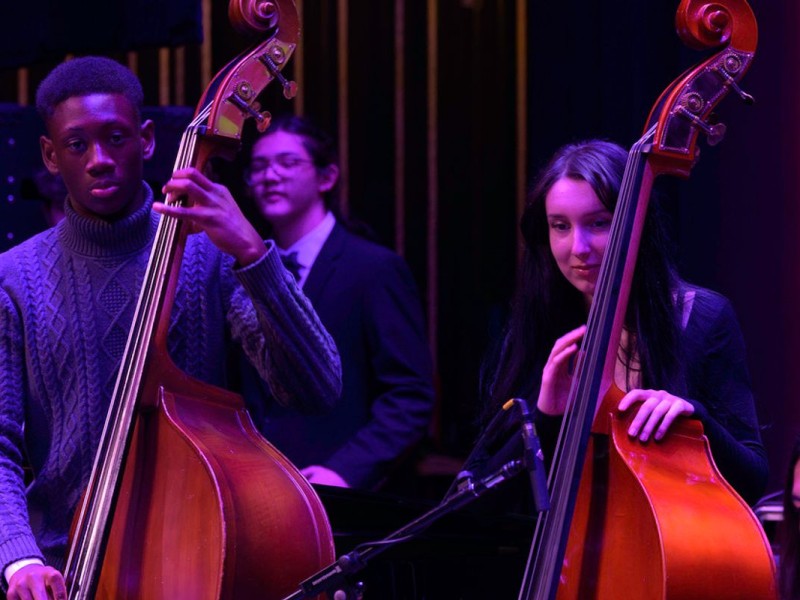
A New Year For Jazz Students At NJPAC Music Program
Registration opens with new opportunities for TD Jazz for Teens 2026-27 year.