Life With Depression As A Person Of Color In New Jersey
Depression is a common mental disorder that can have serious ramifications. Approximately 14% of New Jersey residents have the disorder. This article presents a perspective from a New Jersey resident with depression as well as multiple experts.
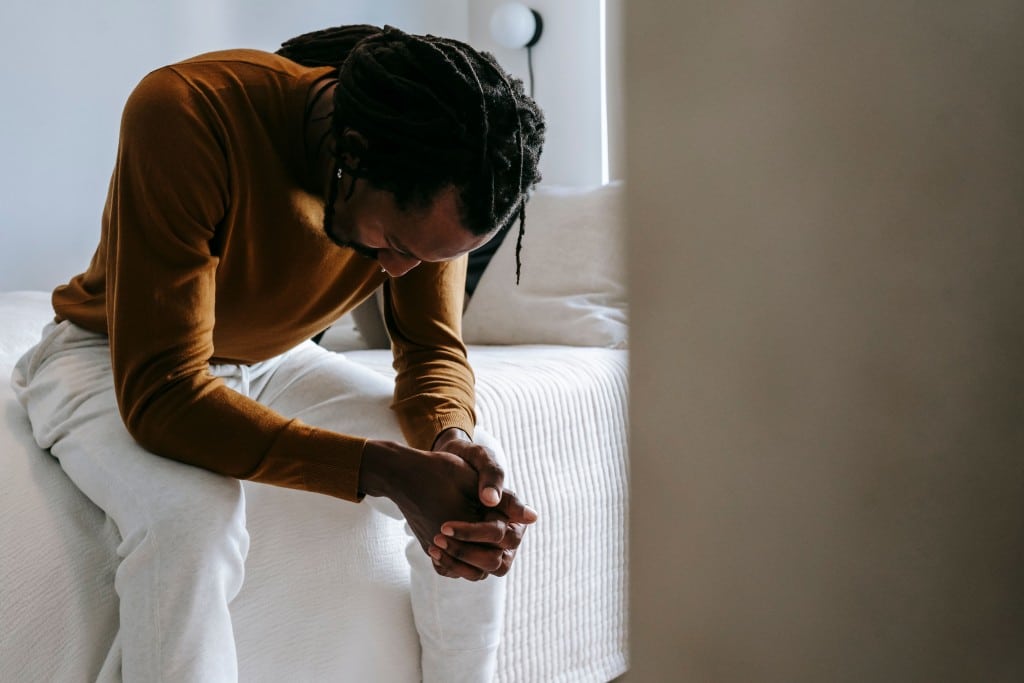
The date was December 3, 2020. A 31-year-old, Bari Hunter, was asleep in his bed in Newark. Suddenly, he woke up to his four-month-old son Jordan crying. When he went to feed his baby, he realized the baby was no longer there.
“I opened my eyes, and I saw him at the end of my bed with this guy holding him, and the guy told his friends, ‘knock me out, put me back to sleep’,” Hunter said. “And he hooked me. When he hooked me, he didn’t knock me out, so I tried to get up. One grabbed my leg, the other jumped on top of my shoulders and put a pillow on my face.”
Hunter survived the ordeal, but Jordan was not as lucky. Within days of the murder, police came to Hunter’s house and arrested him as a suspect in the murder. Police later released Hunter without charges, but the trauma of losing his son and briefly being treated as a suspect left him struggling with depression.
“When I realized (it was depression) is when I had to cremate my son a week before my birthday,” Hunter said. “It’s something I won’t ever forget.”
Hunter’s experience reflects a broader challenge facing many Black New Jerseyans. While depression affects people of every race and background, mental health professionals say stigma, systemic inequities, and barriers to culturally responsive care often make it harder for people of color to seek treatment.
Background on Depression
Depression, as defined by the World Health Organization, “involves a depressed mood or loss of pleasure or interest in activities for long periods of time.”
Anybody can develop depression. Per New Jersey State Health Assessment Data, 13.7% of New Jersey adults had been diagnosed with the condition as of 2024. The percentage of Black people in the state with depression is nearly equal, at 13.8%. This is the second largest percentage, trailing only White adults with 16.6%. Hispanic and Asian adults are represented as well, with 11.4% and 8.8%, respectively.
Per the same source, the prevalence of depression among Black adults went up by 2.7% from 2023. In the same time frame, the percentage went down by 0.8% for White adults and 1.5% for Hispanic adults. Additionally, the suicide rate for Black Americans increased by 53% from 2014 to 2024, according to Capital B News.
Tahira Rodriguez, a professional counselor, described a “significant portion” of her clientele as people of color.
“Black and Hispanic individuals often experience additional stressors that influence how depression develops and how it is expressed,” Rodriguez said. “Many navigate systemic inequities, discrimination, financial stress, and the pressure to work harder for the same opportunities. There can also be cultural expectations to remain strong, prioritize family needs, or avoid discussing emotional struggles.”
Rodriguez went on to describe the stigma around mental health in many communities. Being perceived as weak, being told that “praying more” and “pushing through” are the only options, or keeping personal struggles within the family are reasons she named for why people do not always get help.
For Hunter, faith helped him through the loss of his son.
“I never gave up on God; I never blamed Him for what happened,” Hunter said, “that’s bad for me.”
But as Rodriguez would note, getting help is not one-size-fits-all. Rodriguez takes the time to understand the backgrounds, values, and experiences of every individual candidate.
“Rather than assuming what someone’s experience has been, I invite clients to tell their own story,” Rodriguez said. “We explore how culture, identity, and community influence the way they cope, communicate emotions, and view mental health. When clients feel seen and understood, they are often more willing to engage in the therapeutic process.”
What Can Be Done to Help?
Gardening is what got Hunter through the loss of his son. While the garden is Hunter’s sanctuary and planting is his peace, he shares Rodriguez’s philosophy that not one size fits all. While regularly gardening all sorts of plants have helped him recover, he knows not everyone would want to do that particular activity.
“There’s something out here for everybody that feels like they are worthless,” Hunter said. “There’s a lot of things out there that are positive for people instead of everybody thinking down about themselves.”
It is through a community garden that Hunter met Bilal Walker. Walker is a public health advocate in northern New Jersey who is a full-time consultant for schools, as well as grassroots and nonprofit organizations.
As for professional help, Walker and Rodriguez both believe that culturally competent care is crucial.
“Historically, Black and Brown folks have had a necessary distrust for the medical system, given its overwhelming lack of Black and Brown presence (of social workers and patient health care representatives,” Walker said. “We’re underrepresented in the (health care) workforce, so that in and of itself is an issue.”
Walker also shared Rodriguez’s belief that stigmatization is a significant struggle.
“Some doctors have incorrectly concluded that Black people have a higher threshold for pain,” Walker said. Walker elaborated that, in his eyes, that information has been internalized and therefore Black people have been forced to hold things in.
The two experts had different beliefs in how society can make life more livable for Black people with depression. For Rodriguez, destigmatizing mental health is the best option.
“We need to continue normalizing conversations about mental health, especially within communities where stigma remains strong,” Rodriguez said. “Increasing access to affordable mental health services, expanding insurance coverage, and investing in culturally responsive care are all important steps.”
Hunter agrees with Rodriguez on the importance of discussing mental health. He mentioned the physical ramifications, such as a heart under constant stress, of holding in mental health.
Rodriguez added that institutions in society, such as schools, workplaces, and faith communities, can help destigmatize by encouraging dialogues. Walker, however, believes that these efforts must come from the government. Primarily, in Walker’s opinion, it must be in the form of reparations for the systemic racism Black people were put through.
“You need to focus on getting African descendants of slavery reparations,” Walker said. “We need to repair the trauma that has been so deeply ingrained in our neighborhoods, in our minds, in our hearts. So many of us live in poverty, and that’s a huge factor (in getting services).”
Other solutions can come from people with depression who need help getting it. There are many support groups, such as the African American Community Together NOW initiative, that allow struggling Black people to be among people who understand them.
Walker has worked with the community organization My Brother’s Keeper Newark that seeks to improve educational and workplace development for young Black men. Crisis resources, such as the 988 suicide hotline, are always available, and organizations such as BlackMenHeal and PsychologyToday help put people in contact with culturally competent therapists.
Today, Hunter still carries the pain of losing his son, but tending his garden has become part of his healing. On top of that, Hunter, a father of nine, continues to show up for his other children.
“I have to show them that life is more important than what they see it as,” Hunter said. “The thing that keeps me pushing is my kids.”
He hopes that by sharing his story, others struggling with depression, especially Black men who may feel pressure to suffer in silence, will recognize that asking for help is a sign of strength, not weakness.
Author

Related Articles
Lamp For Haiti Marks 20 Years Of Bringing Healthcare To Cité Soleil
The Haiti-focused nonprofit is celebrating two decades of providing healthcare in Cité Soleil as rising needs put new demands on its medical programs.
Have The Conversation
Why Black men should talk with their clinicians about prostate cancer risk before symptoms appear