Bayway Refinery Workers Ratify Agreement After Two-Week Lockout in Linden
Nearly 400 Teamsters faced weeks of uncertainty as contract negotiations raised questions about worker protections, refinery safety and solidarity across New Jersey’s labor movement.
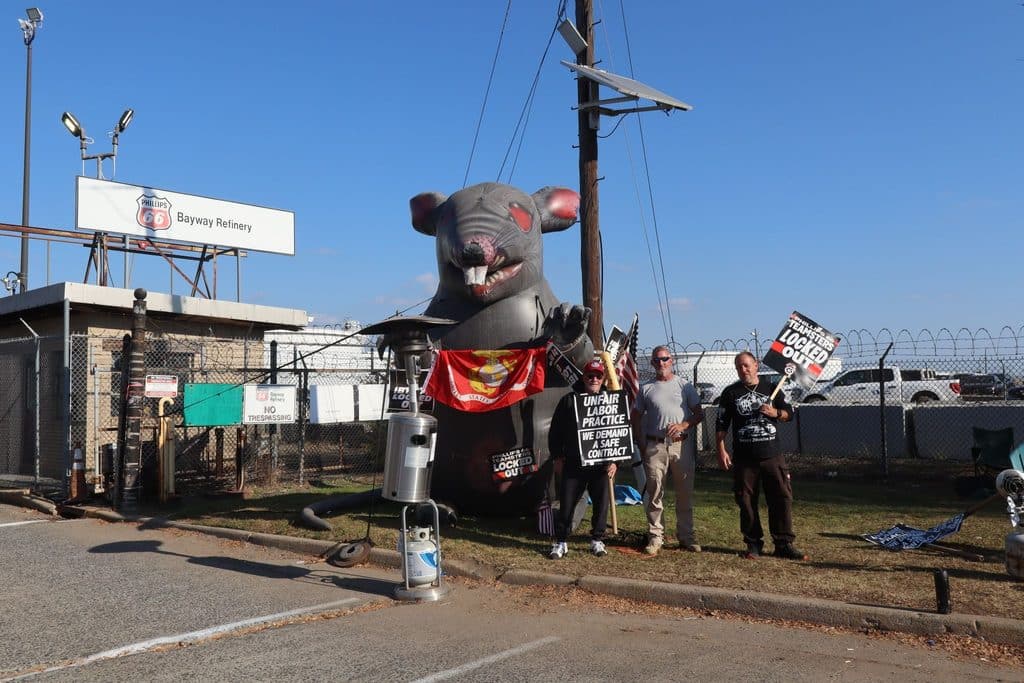
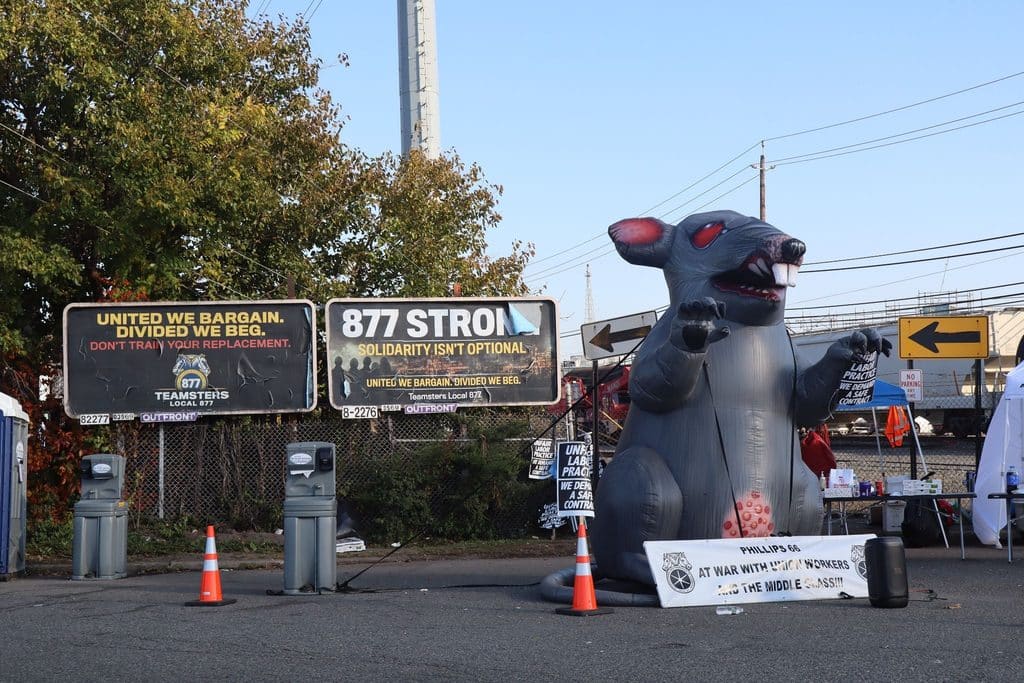
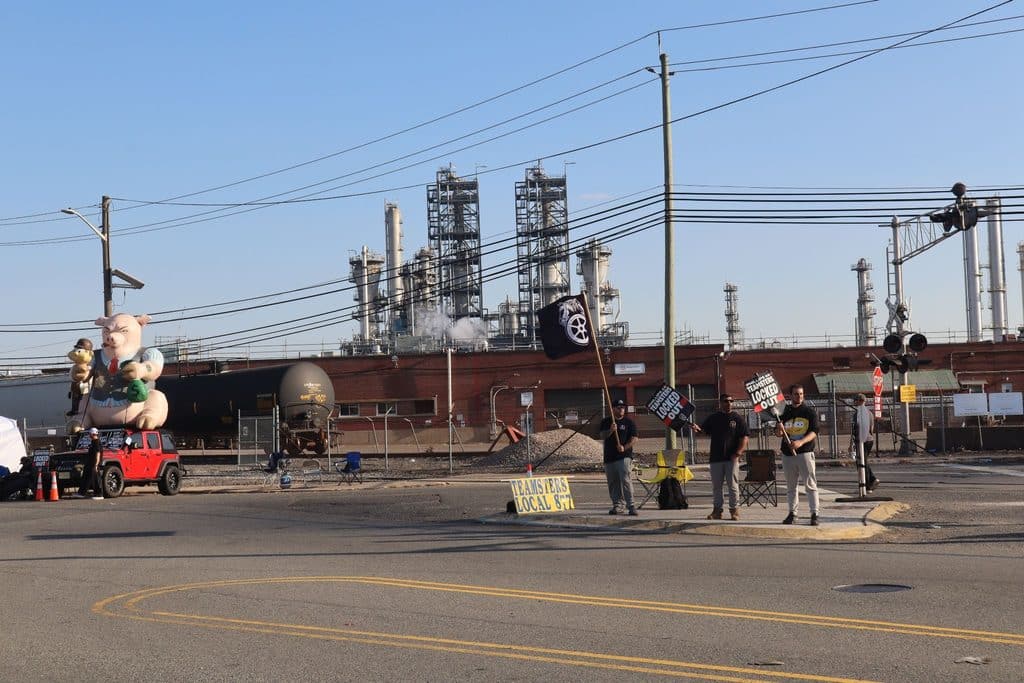
For two weeks, the workers who ordinarily help operate one of the East Coast’s largest oil refineries instead stood outside its gates, carrying signs, walking picket lines and waiting for a contract that would allow them to return to work.
On Monday, Nov. 2, members of Teamsters Local 877, the union representing workers at the Bayway Refinery and Linden Terminal, ratified a new collective bargaining agreement with Phillips 66, a Houston-based energy company that operates the facilities.
The company confirmed that the agreement covers refinery operations and maintenance employees and workers at Linden Terminal. Both sides plan to meet in the coming days to discuss the return-to-work process, but no date has been announced.
The vote followed an Oct. 19 lockout that kept nearly 400 union-represented employees from working at the Bayway Refinery and Linden Terminal after negotiations over wages, benefits and workplace protections stalled.
The dispute also extended beyond the refinery gates, prompting public safety concerns from Linden officials and drawing support from members of other labor unions.
How the Lockout Unfolded
On Sept. 29, the International Brotherhood of Teamsters (IBT), the international labor union representing workers across multiple industries, announced that 92% of eligible voting members of Local 877 voted to authorize a strike.
The workers’ contract expired Oct. 1, but a temporary extension allowed them to remain on the job while negotiations proceeded.
Union members later rejected an initial tentative agreement. When the extension expired at 4 p.m. Oct. 19, Phillips 66 locked out the workers.
A strike occurs when employees stop working to incentivize change during a labor dispute. A lockout, however, occurs when an employer prevents employees from reporting to their jobs during said labor dispute.
Negotiations continued through October, until Oct. 28 when the two sides reached another tentative agreement, according to News 12 New Jersey.
In a Nov. 1 email, Teamsters Local 877 President Jeff Sanford said approximately 400 locked-out members were voting on the proposed seven-year contract, which included raises he described as being under the National Oil Bargaining Program (NOBP) and lump-sum signing bonuses.
The NOBP is an oil-industry bargaining framework associated with the United Steelworkers.
The agreement was approved by a vote of 264-102, according to ratification results reviewed by NJ Urban News. Approximately 72% of the 366 votes cast supported the agreement.
“Even if the TA is ratified late Monday our picket lines will remain until all members return back to their positions,” Sanford wrote, referring to the tentative agreement.
Sanford also said a separate tentative agreement had been reached for laboratory employees, with a vote expected the following week.
Workers Sought Better Benefits and Safety Protections
The dispute centered on more than pay.
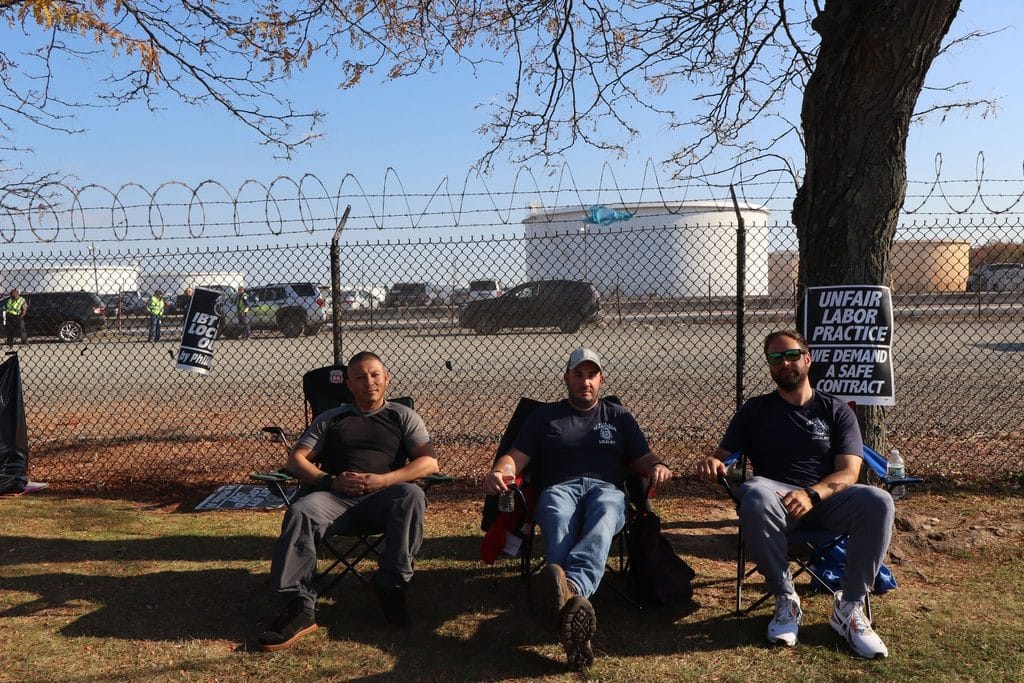
The Teamsters said workers wanted stronger health benefits, reliable paid time off and protections against fatigue from extended work schedules.
In its September statement, the union criticized an attendance policy introduced in 2025 that it said could result in discipline, including termination, for illness-related absences.
The union also objected to proposed changes affecting employee training and qualification requirements.
Sanford told News 12 that some employees worked 13-day stretches with limited time off, making fatigue protections a bargaining priority.
During visits to different refinery gates, NJ Urban News sought interviews with locked-out Local 877 members but was unable to obtain individual comments. Workers indicated they had been advised not to speak with the media, although the source of that guidance was not independently confirmed.
During the lockout, the refinery and terminal continued operating with experienced supervisors, engineers and technical personnel, according to Phillips 66. The company declined to say whether additional workers were brought in from Texas or elsewhere, citing its policy against discussing staffing during contingency situations.
The company also declined to disclose specific compensation and benefits provisions in the ratified agreement, leaving unanswered whether the contract changed sick leave, overtime, fatigue management or training requirements.
The company also acknowledged the effect of the lockout on workers and their families.
“We recognize that this has been a difficult and uncertain period for them, their families and others in the community,” the company said.
Why Bayway Matters Beyond Linden
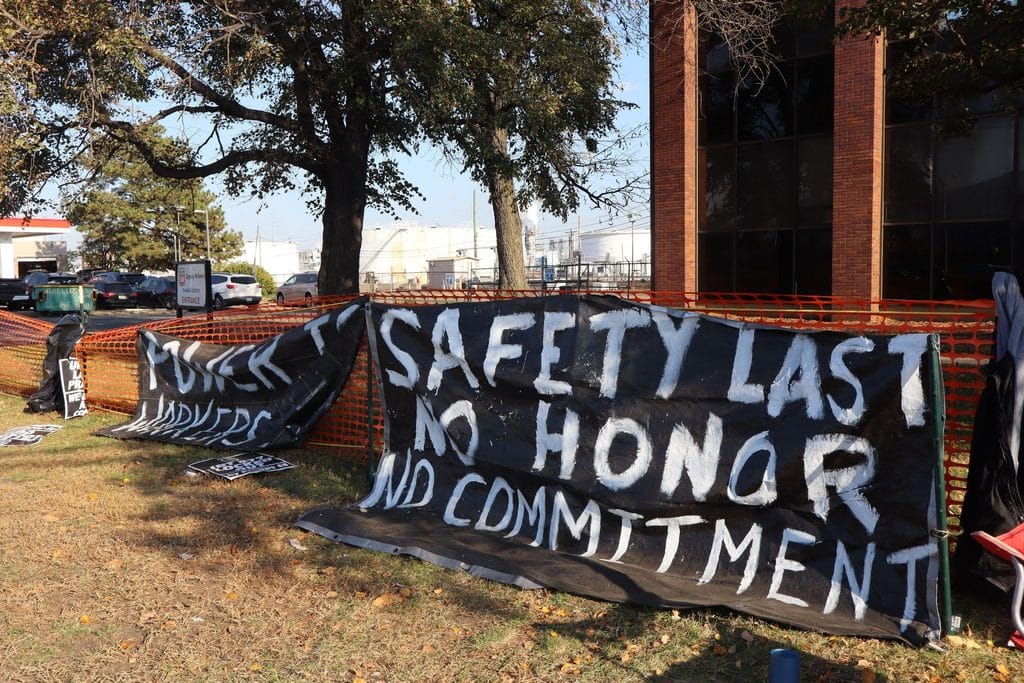
First built in 1909, the Bayway Refinery occupies approximately 1,235 acres in Linden and employs about 695 people, according to Phillips 66.
The refinery has the capacity to process approximately 275,000 barrels of crude oil per day, producing gasoline, diesel, jet fuel, heating oil and other petroleum products. Those products are distributed to customers along the East Coast by pipeline, ship, rail and truck.
Bayway also supplies jet fuel to Newark Liberty International Airport, according to CBS New York, highlighting how crucial their work is for sustaining vital infrastructure in the area.
The facility’s economic importance extends beyond Linden. A 2025 economic impact analysis prepared by the New Jersey Institute of Technology, a public research university, for the New Jersey Business & Industry Association, a statewide business advocacy organization, estimated that the broader Bayway Industrial Complex generated $21.3 billion in statewide economic output and supported 12,091 jobs in 2023.
The analysis included five companies operating at the complex: Phillips 66, Infineum, Nexpera, Linden Cogeneration and Sunoco. Its employment estimate included approximately 1,600 direct on-site jobs, along with thousands of additional jobs supported through suppliers and workers’ household spending.
The findings reflect the economic impact of the entire industrial complex, not just Phillips 66 alone.
Linden Mayor Raises Public Safety Concerns
The lockout also raised questions about emergency preparedness.
In an Oct. 21 statement released by the City of Linden, Mayor Derek Armstead expressed concern that some locked-out workers ordinarily served on the refinery’s fire brigades and oil spill response teams.
“The people of Linden deserve to know that their safety is not being compromised because of a labor dispute,” Armstead said.
He requested assurances about emergency staffing, fire suppression, hazardous materials response and coordination with municipal emergency services.
Bayway Refinery Vice President Donald Susanen previously told News 12 that the facility remained fully staffed without reductions in responsibilities.
In a Nov. 3 response, the company reported that production remained consistent with pre-lockout levels and that no operational issues or safety incidents had been reported during the dispute.
The company did not directly answer whether it provided Armstead with the requested emergency preparedness briefing, instead reiterating that its facilities maintained the personnel, training and resources necessary to respond to potential emergencies.
Support Extends Across Union Lines
The picket lines attracted support from industries and workers far removed from oil refining.
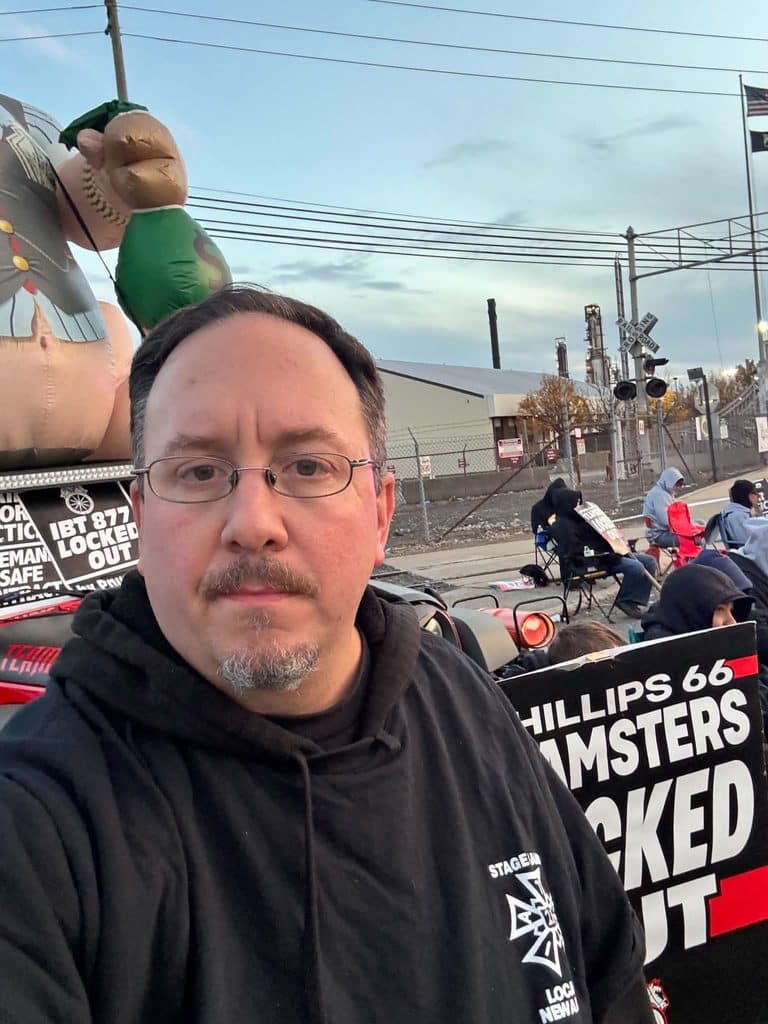
Jonathan Molitor, volunteer political coordinator for the International Alliance of Theatrical Stage Employees Local 21, a labor union representing entertainment industry workers, said members supported the Teamsters to demonstrate solidarity across organized labor.
Molitor said several Local 21 members live near Linden, while others travel past the refinery on their way to entertainment venues.
The union learned about the lockout through the New Jersey State AFL-CIO, a statewide federation of labor unions, and personal connections, he said.
“It was impressive to witness the determination and camaraderie of those on the picket line,” Molitor said.
He recalled motorists honking their horns in support after politicians and television crews had left.
Molitor also connected the labor dispute to the importance of civic participation.
“In fights like the Bayway refinery lockout, showing up is a way to reclaim power,” he said. “That power is amplified when people who don’t normally show up to picket lines show up to demonstrate.”
The New Jersey State AFL-CIO also publicly encouraged affiliated unions to join the Bayway picket line.
A History of Labor Disputes at Bayway
Bayway’s labor history stretches back decades.
According to Local 877’s historical account, refinery workers walked off the job Oct. 13, 1964, during a dispute under the facility’s former ownership.
The work stoppage lasted 101 days. During that period, employees voted to affiliate with the IBT.
Some union leaders later described the 1964 confrontation as a company-forced lockout, although workers initially walked off the job.
More than six decades later, Bayway workers have ratified another labor agreement following a prolonged dispute. As of Nov. 3, the return-to-work date remained unresolved, with Phillips 66 saying the company and union would meet in the coming days to determine the next steps.
Author

Related Articles
EMS Providers Demand Lawmakers Make Ambulance Services Required
Emergency responders are calling on NJ lawmakers to make EMS essential, increase funding, create a statewide plan, and offer more suitable pensions.