NJ Budget Deal: Gov. Sherrill, Leaders Agree on $60.7B Spending Plan
The framework vows to preserve StayNJ property tax relief and expand child tax credits, but specific program cuts remain under wraps ahead of the June 30 deadline.
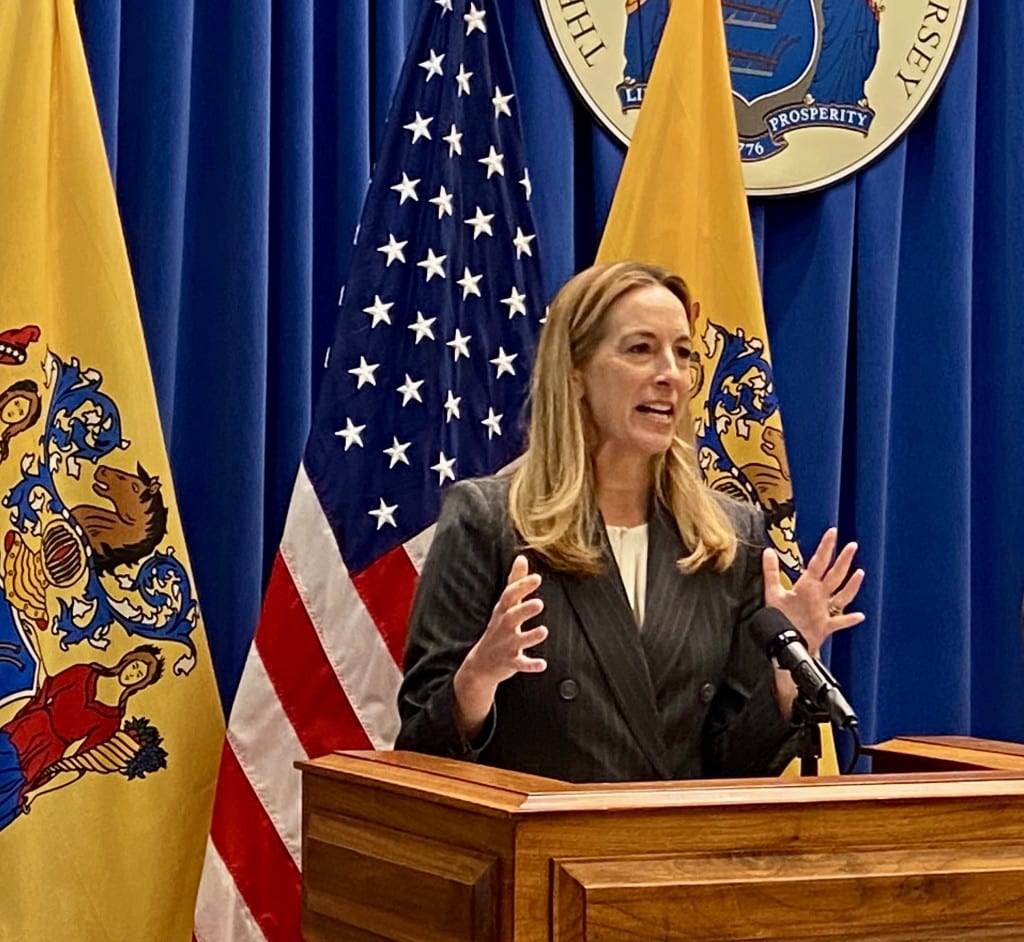
Photo credit: Deborah Howlett / NJ State House News Service
By Devon Williams (NJ State House News Service)
TRENTON, N.J. – Gov. Mikie Sherrill and legislative leaders announced Tuesday they reached an agreement on a $60.7 billion budget.
But they offered few details on the spending plan beyond a broad framework that cuts the state’s structural deficit in half and preserves some property tax relief through StayNJ, a program that targets older homeowners and is promoted by Speaker Craig Coughlin.
The Constitution requires that the legislature must pass a budget by June 30.
In March, Sherrill proposed $2 billion in state cuts, including $500 million to StayNJ by lowering the qualifying income eligibility to $250,000 annually. The agreement announcement did not specify if the cap would change from the current $500,000 annual income threshold.
“The $60.7 billion budget provides tax relief to New Jerseyans who need it most while investing in our shared future with an expanded Child Tax Credit benefit for families. It offers the most property tax relief in the state’s history, ensuring StayNJ is a sustainable benefit retirees can count on,” said the statement from Sherrill, Senate President Nick Scutari and Coughlin, both Democrats.
The agreement also promises unspecified, expanded Child Tax Credit benefits for families.
While expanding these benefits, the budget also “cuts the state’s structural deficit in half,” continues to fund pensions and increases the budget surplus that the state believes is needed to “fight the Trump Administration’s unprecedented attacks on Medicaid, food assistance, affordable healthcare, and jobs.”
The agreement left many questions unanswered, including the timeline by which the budget will be introduced in the Assembly, transit funding, whether the governor’s proposed $372 million increase in funding for K-12 public schools is part of the deal, and what programs were cut or reduced to slash the structural deficit.
In March, Sherrill called her plan an “affordability budget” marked by tough fiscal choices.