Why Is The Government Shut Down? Partly A Fight Over Healthcare
Medicaid cuts and expiring ACA subsidies could leave many New Jersey families without vital health coverage.
By: Benjamin J. Hulac, Washington Correspondent
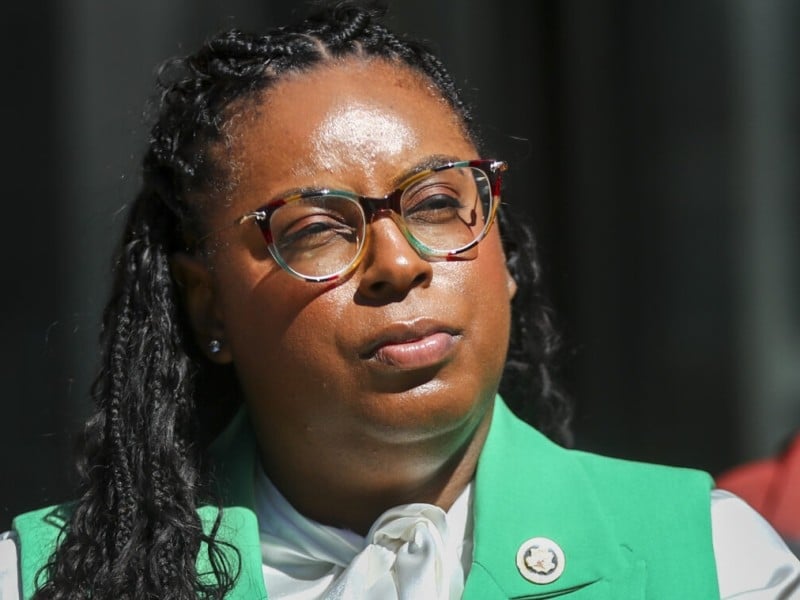
WASHINGTON — Money is tight for Theresa Luoni. A single mom to twin boys with autism, Max and Dylan, who are 13, she relies on federal help for their health, education and day-to-day costs.
Luoni, 43, doesn’t wear contacts every day. She spends $35 a month on generic brand contacts.
“I don’t wear them every day so that I can skip two months a year,” Luoni, of Basking Ridge, said in an interview with NJ Spotlight News. “I only wear them on days that I drive,” she said. “I don’t see every day.”
In the wake of the government shutdown, which arrived last week after negotiations in the Republican-controlled Congress and with the White House crumbled, the legislative fight over reopening the government is anchored around people like Luoni, who relies on Medicaid, the federal health insurance program for the poor and disabled, for her kids.
Impending cuts to Medicaid from a new Republican budget law — signed into law by President Donald Trump in July, the bill cuts $1 trillion from the program — will affect New Jersey’s ability to provide medical care to all no matter the status of medical coverage. And it will drive up costs for the broader public as patients turn to emergency rooms for medical attention, experts said.
Leaning on a rare point of leverage they have under a Republican trifecta — the GOP holds majorities in both chambers of Congress and possesses the presidency — Democrats in the funding talks are negotiating for more Medicaid money.
Democrats’ leverage
Democrats are also pushing for Congress to extend tax subsidies for the state-run health insurance markets created through the 2010 health law commonly known as Obamacare.
Because funding bills require 60 votes to clear the Senate, where Republicans hold 53 seats, the Republicans must find seven or more Democrats to pass a bill to reopen the government.
Hospital-at-home, telehealth programs on hold amid government shutdownMost Republicans, including those in leadership, have shown little interest in either idea, though Reps. Jeff Van Drew (R-2nd) and Tom Kean Jr. (R-7th) support legislation to extend the subsidies a year.
Unless Congress acts, those subsidies will expire at the end of the year, leading to an average cost increase in New Jersey of 15.9% for those who obtain coverage through the 2010 health law. Approximately 454,000 people in New Jersey receive coverage through that law.
Speaker Mike Johnson, a Louisiana Republican who leads the House and sets the legislative agenda in that chamber, said in a CNN interview there is ample time to debate ACA subsidies.
“That’s a December policy issue,” Johnson said, adding that the subsidies do not expire until the end of the calendar year.
Republicans have proposed a bill to reopen the government for seven weeks, a window that would allow members to negotiate and pass legislation that runs through September 2026, when the current budget cycle will end.
“The month of October is going to be very important for us to determine all those things,” Johnson said.
Though the subsidies expire on Dec. 31, insurance customers and patients are making plans now and the health insurance enrollment period starts in November.
Looming premium hikes
Asked about insurance companies’ timelines to set their prices, Johnson said there was lots of time on Capitol Hill.
“Insurance companies can make different decisions,” Johnson said. “There’s plenty of time on the clock,” calling it an “eternity in legislative terms to have three months” to address the ACA benefit expiration.
Seventy-eight percent of the public wants Congress to extend those tax credits, directed to those with low and moderate incomes, according to a survey KFF, a nonprofit health policy research, polling and news organization, published Friday.
Majorities across political parties want Congress to extend the benefits, KFF found — 92% among Democrats, 82% among Independents and 59% among Republicans.
“There is a hot debate in Washington about the looming ACA premium hikes, but our poll shows that most people in the marketplaces don’t know about them yet and are in for a shock when they learn about them in November,” KFF President and CEO Drew Altman said in a statement.
Sen. Andy Kim slams GOP government shutdown, accuses Trump of ‘lawlessness’ In a different analysis, KFF found the insurance premiums of those enrolled will increase on average by 114% in 2026.
Though an electorate apparently angered by immigration and high costs drove Trump back to the White House for his second term, the administration is opposed to extending ACA incentives.
Much of its focus during the shutdown has landed on cancelling federal funding for left-leaning states, like New Jersey, including money for a significant rail tunnel beneath the Hudson River.
“We’re going to look at agencies that don’t align with the administration’s values, that we feel are a waste of the taxpayer dollar,” Karoline Leavitt, the White House press secretary, told reporters last week.
Enrollment under the 2010 law hit an all-time high this year, reaching 24.3 million people, a sharp jump from the 11.4 million enrolled in 2020.
The majority of that growth came from states Trump won in 2024, according to KFF, which found the top 15 states where health coverage under the ACA has grown most were all states the current president won in the presidential election last year.
In New Jersey, enrollment reached about 513,000 this year, up from roughly 246,000 in 2020, a 108% spike.
In New Jersey, Medicaid, which is run under the name NJ Family Care, provides a lifeline for about 1.9 million people, as well as hospitals, in particular for low-income communities.
Due to the new budget law, about 324,000 people in New Jersey over the next decade will be removed from health insurance coverage — either via Medicaid or the ACA — according to the left-leaning Center on Budget and Policy Priorities.
Without money through Medicaid, Luoni, a guest Democrats invited to speak last week in Washington, may not be able to access medical experts her sons need.
“I am one woman, and I can do a lot,” Luoni said. “But I don’t have the expertise that a behavioral therapist has. That a speech pathologist has.”
Waiting lists for medical experts can be years long, she said. “People who need extra help, that’s where the funding should go,” said Luoni. “My dream is for my boys to be able to live as independently as possible.”
Related Articles

Gov. Sherrill Pushes For Voting Registration Reform As New Errors Emerge
After finding more errors in New Jersey’s voter registration system, the Sherrill Administration has announced reforms to strengthen the state’s electoral process.