NJ Officials And Advocates Teach Residents Their Rights On Documenting ICE Agents
NJ advocates and elected officials urge residents to know their rights and document ICE misconduct as enforcement escalates nationwide.
After a deadly ICE shooting, NJ lawmakers and advocates hosted a webinar teaching residents how to document immigration enforcement.
As federal immigration enforcement continues to escalate nationwide, New Jersey advocates and elected officials are working together to educate residents about their rights and how to report misconduct by immigration officers.
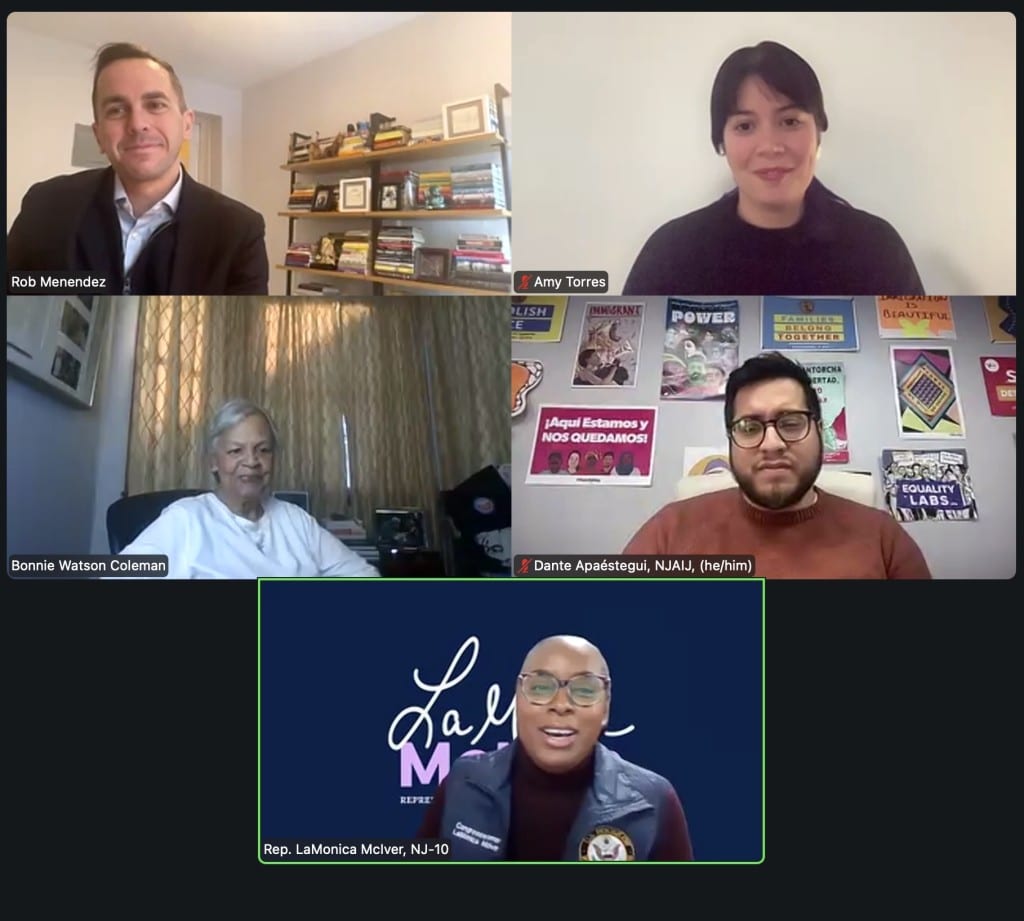
Partnering with the New Jersey Alliance for Immigrant Justice (NJAIJ), U.S. Reps. LaMonica McIver (D-10), Bonnie Watson Coleman (D-12), and Rob Menendez Jr. (D-8) held a webinar Thursday evening to educate state residents on their rights and how to document the conduct of immigration enforcement officers.
The event followed national outrage over the Jan. 24 fatal shooting of 37-year-old ICU nurse Alex Pretti by ICE agents in Minneapolis, the latest death tied to the Trump Administration’s renewed crackdown on immigration. In 2025, over 30 people died in the custody of the Immigration and Customs Enforcement (ICE), making it the agency’s deadliest year in over two decades.
Following Pretti’s death, McIver, Watson Coleman, and Menendez have called for the abolishment of ICE in its current form. They have also urged New Jerseyans to practice their Constitutional rights and to document ICE misconduct.
“We have seen people killed by ICE agents, simply documenting their conduct and exposing what ICE wants to keep hidden,” said McIver. “They know that the threat of…oversight prevents abuses and uncovers them when they occur. This very cruel administration wants ICE to operate with complete impunity without any kind of accountability, and we just can’t let them.”
What We Need To Know
The NJAIJ explained to attendees how to identify federal immigration officers, who are part of the Department of Homeland Security (DHS). These agents typically appear from unmarked vans, wearing uniforms identifying themselves as ICE, Customs and Border Protection (CBP), Enforcement and Removal Operations (ERO), or Homeland Security Investigations (HSI).
The NJAIJ also explained how people can safely and properly report these agents as legal observers to ensure the latter aren’t threatening people’s Constitutional rights to freedom of speech.
According to Dante Apaéstegui, the organization’s federal policy and advocacy strategist, a legal observer is a trained, impartial witness who monitors and documents law enforcement behavior. Members of the public are allowed to film and photograph ICE agents as long as they do not interfere with ICE operations.
“This is about protecting ourselves, protecting our neighbors, protecting our communities, and making sure that the truth is recorded,” said Apaéstegui.
In addition, the NJAIJ reiterated individuals’ Constitutional rights under the 4th, 5th, and 6th Amendments, which bar federal agents from unlawful entry and allow individuals to remain silent and speak with a lawyer.
Federal immigration agents cannot enter a person’s home or a non-public workplace area without a signed judicial warrant (labeled Form 1-200 or Form I-205) issued by the court. ICE-issued administrative warrants are not the same as judicial warrants.
Amy Torres, NJAIJ’s executive director, clarified these lessons were not legal advice, but urged attendees to practice their rights and connect with an advocacy group or legal aid groups to report ICE misconduct.
“We know that ICE is trampling our rights,” said Torres. “We know that they are doing everything that they can to trot over them, to discourage you from standing up for them. They do that because…it may be what’s needed in the evidence that’s needed to bring them to court, and to bring this rogue department to justice.”
Passing Protective Policies
Many New Jersey residents are urging the state government to create stronger legal protections for immigrant communities.
On Jan. 20, former Gov. Phil Murphy (D) approved the State Communities Act, which requires the state attorney general to create policies for how schools, hospitals, courts, shelters, and houses of worship throughout New Jersey should respond when federal immigration agents appear.
Murphy did not sign the Privacy Protection Act and the Strengthening the Trust Between Law Enforcement and Immigrant Communities Act, which advocates say would have provided New Jerseyans greater protections against federal immigration agents.
Current Gov. Mikie Sherrill (D) announced on “The Daily Show” her plan to launch an online “portal” where state residents can upload footage they have recorded of federal immigration agents operating in their neighborhoods.
However, Torres argued that this portal hasn’t been New Jersey’s greatest need, saying, “I don’t need more evidence of what’s happening in our communities. I really need our legislature to act, and I think our big push right now is to push some additional protections.”
While NJAIJ continues advocating for additional state legislation, the organization’s education efforts focus on informing residents about their rights and ways to promote community safety.
“Community is how we will keep our community safe,” said Menendez, “and there will be accountability for all the harm that’s being caused to our friends and neighbors, not just here in New Jersey, but across the country.”
Related Articles
Republicans Alone On Filibuster-Proof Immigration Enforcement Bill
Democrats score no wins five months after insisting on use of body cameras, judicial warrants and a racial profiling ban