
Lawmakers Look To Close Gaps In School Seizure Safety
By Zo Terrana (NJ State House News Service)
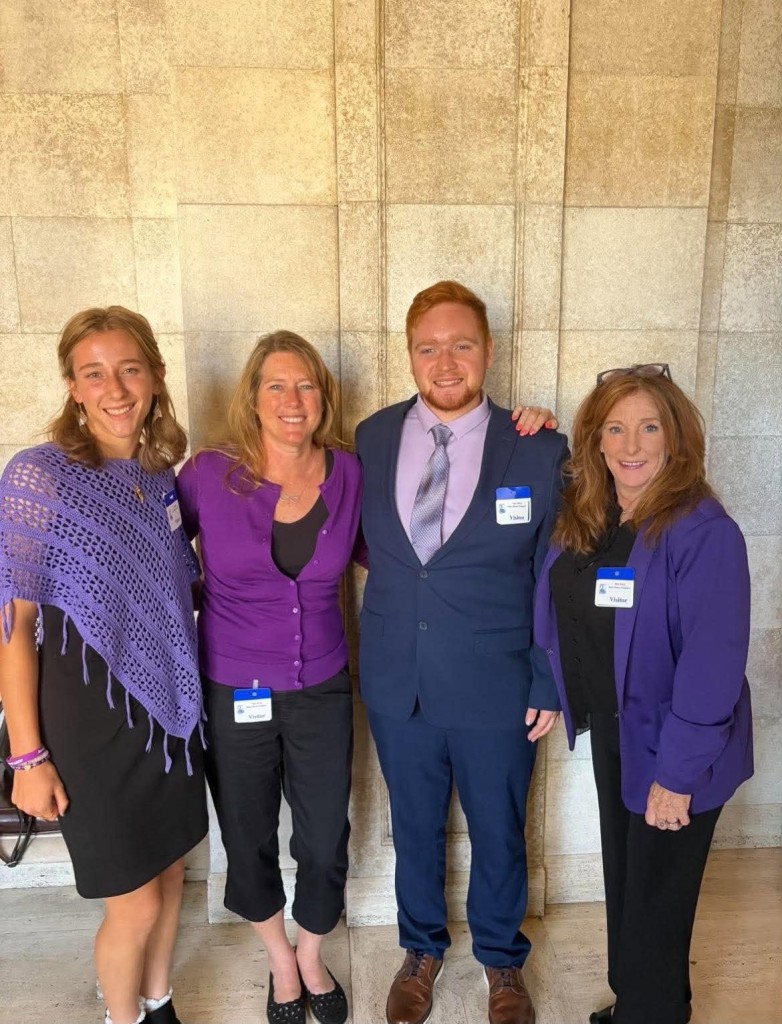
TRENTON, N.J. – Autumn Iwaszczuk is a varsity high school soccer athlete and member of the marching band, but fears if she has a seizure during an after-school activity, no one can give her critical medicine.
“It starts off with a feeling of impending doom, a terror so consuming it’s impossible to put into words,” the 17-year-old West Milford High School senior told lawmakers last month. “The scariest feeling of my entire life and within seconds I blackout. I’m gone. My body shakes, shuts down and I stop breathing. Why can’t someone be beside me ready to put my nasal spray in my nose and bring me back before it’s too late?”
Iwaszczuk testified at a packed Assembly Education Committee, as her tearful mother sat at her side, that non-medical school staff should be allowed to assist with medication during a seizure.
Jennifer Iwaszczuk testified that Autumn was diagnosed with a life-altering seizure disorder seven years ago, and said New Jersey schools need better health services for students with epilepsy and other seizure disorders.
After emotional testimony, the Assembly Education Committee unanimously voted on Oct.15 to move a bill helping children with seizures. A4676 would establish more expansive measures to assist in the administering of nasal medication in schools.
The bill allows for nurses, with the consultation of the child’s parents, to develop a document that outlines specific actions that can be taken by non-medical school staff if a medical emergency were present. The legislation also expands assistance to children who use the school bus in case of a seizure emergency on the bus.
“She shakes. She stops breathing. Her lips turn purple. She vomits and waits there lying helpless for someone to administer her nasal spray,” Jennifer Iwaszczuk testified.
“I have spent the past seven years fighting to keep my daughter safe,” she said. “Right now she’s safe during the school day because teachers are trained under Paul’s Law and a nurse is there to administer her rescue meds if needed. Once the clock strikes two that safety expires. The nurse goes home and my daughter goes to soccer practice and band practice.”
Paul’s Law, signed in 2020 by former Gov. Phil Murphy, helped lay the groundwork with child seizure protections. The legislation was named after a 20-year-old epilepsy advocate, Paul St. Pierre, who was diagnosed with a seizure disorder at age 12.
The new law would require epilepsy and seizure disorder training for all school employees, and for individualized health care plans to incorporate these conditions.
“I am proud to be a prime sponsor of A4676 because this is a direct investment in keeping our children safe,” Assembly Member Michael Venezia, a Democrat from Bloomfield, said. “As a father myself, there is nothing more important to me than keeping all our children healthy and safe at school. Legislation like A4676 allows us to prepare for every scenario and gives our schools the training, directive, and resources to administer life-saving medication.”
If Autumn Iwaszczuk has a seizure after school, her coaches would have to call 911 since they are not allowed to administer the medication themselves, when a fast response is critical.
“I do theater, soccer, marching band, Unified track and field. All my practices and rehearsals are after school and I have no nurse that stays after. Not one person out of all of the people near me is legally allowed to save my life with my med kit that is right next to me at all times,” she said.
A4676 helps to expand assistance to nurses, designating at least two additional volunteers of the school to be trained in administering the rescue medication, in turn giving the child more security around them.
“We are trying to make sure we do everything we can to make sure everyone’s trained properly,” Venezia said.
The bill will produce a more comprehensive policy to cater to each child’s need, instituting a “seizure action plan.”
“We live in West Milford, it’s a rural town of 80 square miles. It takes 20 minutes for an ambulance to get to us,” Jennifer Iwaszczuk said.
Only paramedics, school nurses and designated personnel on school premises can legally administer certain seizure medication, making each second of a seizure more deadly for a student.
“We continue to wait and watch her possibly die or have permanent brain damage while her meds are right beside her,” Jennifer Iwaszczuk said.
Once at band practice her daughter had a seizure, however Iwaszczuk’s son was able to tend to his sister and administer the nasal spray.
Nasal seizure rescue medications are fast-acting sprays designed to treat acute and intermittent seizure activity.
Jennifer Iwaszczuk raced for 20 minutes from home to the school, and said paramedics still hadn’t arrived.
According to a Aug. 2020 NJ.gov report on EMS response times, ambulance services can take from 12-22 minutes. In counties like Passaic EMS can take over 16 minutes.
“Our kids should not be discriminated against because the proper safety measures are not there to participate in after-school activities,” Jennifer Iwaszczuk said.
Colleen Quinn, the president of Paul’s Purple Warriors NJ – Epilepsy, an epilepsy non-profit advocacy group and mother of Paul St. Pierre, testified in favor of the bill.
“While Paul’s Law laid the groundwork, there are critical gaps that remain,” Quinn said. “Our children are unprotected during after-school hours and school sponsored activities when a nurse is not present. A4676 addresses these realities.”
Quinn, who has experience working with children in group homes, explained the early hurdles in her son’s seizure episodes as a child saying, “I kept telling doctors, ‘this is a seizure’ but nobody really believed me.”
Sharing the same emotions as other mothers of children suffering from seizure disorders, she said, “I turned my sadness into action. If I am going to help my own kid, why can’t I help the other 12,000?”
“Seizures do not stick to school hours,” Quinn said. “Without immediate intervention prolonged seizures can lead to brain damage or death.”
Quinn explained that she doesn’t know when her son, Paul is out of his unconscious state during the seizure.
“I’m very quick to jump into action,” Quinn said. “I’ve always been like that. I am not fearful. Something just takes over and I get him to the ground. I am very diligent because I don’t understand at what point he is back with me and what he doesn’t hear. So I’m always saying to him ‘you’re going to be OK. It’s OK. You’re safe.’ I use a very calm voice and I try to stay very reassuring.”
Quinn stated that children suffering from seizure disorders are often excluded from sports or clubs unless a parent who can act as a “medical chaperone” is present.
“A4676 requires age appropriate classroom education on seizure disorders,” Quinn said. “This directly combats social stigma. A devastating study by Epilepsy and Behavior found that 42% of children with epilepsy are victims of school bullying, exactly double the rate of their healthy peers. Classroom education replaces fear and cruelty with peer advocacy.”
According to Quinn, educating children and gauging problems that these mothers face helps in advocating for more comprehensive change in seizure protection policy.
“When classmates learn what a seizure is and how to respond, a child with epilepsy is less likely to be teased or isolated, and more likely to feel safe and included,” Yachao Li, a professor of public health at The College of New Jersey said. “That matters for their mental health as much as their physical health.”
St. Pierre, the namesake of Paul’s Law, explained, “I had frequent school seizures, untrained teachers sent me to the nursing office entirely alone when I was still disorientated. That terrifying experience is why we fought for Paul’s Law. A dangerous gap exists when a student has an extended seizure on a school bus, an athletic field or a field trip where a school nurse is rarely present.”
St. Pierre stated he was “scared” when he received the diagnosis at a young age.
However, St. Pierre isn’t alone in this struggle, about 1 in 26 people will develop epilepsy at some point in life according to Young Adults with Epilepsy. This, in turn means that thousands of students will be endangered from their seizure disorders, leaving parents with concerns when their child leaves their house.
“Parents of children with seizure disorders often carry a lot of worry every time they drop their child off at school,” said Li. “When schools have a clear plan, trained staff, and an open line of communication with parents, it builds trust. In my interpersonal health communication course, I talk a lot about how health outcomes depend on relationships and coordination, not just medicine. This bill puts parents, school nurses and doctors on the same page through the child’s seizure action plan.”
The Mayo Clinic states the typical seizure time can be 30 seconds, up to two minutes or even longer.
“No student should be left defenseless because a nurse isn’t in the room,” St. Pierre said.
For many Americans, finding access to better healthcare is a difficult task when having a seizure disorder like epilepsy according to the CDC.
“Like the rest of the country, New Jersey has gaps in access that follow lines of race, ethnicity, income, and immigration status,” Li said. “These gaps show up not just in who has insurance, but in who gets referred to specialists, who can take time off work for appointments, and who can afford medications over the long term.”
The CDC states that a person who suffers from a seizure disorder “are more likely to experience barriers or delays in receipt of certain types of care, including epilepsy specialty care.” These delays are associated with individual factors including household income.
“Policies work best when every school has the funding and training support to carry them out, not just well-resourced districts, and when families who struggle to afford medication or navigate paperwork get extra help,” said Li. “It’s also important to involve parents and young people themselves in designing these policies, since they know best what support looks like in daily life.”
No school employee, according to the legislation, would be held liable for a good faith act which tries to help a child suffering from a seizure. However a good faith action should not be deemed so if a member of the school acts with recklessness or willful misconduct.
“This legislation would help ensure that students with seizure disorders have access to potentially lifesaving emergency care in school, including nasal rescue medication and manual vagus nerve stimulators,” Assembly Member Melinda Kane, a Democrat from Cherry Hill and another sponsor of the bill.
Related Articles
The Neo-Colonization of a School District Pt. 3
In the third installment of his series, Rann Miller examines how state control of Camden’s school district has shaped the distribution of public resources, fueled concerns about gentrification, and threatened local control over the education of Black and brown students.
Newark’s New Key Club Connects With Student Leaders in Jamaica
North Star Academy’s Washington Park chapter, launched with 51 founding members, brought together students from three schools and Kiwanis International President Hope Markes to share ideas for community service.
University of Maryland Eastern Shore (UMES) Opens Applications For First Doctor Of Veterinary Medicine Program At A Public HBCU
Maryland’s first in-state veterinary school is now accepting applications for its inaugural class, which begins in summer 2027.