
Why The Black Press Still Matters, 199 Years Later
From Newark road trips to the NABJ Hall of Fame, one journalist’s case for keeping Black publishing alive.
By: Cheryl Smith
Although I got the writing bug when I was in the seventh grade, it wasn’t until I was a junior in high school that I joined the newspaper staff and had my first articles published in the school newspaper, the East Orange High School Panther Press.
My classmate, Vernard Richburg, and I both competed for top reporter honors and with a lack of role models readily available to us who looked like us, we were positioned as the Clark Kent and Lois Lane of our class.
I was filled with pride when my first story appeared in the local newspaper. It was so exciting representing my school as I wrote about the girl’s softball team.
Seeing my name in the paper sparked an interest in me. It was a reminder of the many times my family took trips to Florida. As we stopped in different cities, I would always look for the Black newspaper because I wanted to know what was happening in the Black communities in the United States. For me, the best way to begin connecting with other Black people was by reading Black newspapers.
I read every page, finding out everything from the athlete of the week or who died, to who was jailed, got a promotion, graduated, had a baby, or got married.
There was so much I learned about how people lived their lives. I called the Black newspapers my “History books,” and the writers were the historians, telling the stories of Black people from the rooter to the tooter, as old folks would say. I learned about citizens from their first breath until their last, from the beginning to the end.
As a chiId, I loved going to the library and reading every book I could get my hands on. My mom knew where to find me on Saturday afternoons and she knew I kept going even though the majority of folks I read about or read their works, for the most part didn’t look like me.
It was the 1960s and 70s and I was reading Nancy Drew and the Hardy Boys, and all the other classic all-white character books.
Then the world opened up.
With the help of certain magazines, like Essence and Ebony, I was able to find out about a world that included the likes of Nikki Giovanni who taught me to love — beginning with myself. And there was Toni Cade Bambara, Ann Petry, Iceberg Slim, Maya Angelou, and so many others to learn from.
Now and then, I would see a Black person on television, but I never wanted to be on television. I just wanted to write. I wanted to tell the stories of Black lives. I wanted to go where no one else was going, hoping to quench the thirst in young girls and boys who wanted to see themselves on the page, living life to the fullest, and showing the world that we were human.
Unfortunately, many so-called mainstream newspapers didn’t feel Black people were human and their coverage of Black people was proof of their disdain.
Reading Black publications as my family traveled up and down the eastern seaboard was proof that more was possible.
Since the inception of the Black Press, New Jersey had close to 40 newspapers in print at its peak, according to the New Jersey Black Chamber of Commerce. I am pleased that today the Black Press is still vibrant, but sadly, it’s still in need of the level of support it had in the last century.
I grew up mostly reading the daily Newark Star-Ledger. But when I decided to go to Florida A&M University 50 years ago, I was determined to be one of those soldiers without swords who told the stories of Black people. Just as I chose to attend an HBCU, I chose the Black Press — I had work to do, and I was destined to do it there.
The first day I walked on campus was such a beautiful experience, and the first office that I went to was the office of The FAMUAN, the school’s newspaper. I signed up to join the staff and I was doing what I felt was my calling.
I was given the freedom to write about so many topics and to interview some interesting people – one of my best interviews was with famed football coach Alonzo Smith “Jake” Gaither.
Upon graduation, I went to work for the Black Press: The Capital Outlook, in Tallahassee, Fl. There, I flourished, and hopefully made not only my family, but anyone who loves Black people, proud.
As an inductee into the National Association of Black Journalists Hall of Fame, I am grateful that I have been a voice for the voiceless, those silenced or muted and I hope and pray that I’ve been able to educate, inform, enlighten, inspire, agitate, challenge, and yes, entertain.
Although I never made it back to New Jersey to write those stories, I take solace in knowing that I have friends, like New Jersey Urban News co-founder Penda Howell, who believe we must plead our own cause and speak truth to power.
The Black Press mattered 199 years ago, and it matters just as much now, as we face efforts to erase the rich heritage of Black people. We must keep on publishing.
Publications like New Jersey Urban News are an example of what helps a community and its people to thrive. Penda and his team are more than deserving of support to keep telling those empowering stories that ensure little Black boys and girls can read about themselves and see pictures displaying the beauty of a proud people.
It would be great if every church, funeral home, and other Black businesses would support the Black Press. Too many stories go untold and more could be written with greater support from those we work tirelessly to serve.
We know that by erasing our history, we also erase the past of deranged, vicious people who were savages and destroyed the lives of millions.
Fast forward to 2026. Think about what has been done to further negatively impact the lives of descendants of Africans. It is our obligation to remain vigilant in the face of those who would like the Black Press to disappear.
After all our forefathers endured, we must remain steadfast and march on to 200 years, laying the path foremother century and beyond.
Cheryl Smith is the publisher of Texas Metro News, Garland Journal and I Messenger, out of Dallas, TX. A graduate of Florida A&M University, she has the distinction of having served on the boards of NABJ, SPJ and is the current treasurer of NNPA – The National Newspaper Publishers Association. She is a member of the NABJ Hall of Fame.
Related Articles
The First Columbus Day Was Declared In The Shadow Of A Lynching
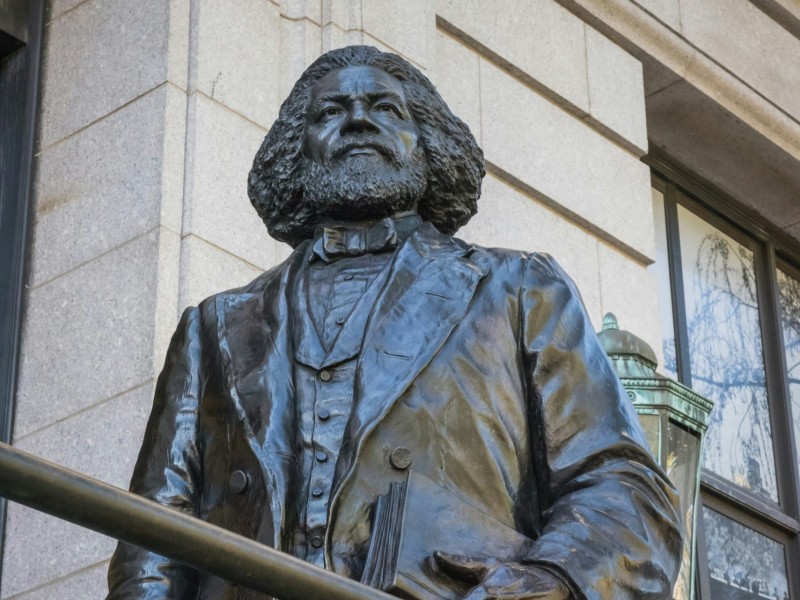
In the Windy City, Frederick Douglass and Ida B. Wells spotlighted what Washington wanted forgotten