Jersey Sound: How One State Influenced American Music
Beyoncé sampled it. Drake built on it. How New Jersey’s Black music legacy shaped jazz, house, hip-hop, and Jersey club.
For nearly a century, New Jersey has served as a laboratory for Black music innovation, a legacy that spans jazz and bebop, house and hip-hop, and Jersey Club. But New Jersey rarely gets credit for its influence in music.
In 2022, Beyoncé dropped “Renaissance,” and Drake released, “Honestly Nevermind,” which brought Jersey House mainstream: they were channeling decades of sounds and rhythms that dominated Newark house parties.
That influence wasn’t by accident. It grew out of the roots of 1980s Black electronic dance music genres, which were later absorbed, and often uncredited, by the mainstream EDM industry.
Dr. Jasmine A. Henry, Assistant Professor of Musicology, University of Pennsylvania, said “Jersey Club music-making functions as an integral aspect of contemporary Black social life through which urban youth engage in intersectional performances of Black self-making and placemaking.” It’s a living culture and not a genre to be borrowed and forgotten.
The Jazz Era
During the Great Migration of the 1930s and the post-Prohibition boom that followed, Newark earned a reputation as America’s jazz capital. Known as “Ticklers’ Town,” the city became an incubator for artists including Willie “The Lion” Smith, Duke Ellington, John Coltrane, Charlie Parker and Billie Holiday.
That jazz-era energy shaped the artists who came up in and around Newark in the decades that followed. The Four Seasons’ 1962 hit “Sherry” sold more than 100 million records between 1962 and 1978. The Shirelles, who met at Passaic High School, broke ground in 1960 when “Will You Love Me Tomorrow” made them the first all-girl group to land a No. 1 song.
Newark’s House Music Revolution
From 1979 through the 1990s, Newark became the epicenter of what’s known as the Jersey Sound, with the scene centered at Club Zanzibar, run by resident DJs Tony Humphries and Kerri Chandler. The sound grew out of disco, blended with house elements from Chicago’s warehouse clubs and infused with gospel and R&B drawn from Newark’s church culture.
Humphries’ stints at radio stations 98.7 KISS-FM and Hot 97 helped carry the Jersey Sound nationwide. As it spread overseas, it evolved into what’s known today as U.K. “garage music,” a genre that still has a devoted following.
New Jersey’s Hip-Hop Legacy
Next to New York, no state played a bigger role in hip-hop’s early growth than New Jersey. Englewood-based Sugar Hill Records released the genre’s first commercial rap hit, “Rapper’s Delight,” by the Sugarhill Gang, which reached the Top 40 in 1980. Until then, audiences could only catch rap music live at parties or clubs in Harlem or the Bronx. “Rapper’s Delight” introduced the genre to a global audience, climbing to No. 3 in the United Kingdom and No. 1 in Canada.
In the late 1980s and 1990s, New Jersey produced some of the defining artists of hip-hop’s Golden Era, including Queen Latifah (East Orange), Naughty by Nature (East Orange) and the Fugees (South Orange). Fugees member Lauryn Hill’s solo album, “The Miseducation of Lauryn Hill,” left a lasting mark on the genre.
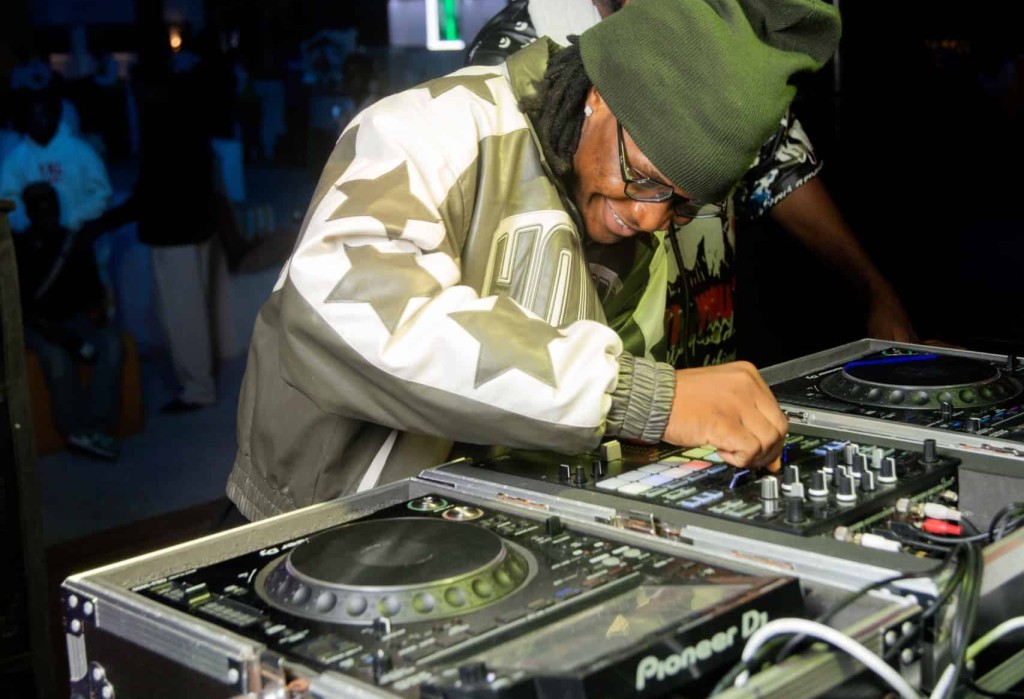
In the early 2000s, Newark gave rise to Jersey club, pioneered by DJs including DJ Tameril, Mike V, DJ Tim Dolla and DJ Black Mic of the Brick Bandits crew. The genre blends house and hip-hop with the uptempo beats of Baltimore club music.
At the 2019 MTV Video Music Awards, held in Newark, Ice-T paid tribute to the state’s hip-hop legacy: “Hip-hop may have been born in the Bronx, but it was raised across the river, right here in New Jersey.” He credited the state’s artists with helping shape hip-hop culture “not just in Jersey, but all over the world.”
Jersey Sound: A New Generation
Beyoncé highlighted the Jersey Sound’s reach when she sampled the Jungle Brothers and Todd Terry’s “I’ll House You” on “Summer Renaissance” in 2022.
House pioneer Crystal Waters, known for “Gypsy Woman,” said the recognition from major artists feels like vindication after years of being dismissed by critics. She and fellow house artists have said Beyoncé’s embrace of the genre on “Renaissance” has helped reinforce dance music’s roots in Black culture.
While Beyoncé drew on house music’s lineage, other artists, including Ice Spice, Bandmanrill and PinkPantheress, have pulled directly from Jersey club’s rhythms; its drum patterns, bed-squeak kicks and chopped vocals. Ice Spice and PinkPantheress’ 2023 hit “Boy’s a Liar Pt. 2” carries the chopped-vocal, bouncy bassline that traces back to Jersey club production. Bandmanrill’s tracks “Keep Up” and “Heartbroken” are built on the genre’s signature drum-and-bass patterns. Nicki Minaj and Lil Uzi Vert’s 2023 single “Everybody” has also been noted for pulling from Jersey club’s rhythmic DNA. Producer McVertt continues to rework the genre’s triplet kicks and squeaky-bed percussion on tracks like “Defiant,” with Sha EK and Bandmanrill.
Drake’s 2022 album “Honestly, Nevermind” sparked a broader reawakening of interest in Jersey club and house music. According to The Michigan Daily, his single “Sticky” draws on Jersey club’s rhythmic patterns and set off a wave of attention on social media. Unlike Beyoncé, Drake hasn’t been vocal in crediting Jersey Sound and house music artists for their influence on his work.
Spreading Through Social Media
The Jersey Sound has found new life on TikTok, where artists like Ciara and Drake, with “Level Up” and “Massive,” respectively, have woven Jersey club elements into remixes that fueled viral songs and dance trends.
This Black Music Month, the Jersey Sound stands as a reminder that some of America’s most influential music didn’t start in a big-name studio; it started in clubs, churches and high school hallways across the Garden State.