Pride Comes to South Jersey Communities With Few LGBTQ+ Spaces
Organizers say grassroots support for LGBTQ+ residents runs deep in a region that lacks concentrated community spaces
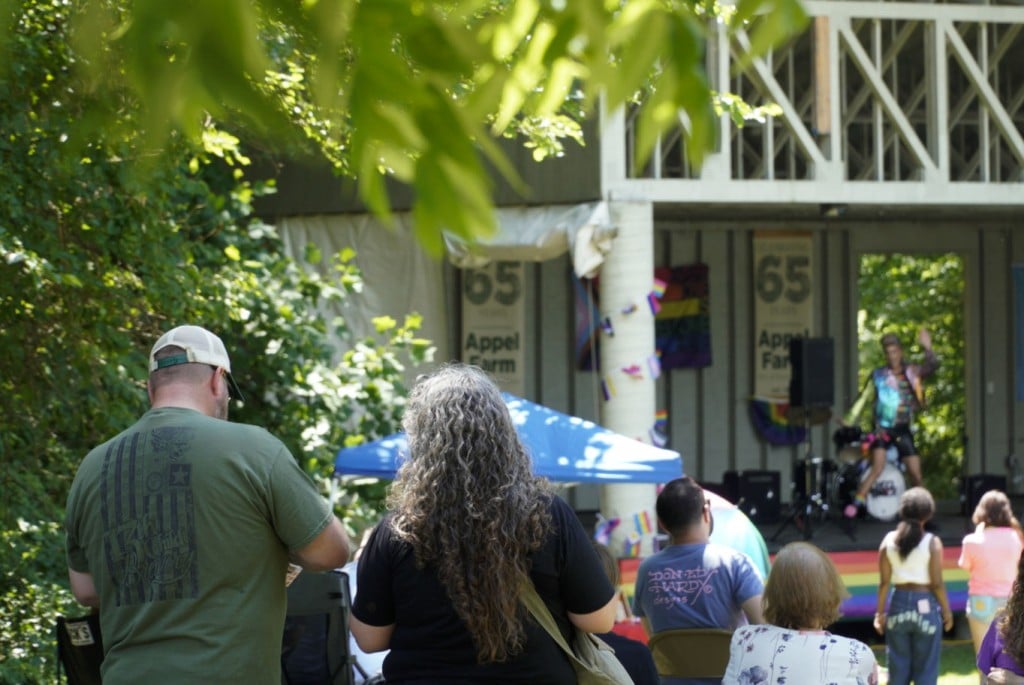
In parts of South Jersey where LGBTQ+ residents have long had few visible spaces, nearly 1,000 people turned out last weekend for a Pride festival alongside small businesses, local bands and drag performers. This is a sign that acceptance of the LGBTQ+ community can change in these counties, organizers say.
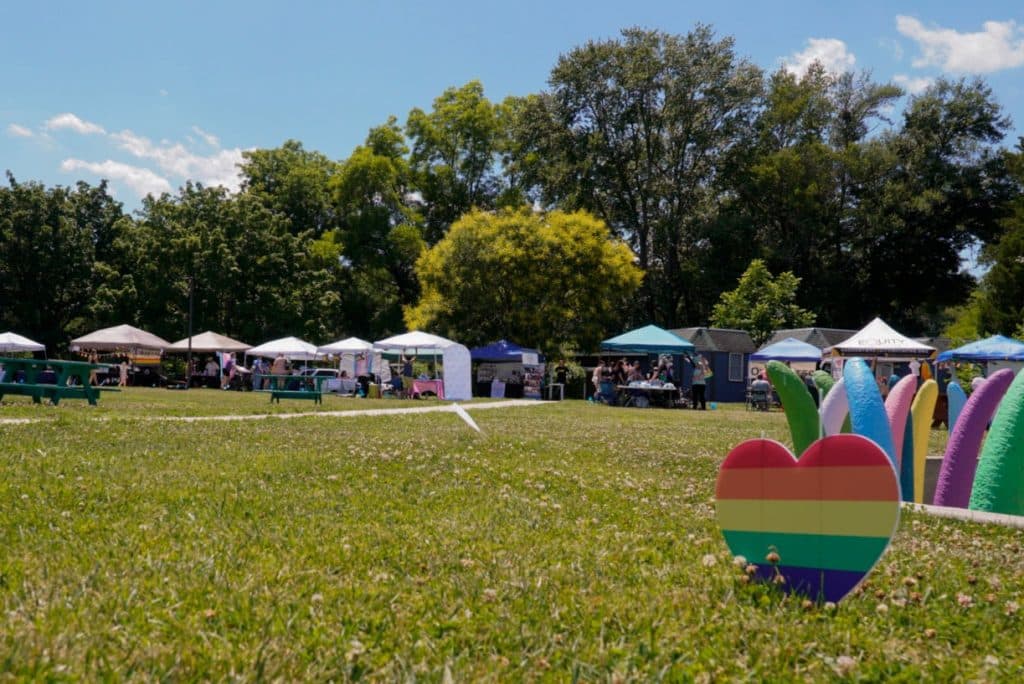
The inaugural South Jersey PrideFest was hosted by Salem County Pride+ at Appel Farms Arts & Music Center in Elmer on June 21. The event drew more than 100 vendors, local bands, and drag performers. It was one of several Pride events held across South Jersey’s red counties this month, as LGBTQ+ groups aim to provide safe spaces in a politically divided climate.
The event was the first of its kind and size in the region. Despite the region’s demographics, Amber Rorris-Crow, the deputy director of Salem County Pride+ says the event was funded almost entirely by small businesses in Salem County.
“It’s very nerve wracking, I think, in a conservative county reaching out for sponsorships,” said Rorris-Crow. “We applied for funding from nationwide LGBTQ organizations, and the majority of our funding, I would say something like 80 to 85% of our funding came from small businesses in Salem County and the surrounding areas.”
The vendors did not just include small businesses, however. Churches, mental health organizations and medical experts also attended to offer their services.
“It was really important to us to structure it so that when folks came into the event they walked through all of the resources first so they could see all of the people that were there for them before they saw people trying to sell them something,” said Rorris-Crow.
The organizers were not the only ones focused on fostering support and unity for LGBTQ+ attendees. Bambi Nieves, author of “The Perfect Prince(ss),” was among the vendors at the event, where she sold copies of her book. She said that it is important to celebrate identity, and bring people together despite political division.
“As a non-binary Afro-Latina person, it’s important to me to celebrate some of the things that I was once afraid of,” said Nieves. “There is a concerted effort on the right to both vilify and target queer people, especially trans people, and while I don’t have as many right-leaning Republican friends, I hope that people can start to see there’s more that brings us together than tears us apart.”
Salem County Pride+ isn’t alone. Other groups in the county are working to build community, visibility, and encourage government support. According to Ann McCabe, founder of Equality Cape May, Cape May is a “nuanced” community and some towns are more welcoming than others.
Unlike rural conservative counties like Salem, Equality Cape May has the challenge of creating a welcoming environment for not just residents, but for those visiting the popular vacation spot as well.
“I’ve always wanted to make sure that people who are visiting here are also experiencing a welcoming atmosphere,” said McCabe. “We don’t really have the spaces or events that are happening where they can go to a certain bar or a certain tea dance or something like that. We’re not there yet nor do I know that the leadership of these communities want that to happen.”
On June 7, Equality Cape May hosted a Pride March, which McCabe said the theme was “unapologetically us,” as a way to show those in the LGBTQ+ community that Equality Cape May offers them support.
“We had to be unapologetically us, and we had to be doing good for our community because there were a lot of people doing good things for the whole community,” said McCabe. “Our community was the community that needed representation, that needed visibility, that needed advocacy.”
According to McCabe, despite progress across the county, the organization still has work to do amongst both the counties that do recognize June as Pride Month, and those that don’t.
“Let’s see who turns us down, that may be where our work has to go,” said McCabe. “How can they [municipalities] begin to show their allyship in a more expanded way than just the proclamation of recognizing pride month because that takes some liberal thinking but let’s look for liberal action.”
Attendees, and volunteers of both organization’s events shared similar stories about the importance of Pride events, specifically in more conservative communities. John Quattrone, a volunteer at the South Jersey PrideFest said it’s humbling to see how young members of the LGBTQ+ community can feel safe at events like these.
“Someone came to the table today, and it was their first festival. They’re 26 years old, and they’re going to their first pride festival in Salem County,” said Quattrone. “And for someone like myself who grew up before all of this. It was still illegal, and it was still a mental health issue, you know, having that, um, freedom because some really passionate people created a space for that to happen is what this is all about.”
Frank Revesz, a drag performer who performs as “Regina Holiday,” and attended Equality Cape May’s Pride March shared a similar experience.
“Cape May Pride was a truly special experience for me, not only as a performer and host, but as someone who grew up in Cape May County,” said Revesz. “To stand in a place where visibility like this once felt impossible and see hundreds of people celebrating openly, proudly, and authentically was incredibly meaningful.”
As recent Gallup data shows, broader acceptance for LGBTQ+ relationships and rights are declining from its 2022 peak. Organizations such as Salem County Pride+ and Equality Cape May avoid the division and instead promote unity.
“In a world that is so divided and often so hateful because hate is what sells newspapers and gets clicks,” said Rorris-Crow. “People were there to celebrate joy, to celebrate each other, to be together. And I think that in and of itself is an act of resistance.”
Author

Related Articles
New Jersey Urban News Welcomes Sydney Salomon as Our New Community Impact Reporter
New Jersey Urban News welcomes Sydney Salomon as its new Community Impact Reporter through Report for America, expanding coverage of issues impacting Black and Brown communities across New Jersey.
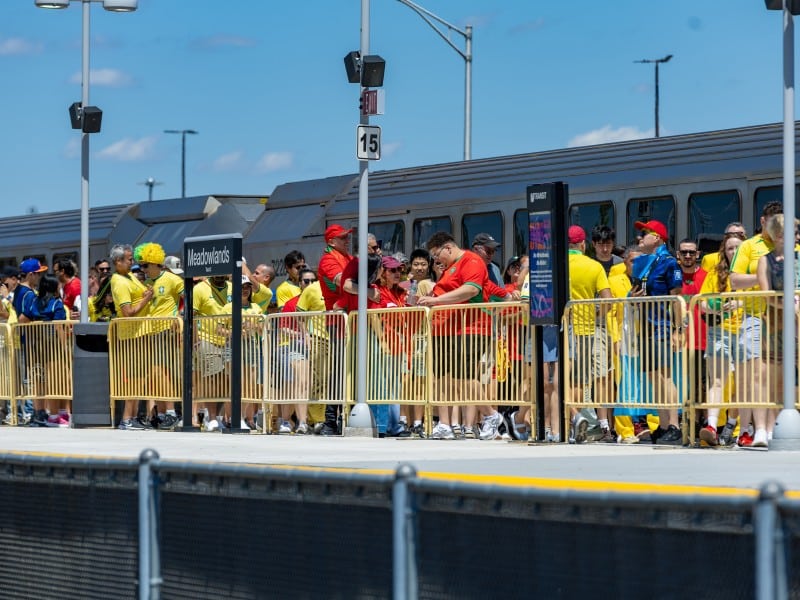
In Newark, Soccer Speaks Every Language
FIFA World Cup 2026 brings global energy to a city already fluent in culture, community and the joy of the game.