
Who Pays for New Jersey’s Data Center Boom?
New Jerseyans say that the state’s growing number of data centers has driven up electricity bills while raising concerns about local pollution and public health.
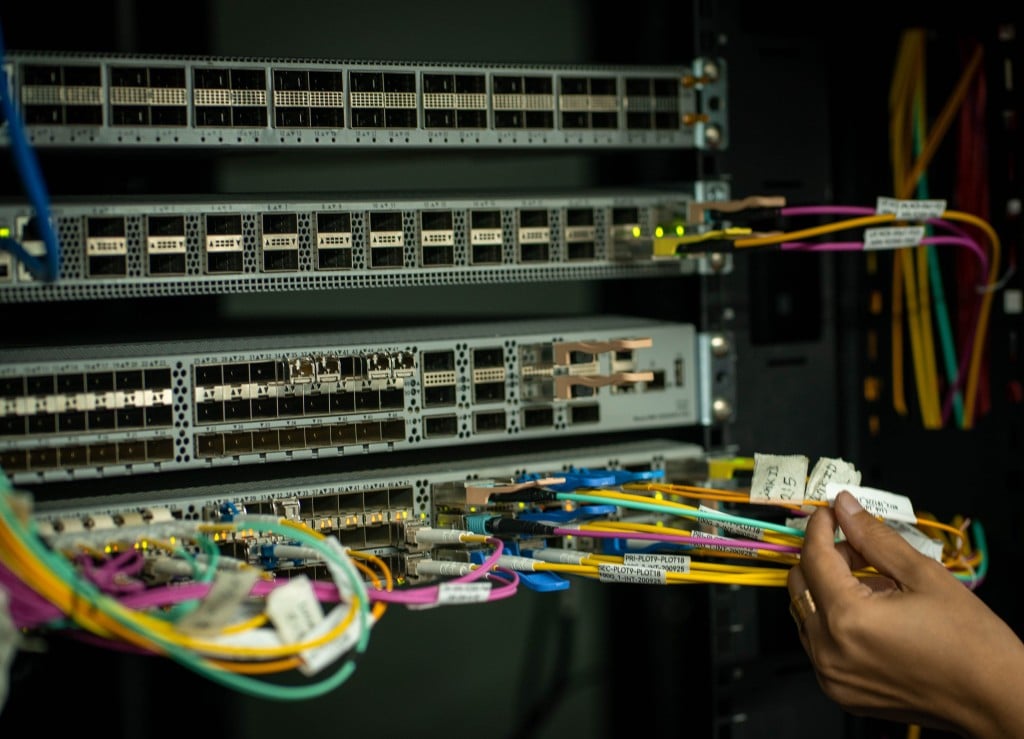
With more than 80 data centers operating in New Jersey, state residents have faced a 20% surge in energy costs since June 2025. By 2030, NJ data centers are projected to consume as much electricity as Rhode Island.
Local communities and advocates are calling for stronger regulations to rein in utility costs and address environmental concerns before the industry’s footprint becomes irreversible.
Increases in utility bills are going towards upgrading and expanding the state’s grid system to support data centers, said Climate Revolution Action Network executive director Ben Dziobek. This means “the infrastructure and the transmission lines, the substations necessary, all are being paid for by average working-class residents.”
“When New Jerseyans’ bottom line is so tight right now, this should be the top concern of our legislators, but also the top concern of local elected officials who can stand up and ban them in their municipality and prevent a good amount of the issues that are not just presented on the electric bill,” Dziobek told NJ Urban News.
Advocates say those concerns are already playing out in Vineland, where residents say a data center has made an already struggling community worse. Alex Ambrose, senior policy analyst at New Jersey Policy Perspective, said the facility has increased noise and air pollution in an already overburdened community.
Ambrose noted that the data center compounds Vineland’s decades-long history of environmental justice concerns – a city where low-income communities and communities of color already face higher rates of asthma and heart disease.
In addition, noise pollution has been cited as a cause of declining property values for nearby homes, making it harder for residents to sell and move away from loud data centers.
“So that’s why it’s important that the state steps in and helps set strong regulations, which they have indicated that they plan to do to ensure that the local environmental justice communities, who…have already been suffering from environmental racism for decades, if not centuries, can deal with the issue of a large data sector trying to come in and take over their community,” Ambrose stated.
In response to rising energy costs, Gov. Mikie Sherrill announced a plan to increase supervision and regulation over data centers. Under this plan, these facilities would be required to pay for grid upgrades, provide their own clean energy, report energy and water usage, and provide well-paying jobs.
While some environmental justice advocates say Sherrill’s proposed guardrails will benefit local communities by ensuring that data centers cover their own energy costs and don’t increase pollution, others say her proposals don’t go far enough.
Zac Landicini of Sustain SJ, a Vineland resident impacted by the local data center, said the state should enact a temporary moratorium on data center construction and expansion for at least a year while it develops stronger oversight measures.
“The policy solution that I think would be effective in making it so people who live in these municipalities aren’t blindsided, is [that] there needs to be a moratorium put in place,” said Landicini. “There needs to be an effort to educate people who sit on planning boards, city council boards and zoning boards as to what these buildings and campuses are because that is what I have seen to be a big part of the problem.”
As New Jersey officials weigh how to manage data centers, communities such as Andover Township, Red Bank and New Brunswick have already enacted bans on these facilities. As residents and advocates rejoiced over these bans, they continue to call on other local leaders to follow suit and regulate data centers harming their communities.
“I think the most important thing for local elected officials to know is that this is going to have electoral consequences for whatever side you’re on. These are large pools of voters, and voters are overwhelmingly frustrated with the cost of living right now. And the one thing that you can clearly point to, that is the crux of all of the issues, is data centers,” said Dziobek.
Author

Related Articles

Statewide Homeless Veterans Initiative Achieves Milestone
Started during the Murphy Administration, the Bringing Homeless Veterans Initiative has helped more than 2,000 veterans find housing.
