Sherrill Targets Data Centers’ Potential To Do Good For Communities
Supplying own power sources and providing for local needs are included in plan to regulate booming industry

Colleen O’Dea, Senior Writer and Projects Editor (NJ Spotlight)
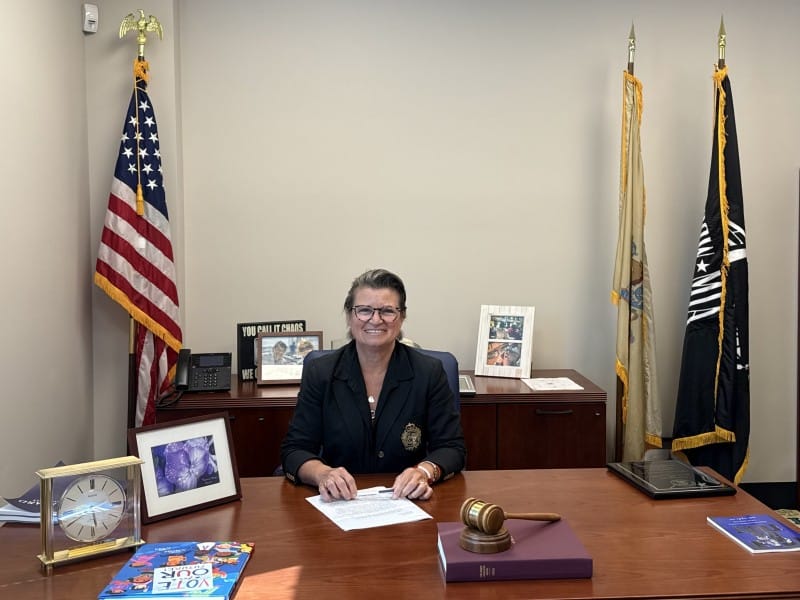
Gov. Mikie Sherrill on Wednesday announced a four-point plan to use laws and statewide guidelines as “clear guard rails” on data center development.
Data centers, which enable the widespread use of artificial intelligence, would have to provide their own power sources, report water and energy usage, invest in communities and use union labor paid at the prevailing wage.
Sherrill, though, did not name any specific legislation she is backing. It’s unclear how some of her goals would be implemented.
The state does not want to prevent the building of centers, though wants them sited responsibly, Sherrill said. Regulation is needed to help local officials navigate proposals, address residents’ concerns about pollution and other potential impacts and prevent higher ratepayer bills for the infrastructure required by the power-hungry operations.
“For a lot of people, things can feel out of control, like it’s the wild West, like it’s happening in the dark. I hear you,” Sherrill said. “To really bring utility rates down, we have to address soaring demand, not just supply, and data centers are the single biggest driver.’Noise, water, power
PJM Interconnect, which operates the regional electrical grid that includes New Jersey, said data centers were responsible for 70% of the projected increase in electricity demand last year. New Jersey alone is home to more than 80 centers, with several more proposed.
A 2.6-million-square-foot complex under construction in Vineland has drawn residents’ opposition amid concerns about noise, electricity and water usage.
Michele Siekerka, president and CEO of the New Jersey Business & Industry Association, said Sherrill’s announcement shows that AI centers are “welcome” here. She is looking for details about the plan and how it will be implemented.
“Like all development, opportunities and challenges are presented and getting the right balance to move projects forward is significant,” Siekerka said. “The governor’s parameters and expectancy of transparency are some first steps in establishing a process to get the ball rolling. Details on how these parameters are more deeply defined are yet to come.”
The proposal from the Governor’s Office had few specifics.
During a news conference Wednesday, Sherrill said that she was working with lawmakers on bills to implement two of her goals.
One bill, S-680, would require data centers to provide their energy sources and pay “for the grid upgrades needed to handle the larger load.” That bill, approved by a Senate committee in March, would take effect only if other states in the PJM region pass similar legislation. Another bill, S-3379, would mandate public reports on water and energy use every six months. It was passed by the Senate in March and is awaiting an Assembly committee hearing.National movement
More than 40 states in 2025 considered data center legislation involving energy, water, zoning and tax issues, according to a report this month from MultiState, a company that advises on government lobbying.
Sherrill said her administration is working on guidelines for community benefit agreements to address noise, light and pollution concerns and require investments in the needs of the towns where they are located. The latter could involve schools, housing or other priorities.
Her plan, she said, will ensure that “the jobs these facilities create initially in construction and long term in operations are good-paying jobs you can raise a family on.” Sherrill did not provide specifics on how she would do that.
Anjuli Ramos-Busot, director of the New Jersey Chapter of the Sierra Club, called Sherrill’s plan “a matter of fairness.”
“Hardworking New Jerseyans should not have to shoulder the cost of data center development,” Ramos-Busot said. “This is a moment that clearly shows that protecting the health of our communities and our environment do not come at the expense of creating policy that promotes affordability and economic development.”
This story was originally published by NJ Spotlight News through the NJ News Commons.
Related Articles

Gov. Sherrill Pushes For Voting Registration Reform As New Errors Emerge
After finding more errors in New Jersey’s voter registration system, the Sherrill Administration has announced reforms to strengthen the state’s electoral process.