
New Jersey Aims To Become The Third-Largest Film Hub In The U.S.
New Jersey is now on track to surpass Georgia for film and TV in the U.S.
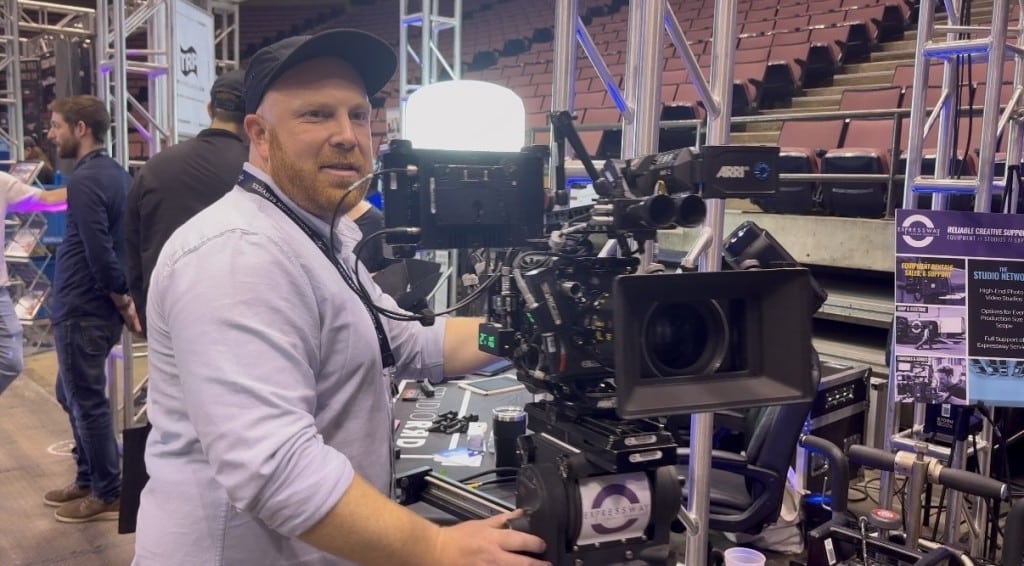
New Jersey is on track to become the country’s third-largest hub for film and TV, fueled by a tax credit program that drew $833 million in production spending last year, even as debate grows over who benefits.
Since 2018, New Jersey has seen a surge in film and digital media productions after launching a tax incentive that now offers up to 40% credit for incurred expenses. In 2024 alone, filmmakers spent an estimated $833 million on productions in New Jersey, hiring a total of 30,000 crew members. The tax credit is now set to last until 2049.
Expanding productions statewide
Upcoming, high-profile releases filmed in New Jersey include Steven Spielberg’s UFO blockbuster “Disclosure Day” and Amazon MGM’s Sylvester Stallone biopic “I Play Rocky.”
State officials and industry leaders view these productions as an economic boon to local workers and businesses. Jon Crowley, executive director of the New Jersey Motion Picture and Television Commission, said that productions have brought significant spending into communities within the state.
Crowley recounted the production of “Disclosure Day” in Cape May County, where 350 crew members dined at local restaurants and stayed in eight local hotels during the off-season, paying an average of $285 per night.
“So that’s why we do what we do,” Crowley said. “So when people say, ‘Oh, we’re just paying Hollywood to be here.’ No, no, no, that money is going immediately into our local economy. And I think one of the things that I think is important about what the Film Commission is doing…it’s changing the perception of Jersey around the world.”
The Garden State has seen a 45% increase in filming and a 37% increase in production spend in 2026, while California, New York, and Georgia hosted fewer film productions.
Gov. Mikie Sherrill noted the industry’s rapid growth and impact on the state while speaking at the NJ Film Expo on April 30. Sherrill said that New Jersey was the “film capital of the world” before Hollywood, and that film will be a big part of the Garden State’s future.
“They’re filming everywhere,” Sherrill said. “From Belleville to Denville, Kearney to Keansburg, Wayne to West Orange, we are on track to pass Georgia as the number three state for film and TV production. These projects are making a huge difference on the ground.”

A boon for job growth?
State leaders said that the industry’s growth could create even more job opportunities as multiple studios and networks construct new facilities in New Jersey.
Netflix will open a $1 billion studio complex at Fort Monmouth in 2028, a development expected to generate “thousands” of jobs, according to a statement by Netflix CEO Ted Sarandos. Likewise, Lionsgate will open a studio campus in Newark in 2027, while Paramount has signed a 10-year lease at 1888 Studios, which broke ground in Bayonne in Dec. 2025.
David Schoener, associate director of the state film commission, also highlighted the state’s investment in workforce development with incoming studios. New Jersey will offer multiple training programs for those pursuing careers in film and digital media.
One example is the partnership between Reel Works and the upcoming Netflix Studio Campus at Fort Monmouth to provide hybrid training for aspiring filmmakers and production workers.
“[Our partners] understand that they need to train and bring up that next generation, and they want to make sure that it is intentional, and it’s also as diverse as they can, because that’s what it’s about. That’s what New Jersey’s about,” said Schoener.
Who benefits?
The industry’s rapid expansion has also raised questions about whether taxpayers are getting a fair return on a $250 million public investment.
Peter Chen, a senior policy analyst at New Jersey Policy Perspective, questioned the need to spend millions$250 million to subsidize this particular industry. In an interview with NJ Urban News, he said that the bulk of income generated by film and media productions disproportionately benefits the highest-paid talent, including actors and directors.
Chen also warned that film production is a mobile industry, citing the recent decline in productions in Georgia despite its high tax incentives. He expressed concern that New Jersey is spending millions to create temporary jobs and facilities for an industry that could leave the state in pursuit of bigger subsidies.
“I don’t necessarily think that the government should be in the business of that,” Chen said. “And I think there are more effective ways of trying to stimulate local economies than throwing money at Hollywood Studios on a promise of jobs that may or may not stick around.”
State officials argue that New Jersey’s strategy to expand film and television production will address these concerns and help build a lasting entertainment industry.
“All of this progress is the result of smart, targeted investments that our state has made and strong partnerships,” said Sherrill. “And we’re gonna keep building, keep filming, and keep making it easier for companies…to grow and to thrive here. New Jersey is open for film business.”
Author

Related Articles

The Power Of Public Art On Display In Camden
Artists and community organizations are using murals, galleries and public spaces to challenge the narratives imposed on Camden and affirm the beauty and humanity of its residents.

Black Theatre United Announces Fourth Annual Gala: “Work To Do” Honoring George Cheeks, Delroy Lindo And Paul Tazewell
Monday, October 5 at the Ziegfeld Ballroom. Tickets on sale now!