How an Afternoon in Newark Built the 25-Year Legacy of Jazz House Kids
Now in its 25th year, Jazz House Kids in Montclair continues its mission of bringing live music to students from various communities.
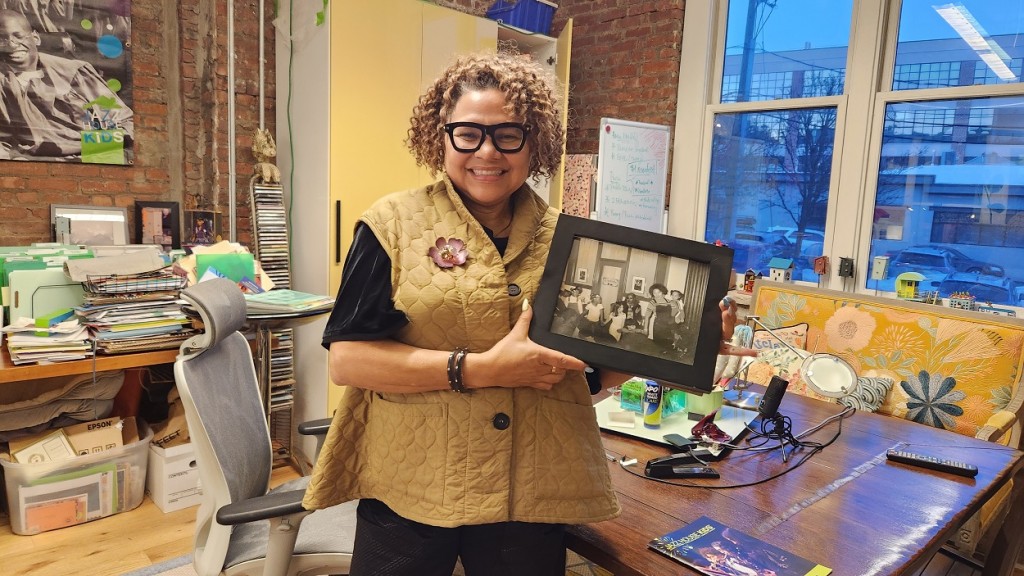
Jazz House founder Melissa Walker often says the organization wasn’t exactly born, but rather grew out of a program she was developing with Newark-based radio station WBGO. The seeds were planted 25 years ago when she was first asked to introduce toddlers and young children to the music she loved most.
“Jazz House evolved out of an afternoon with several kids and their parents in Newark,” says Walker. “While I was there, I didn’t realize the head of Newark Public Schools arts program was there taking photographs. After we finished, he said to me ‘I loved that assembly program,’ and I said ‘what assembly program? I just came to perform and talk to kids.”
Out of that experience, Walker had the concept to build a jazz house before 100 kids and their parents in Newark. From there, the head of Newark Public Schools asked Walker to continue visiting schools in the area and conduct more assemblies.
“The more time I spent at these schools, the more I was aware of the lack of kids’ exposure to jazz, and how kids have this thirst for live music and being around instruments,” she says. “I was so struck by that and continued my work.”
Working alongside Walker is her husband and the organization’s artistic director, 11-time GRAMMY-winning bassist Christian McBride. Together, they have built a curriculum where up to 60 % of students participate in multiple classes and electives each week.
These include their Louis Armstrong Track, which introduces the program’s youngest students with little to no jazz experience to swing music before moving on to more challenging electives. Around 85 percent of students return to Jazz House after their first year to move on to higher classes. Thirteen of their students also serve as mentors for new arrivals.
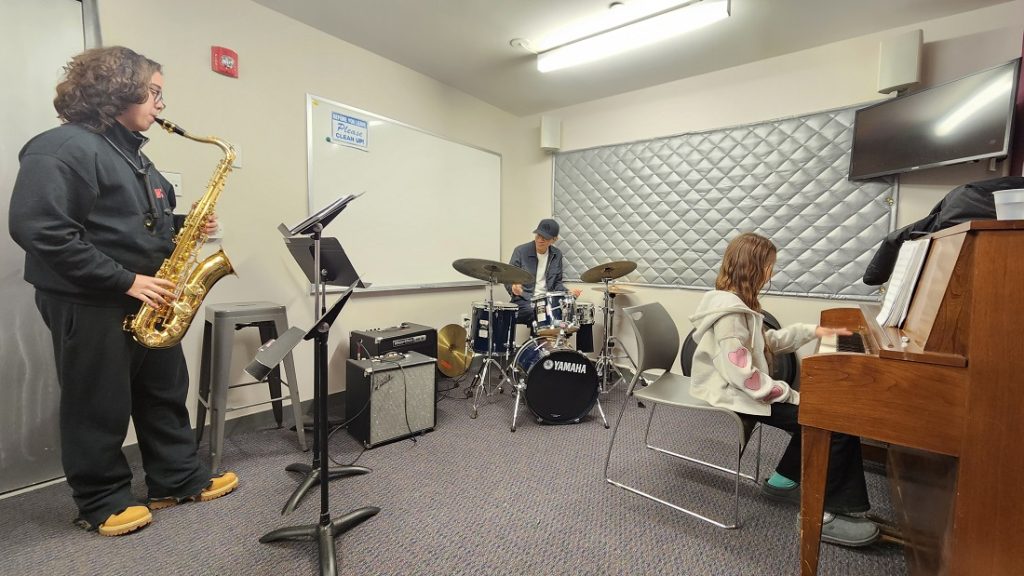
There are 43 weekly offerings at Jazz House. Classes and ensembles include Roots of Improv; Blues & Roots; Mosaic, Heritage, and Afro-Latin Big Bands; Organ Messengers; Rhythm Section Workout; Giglet Bootcamp; and Music Business. They also have a Saturday Vocal Academy for jazz solo singers and their Blue Note Vocal Choir.
Their flagship training program, the Sunday Pre-College Instrumental Academy, provides classes to more advanced students, most of whom go on to attend world-class conservatories and institutions.
While students get to show what they’ve learned with live performances and competitions including the Charles Mingus Competition, Essentially Ellington at Jazz at Lincoln Center, the Exit 0 and Mid-Atlantic Jazz Festivals, and international festivals in Italy.
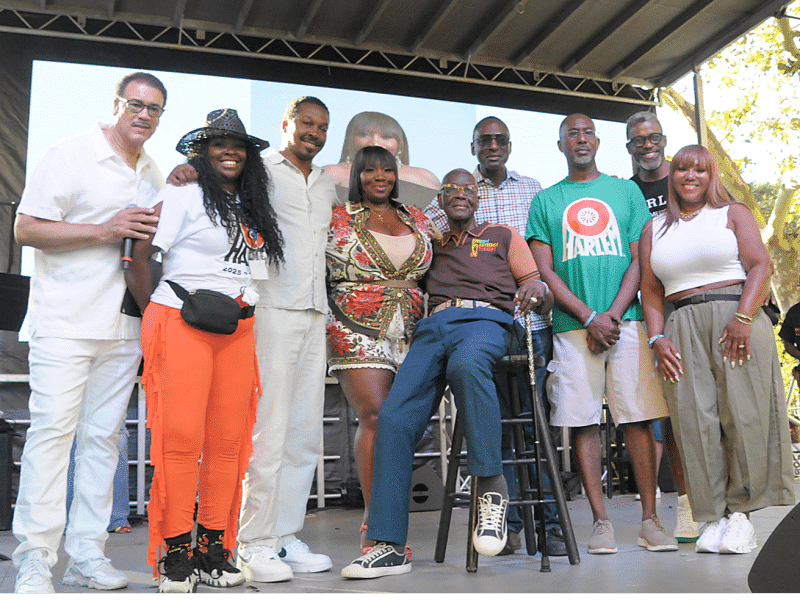
Everything converges on the biggest event of the year: the Montclair Jazz Festival, which has the distinction of being the largest free outdoor jazz festival in the New York Metro Area. Last year’s festival reached around 30 thousand people. The festival originally started as the last day of Jazz House’s summer flagship workshop.
The Montclair Jazz Festival will be one of several participants in the Smithsonian Folklife Festival to commemorate the 250th anniversary of the United States. Under the theme “American Jazz Cities,” the Smithsonian will be working with local organizations like Jazz House to design activities that will reflect the stories and aspirations of their communities.
Originally called “Let’s Build a Jazz House,” the program was quickly renamed Jazz House Kids. As time passed, and more artists were brought into the fold, Jazz House began doing residencies for musicians.
“It allowed us to bring in young people from various communities,” says Walker. “Once we started conducting programming and had a full view of our mission, which was to have a very inclusive community bringing in kids at all different levels, that’s when Jazz House took shape into what it is now.”
For some students, their education at Jazz House comes full circle as they find themselves as a part of the school as instructors and administrators.
“It’s not an uncommon story, as I started at Jazz House when I was 15,” says Ariana Sowa, who began her journey at Jazz House with the saxophone and is now Manager of Student Services. “I was looking for music beyond my school and had an interest in jazz. I found my way back as an intern while in college and I’m one of many alumni that now works here.”
As it is now, Jazz House continues to fulfill Walker’s interest in bringing music to young people and feeding their thirst for creativity.
“Over the years, people would ask if kids really did like jazz, and most kids who are musically inclined and gravitate to music are going to like it,” she says. “It gives them the creative freedom to be a part of an ensemble and learn how to create spontaneously.”
Walker, herself a jazz vocalist, finds that younger people gravitate towards jazz for the challenge that it brings.
“When you climb up a hill, you feel good when you get to the top,” she says. “The thing is though, you find out there’s another hill. But that challenge in this music, and the communal way it is done as a collective is empowering and nurturing.”
From their headquarters in downtown Montclair, Jazz House holds after-school and weekend activities for up to 400 students ages 12 to 18. These include 43 classes for 65 hours a week. They also have programs in Jersey City, Elizabeth, Brooklyn, and a satellite program in Lower Manhattan in collaboration with Trinity Church.
Their footprint remains in Newark with the Jazz House Music Scholars Program, which provides free programming in under-served schools with year-long instruction and free instruments to students who can’t afford one.
Newark schools that are a part of the program include Science Park High School, Oliver Street School, John F. Kennedy School, East Side High School, Arts High School, and LINK Community Charter School.
Editor’s note: This story was updated to include two new GRAMMY awards recently won by McBride.
Author

Related Articles

Black Theatre United Announces Fourth Annual Gala: “Work To Do” Honoring George Cheeks, Delroy Lindo And Paul Tazewell
Monday, October 5 at the Ziegfeld Ballroom. Tickets on sale now!