
Learn More About The Candidates Running For Governor In NJ
New Jersey voters will elect a new governor and decide among four candidates in a high-stakes race that could reshape the state’s political future.
This year, voters will choose a new governor for New Jersey. The state Constitution prohibits Gov. Phil Murphy, a Democrat, from seeking a third consecutive four-year term.
The contested Democratic and Republican parties broke records for spending by candidates and outside committees. The winners were Rep. Mikie Sherrill (D-11th), in her fourth term in Congress, and Republican Jack Ciattarelli, a former business owner, making his third bid for the governor’s office.
New Jersey’s voter rolls lean Democratic: More than 38% of all registered voters are Democrats, compared with some 25% who are Republicans. Most of the rest are not affiliated with any party.
In addition to the two major-party candidates, two others are on the ballot: Libertarian Vic Kaplan of Stanhope and Joanne Kuniansky of Union City running as the Socialist Workers Party candidate. The Green Party originally had backed Stephen Zielinski, but he dropped out due to health concerns. His replacement, Lily Benavides, was knocked off the ballot by a signature challenge.
Editor’s note: This story was originally published by NJ Spotlight News and is being republished as part of the NJ Decides 2025 content-sharing agreement with NJ Spotlight News and the Center for Cooperative Media at Montclair State University.
The Candidates
- Jack Ciattarelli (Republican)
- Mikie Sherrill (Democrat)
- Vic Kaplan (Libertarian)
- Joanne Kuniansky (Socialist Workers Party)
JACK CIATTARELLI, REPUBLICAN
Age: 63
Hometown: Somerville
Occupation: Entrepreneur/Former Business Owner
Personal or professional background: I am a life-long Jersey guy, born in Somerville and raised in Raritan Borough, where my grandparents immigrated 100 years ago. My parents owned a restaurant/bar, worked hard to pursue the American Dream, and provided a solid middle-class life for me and my siblings. I earned both my bachelor’s and MBA from Seton Hall, and later became a Certified Public Accountant, as well as an entrepreneur who founded two successful Main Street businesses in NJ. Along the way, I served in public office at the local, county, and state level, term-limiting myself each time. But of all the titles I’ve earned, the one I am most proud of is to be called “Dad” by my four adult children, each already accomplished in their fields.
What is your top issue this year? Unfortunately, after 25 years of one-party Democrat control of the State Legislature and 8 years of Phil Murphy as Governor, NJ is consumed by several crises negatively impacting the quality of life for our residents. My top focus will be affordability and lowering the cost of living so young families can build a life here and retirees can afford to stay. I will cap property taxes for families and freeze them for seniors, while killing offshore wind farms and expanding safe and clean natural gas and nuclear to lower electricity rates, which are currently out of control. Lastly, I will appoint a law-and-order AG who will empower police and parents and deliver on my promise to repeal Governor Murphy’s failed and dangerous Sanctuary State policy for illegal immigrants.
What are your specific proposals for making New Jersey more affordable? I encourage everyone to visit my website at www.jack4nj.com/platform to read my entire plan. In short, I will cap property taxes to a percentage of assessed home value, expand the senior property tax freeze, reduce state spending, and aggressively use the line-item veto pen to eliminate and prevent waste. I will reduce the Business Tax by one percent per year for five years, taking it from the highest rate in the nation to one that is competitive nationally, and reduce and simplify income taxes for all taxpayers, prohibit tax increases on home improvements, and make student loan interest tax deductible.
Do you support the state law designed to increase the amount of affordable housing and if not, how would you make housing less costly for residents? We need more affordable housing, but I do not support mandated housing construction in every municipality, which has resulted in overdeveloping suburban communities with limited infrastructure, no mass transit, and very few, if any, low-to-moderate income job opportunities. This failed approach is devouring open space, chasing wildlife from its habitat, increasing pollution from more idling cars on already congested roads, leading to more local flooding, and driving up property taxes. Instead, I would implement a regional approach – focused on driving population growth to transit hubs and urban centers, where self-sustaining local economies are desperately needed and would be welcomed.
How should the state deal with federal funding cuts to Medicaid, food assistance, education and other areas? My job as governor is to protect the most vulnerable citizens in our state, make sure those who need help receive it, and ensure they have access to affordable services, and that no one falls through the social safety net. At the same time, we need to restore fiscal responsibility and discipline to our own state. Trenton Democrats believe more spending is the solution to every problem, but despite increasing spending by nearly 70% in just eight years all of our problems are worse, not better. On top of that, we are facing multi-billion-dollar deficits. I will reduce state spending, reprioritize how dollars are allocated, and root out waste and fraud in our state government.
How would you manage the current and looming impacts of climate change on the state? I believe in climate change, but the approach taken by Governor Murphy and New Jersey Democrats is making things worse, not better. I will end their housing construction mandates that are adding to pollution and negatively impacting drinking water. I will implement a new Energy Master Plan that promotes an all-of-the-above energy policy including clean and safe natural gas and nuclear, and repeal unrealistic and unaffordable state mandates regarding electric vehicle sales, household appliances, home renovation, and home construction. Lastly, I will ban offshore wind farms from being built off our coast and along our Jersey Shore, which again, have negative environmental impacts in addition to driving up the cost of energy.
What actions, if any, should NJ be taking to respond to the Trump administration’s policies? My opponent has no solutions to fix the state, so her plan is to try and blame the president for state and local issues created by 8 years of Phil Murphy and 25 years of one-party Democrat control of the legislature, while wasting your money on politically motivated lawsuits. It’s insulting to New Jerseyans. We need a governor who will work with President Trump to deliver results for our state, and also stand up for New Jersey when we disagree. I have talked to the president personally and we are aligned on items such as stopping offshore wind farms, providing tax relief to already overburdened New Jerseyans, and repealing the absurd congestion pricing scheme being imposed on us by New York’s governor.
What changes, if any, would you make to the state’s school funding system, and how would you pay for them? I will set a statewide standard on per-pupil spending, create a more equitable distribution of funds by setting a reasonable spending target for all districts, and allow money to follow the student. I would achieve this by providing a base amount (“x”) for every English-speaking student and additional funding (“y”) for English language learners, recognizing different educational needs. I also support the state taking over Special Education costs and relieve local districts of that burden. Last, but not least, I will hold districts accountable for how tax dollars are spent and ensure that funding is tied to academic results and end the practice of pretending all problems are solved by just throwing money at them.
MIKIE SHERRILL, DEMOCRAT
Age: 53
Hometown: Montclair
Occupation: Congresswoman (NJ-11)
Personal or professional background: I’m running for governor because my life is built on service and running toward the tough fights. I’m a graduate of the U.S. Naval Academy and spent nearly ten years in the Navy, as a helicopter pilot and Russian policy officer. I continued my public service at the U.S. Attorney’s office as an outreach and re-entry coordinator, then as a federal prosecutor. After Trump’s first election, I ran for office and flipped a long-time Republican district in the largest red-to-blue swing in the country. In Congress, I’ve proudly delivered for NJ-11 — and will bring that dedication to the governor’s office.
What is your top issue this year? I’m running to bring a different kind of leadership to Trenton because the status quo isn’t working. As your governor, I’ll work to drive down costs and will stand up to Trump, Musk, or anyone else hurting New Jerseyans. I’ll take on rising costs for housing, utilities, and health care. I’ll crack down on special interests that drive up the cost of rent and prescription drugs. I’ll fight Trump and Musk’s plan to cut Social Security, Medicare, or any attack on our freedoms. I’ve spent my life fighting for you and your family, and I’m not stopping now.
What are your specific proposals for making New Jersey more affordable? I’m focused on lowering costs for families in six areas: housing, energy, health care, taxes, costs to raise children, and groceries. To reduce housing costs, I’ll work with communities to build more homes by converting underused commercial spaces into housing. To bring tax relief to families, I’ll unlock the potential of shared services for municipalities and expand our Child Tax Credit and Earned Income Tax Credit. I’ll drive down health care costs through independent auditing of the State Health Benefits Program and increased pricing transparency. I’ll also prioritize low-cost, in-state clean energy investments – like solar – to bring down utility rates.
Do you support the state law designed to increase the amount of affordable housing and if not, how would you make housing less costly for residents? The new housing law rightly took the process back from the courts, while also incentivizing goals that I share like reducing delays and litigation, boosting transit-oriented development, and redeveloping commercial properties. But our current housing system is not leading to the construction of the variety of units in the right places we need to address our housing shortage. As governor, I will streamline our state permitting to make it faster to build and in locations with access to jobs and transit, while avoiding exacerbating our flooding problems.
How should the state deal with federal funding cuts to Medicaid, food assistance, education and other areas? Trump and Musk’s budget cuts would be devastating for New Jersey. I’ll appoint an attorney general who will be creative and aggressive, taking Trump to court to defend our state and the tax dollars we send to Washington. If he goes through with threats to cut Medicaid, I’ll bring together our health care organizations, not-for-profit hospitals, and commercial insurers to develop a comprehensive strategy to close the coverage gaps. If he cuts education funding, I’ll claw those dollars back to New Jersey to support our schools here. These attacks are illegal and I will fight them on every front.
How would you manage the current and looming impacts of climate change on the state? I’ve been a champion of environmental and clean energy priorities in Congress and I’ll drive innovative solutions to address climate change as governor. First, I’ll prioritize in-state production of clean, cheap energy by boosting capacity for community solar and hosting solar projects on state properties. Second, I’ll take on polluters and incentivize remediation of brownfields that disproportionately impact overburdened communities. Third, with some of the most flood-prone counties in the country, I’ll bring local, state, and federal stakeholders to the table and create a true statewide flood mitigation and resiliency plan — and make sure we stick to it.
What actions, if any, should NJ be taking to respond to the Trump administration’s policies? Governors are the last line of defense against Trump’s lawlessness. In Trenton, I’ll appoint a strong attorney general – and increase their budget – to vigorously defend the people of New Jersey. Our residents contribute more than their fair share of federal taxes, and we must demand our due in federal resources. I’ll also stand up for our values: aiding small businesses amid pointless trade wars; safeguarding health care for the most vulnerable and enacting shield laws and stockpiling mifepristone to protect abortion rights; and supporting our students and schools, federal workers, and non-profit agencies as Trump wreaks havoc from Washington.
What changes, if any, would you make to the state’s school funding system, and how would you pay for them? We need to ensure all our students have a fair shot at success. The bulk of the formula was written in 2008 and I would work to modernize it so that we are meeting the latest standards and best practices, and helping students overcome challenges like learning loss and mental health. It needs to account for districts that have a higher percentage of students with special needs. We also need to stabilize the formula to address the wild year-to-year fluctuations we see and ensure districts have the resources needed to maintain the programs and quality of education a student receives.
VIC KAPLAN, LIBERTARIAN
Age: 47
Hometown: Marlboro
Occupation: Self
Personal or professional background: I have worked in a variety of fields ranging from translation to sales.
What is your top issue this year? People cannot afford the cost of housing (more homelessness). I support getting rid of the impact fees (taxes) on smaller homes. By changing the zoning laws, housing can become more affordable. More people could live in RVs and tiny homes. I support the gradual repeal of the State Income Tax (in place since 1976, with 9 states currently lacking a State Income Tax), and replacing it with user fees. The State Income Tax was meant to fund education, and we ended up both with the State Income Tax and the highest property taxes in the country. By working towards the gradual abolition of the State Income Tax, property taxes (the highest in the nation) can be significantly reduced, and/or local governments choosing to boost local school funding.
What are your specific proposals for making New Jersey more affordable? I support ending the certificate of need (CON) laws that raise the cost of medical services and prevents more hospitals from being built. I support getting rid of the impact fees (taxes) on smaller homes. By changing the zoning laws, more people could live in RVs and tiny homes. I support the gradual repeal of the State Income Tax (in place since 1976, with 9 states currently lacking a State Income Tax), and replacing it with user fees, which would save the people of New Jersey thousands of dollars. Property taxes could then be significantly reduced, and/or local governments choosing to boost their local school funding.
Do you support the state law designed to increase the amount of affordable housing and if not, how would you make housing less costly for residents? I do support more affordable housing, just not at the expense of taxpayers. I support getting rid of the impact fees (taxes) on smaller homes. By changing the zoning laws, housing can become more affordable, thus reducing the homelessness. More people could live in RVs and tiny homes. I support the gradual repeal of the State Income Tax (in place since 1976, with 9 states currently lacking a State Income Tax), and replacing it with user fees. More funding for the homeless would become a possibility for the groups that provide the support for the homeless populations, from the savings. Abandoned commercial and residential buildings can be used to house the homeless.
How would you manage federal funding cuts to social services, health care, education, and other areas, particularly in light of the state’s budget challenges? The savings from the gradual abolition of the State Income Tax (to be replaced with user fees), the significant reduction of property taxes, and the affordable housing (which would reduce the number of people leaving New Jersey) would open up resources to fund other areas.
How would you manage the current and looming impacts of climate change on the state? Innovative solutions should not be stifled. This, however, should not be funded at the expense of taxpayers, to make sure that the alternative forms of energy have demonstrated their effectiveness.
What actions, if any, should NJ be taking to respond to the Trump administration’s policies? If the federal or state policies are not in line with the natural rights that we are born with (a right to life, liberty, and property), then they should not be enforced. The US Constitution covers every person who is on US soil. 93% of the people arrested by ICE had no violent convictions, and 65% had no convictions. Let the local police deal with law enforcement, if anyone does commit violent or property crime. Let employers fund the travel and training of immigrant employees, with private groups offering financial assistance. Individuals who will pass the background checks in the State of New Jersey, have a right to come to New Jersey on their own or with their families to seek work.
What changes, if any, would you make to the state’s school funding system, and how would you pay for them? I support Parental Choice in applying for public schools across municipal lines, charter schools, private schools, and homeschooling. By working towards the gradual abolition of the State Income Tax (to be replaced with user fees), property taxes (the highest in the nation) can be significantly reduced, and/or local governments choosing to boost local school funding.
JOANNE KUNIANSKY, SOCIALIST WORKERS PARTY
Age: 72
Hometown: West New York
Occupation: Campaigning for the Socialist Workers Party
Personal or professional background: I joined the Socialist Workers Party in 1977 convinced workers’ interests are irreconcilable with those of the bosses and their parties — Democrats and Republicans. Working people need our own party, to lead the fight to take political power into our hands, to make socialist revolutions worldwide.
At high school in Atlanta I was part of the fight for Black rights and against the Vietnam War. Civil rights battles that uprooted race segregation show the capacities of the US working class.
For decades I’ve been part of building solidarity and strengthening unions. Recently I’ve joined picket lines of nurses, flight attendants and longshoremen; protests against Jew-hating attacks, for immigrant rights, and in defense of the Cuban Revolution.
What is your top issue this year? The international working class has high stakes in Israel’s war to defeat Hamas and prevent another Holocaust. Hamas is the main obstacle to Palestinian national rights. Under capitalism there can be no safe-haven for Jews. Building proletarian parties to lead the fight for a workers’ governments is the course to prevent imperialism’s march toward fascism and another world war.
I support the resistance of Ukraine’s working people to Moscow’s war. Workers need our own foreign policy! U.S. troops, bases and warships out of the Mideast and Europe!
ICE arrests and deportations aim to keep undocumented workers in a pariah status, to divide and attack our entire class. For a union led fight for amnesty for immigrants to unite the working class.
What are your specific proposals for making New Jersey more affordable? Air Canada flight attendants’ fight for better wages and conditions points the way forward for workers here. They defied government orders to go back to work asserting their right to strike, strengthening the independence and fighting capacity of the working class.
Capitalism can’t be reformed. The burdens working people face are the product of a crisis-ridden profit system. There are no “New Jersey” solutions, but if we start from the world, we can understand why working people face lower living standards, job speedup and why the opening guns of World War III grow louder.
Ultimately, we need to overthrow capitalist rule and take political power into our own hands to fight for a world based on human solidarity not capitalist profit.
Do you support the state law designed to increase the amount of affordable housing and if not, how would you make housing less costly for residents? A union-led fight for automatic cost-of-living increases in all contracts, pensions and benefits is needed, along with a mass public works program to provide jobs for millions — at wages sufficient for families to live on — building safe, affordable housing, hospitals and other needed infrastructure.
A working-class course to confront the capitalist crisis bearing down on workers is the road to advancing the fight for women’s emancipation.
Under capitalism, workers’ housing is more often built on cheaper land in dangerous flood-prone areas and areas of high pollution. Solving problems like this requires changing which class rules, like working people did in Cuba by taking power and ending capitalist exploitation.
How would you manage federal funding cuts to social services, health care, education, and other areas, particularly in light of the state’s budget challenges? I am for universal health care and education, from cradle to grave. To achieve this, we must replace dog-eat-dog capitalism, where health care is a commodity sold for a profit.
Programs like Social Security, Medicare and Medicaid are byproducts of the union battles in the 1930s and the struggle to smash Jim Crow segregation.
As long as capitalism exists, gains working people win will come under attack by the bosses. That’s why workers need to take power. In Cuba millions were transformed by making a revolution. Some 400,000 Cubans volunteered to fight in Angola ensuring the historic defeat of the invading apartheid army.
End Washington’s brutal economic war on Cuba! Remove Cuba from the list of state sponsors of terrorism.
How would you manage the current and looming impacts of climate change on the state? The fight for workers control of industry is needed to combat the bosses’ life-threatening speed-up and their contamination of the earth, skies and oceans. Job safety, and consumer and environmental protection are tied together. Through the fight for workers control workers can demand the bosses open their books and expose the way they hide their outrages against both labor and nature.
The working class is the only truly international class. Support the efforts of countries oppressed by imperialism to acquire the energy sources needed to expand electrification. Oppose the efforts of Washington and other imperialist powers to prevent those nations developing nuclear power and other energy sources to bring much of humanity out of darkness.
What actions, if any, should NJ be taking to respond to the Trump administration’s policies? Until working people break from both the Democratic and Republican parties, we cannot make any political advances. Both parties serve the capitalist rulers, carry out their wars abroad and their assaults on workers at home.
The Socialist Workers Party’s continuity goes back to Lenin and the Bolshevik Revolution in Russia, to the fight by Leon Trotsky against the counterrevolution carried out by Joseph Stalin, and to Cuba’s socialist revolution. The SWP was built in the struggles to organize industrial unions in the 1930s, the working-class movement for civil rights, and in the fight against every imperialist war carried out by the US rulers.
Its members are workers. Be part of the coming class struggles — join the SWP!
What changes, if any, would you make to the state’s school funding system, and how would you pay for them? The capitalist rulers have no need for workers to be educated. They need us to be obedient, work hard for them, consume all we make each week on the products they sell and lose any desire to broaden our scope and become citizens of the world. The purpose of “education” in class society is not to educate. It is to give the “educated” a stake in thinking they are going to be different and better than other people who work all their lives.
Until society is reorganized so that education is a human activity from the time we are very young until the time we die, there will be no education worthy of working, creating humanity.
Related Articles
Sherrill Signs NJ’s Landmark Immigrant Protection Laws
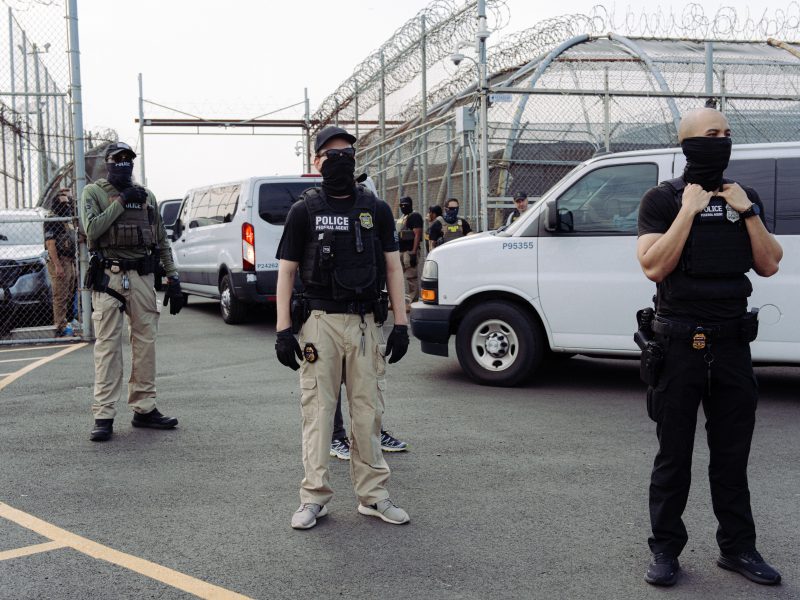
The bills protect immigrant residents’ private information and limit how local police can interact with ICE officers.
Gov. Mikie Sherrill: Ethnic And Community Media Shed Light On ‘Untold Local Stories’
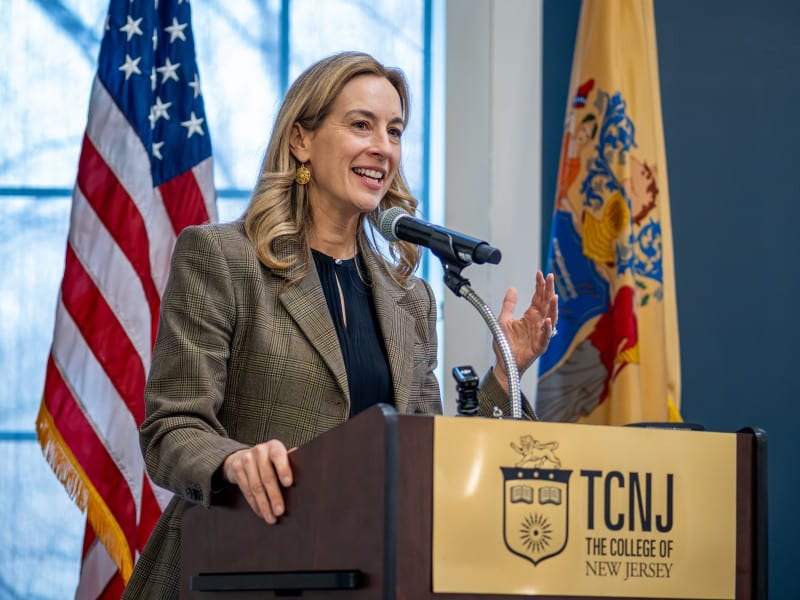
U.S. Sen. Andy Kim, NJ Sen. Raj Mukherji highlight the need for truthful, reliable news media at the 2026 NJ Excellence in Community Media Awards.
In Rare Bipartisan Burst, Congress Close To Historic Housing Law
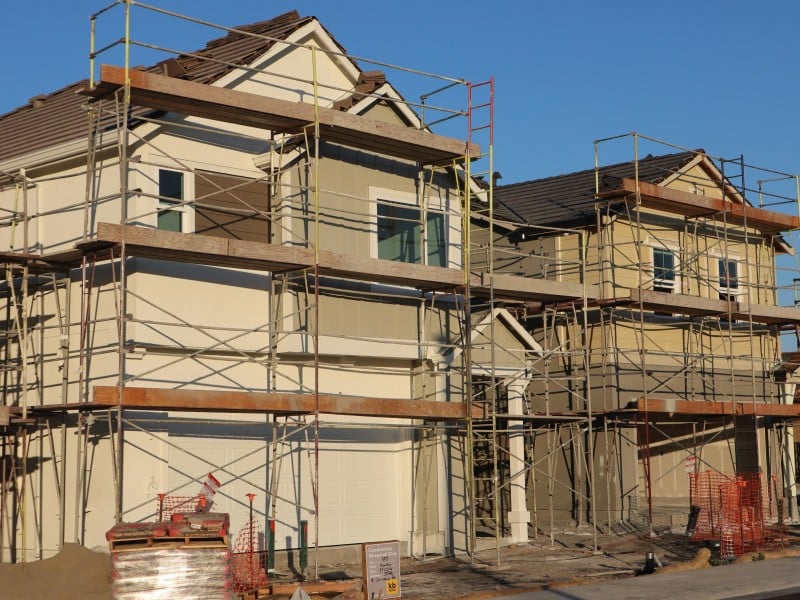
With the nation short millions of residential units, bill may stall because Trump says he’ll sign nothing unless voting curbs are passed