Trump Budget Cut List Revealed
By Benjamin J. Hulac
Washington Correspondent For the NJ Spotlight News
WASHINGTON — The Trump administration wants deep cuts to federal housing and health care programs, more funding for the military and the elimination of dozens of small government programs and agencies in the next budget cycle.
The proposed budget includes cuts to a key Amtrak line that bisects New Jersey, more money for immigrant detention sites like Newark’s Delaney Hall and language that places the future of federal historical locations, like the Statue of Liberty and Ellis Island, at risk.
In a roughly 1,200-page document released without fanfare on Friday evening, the administration laid out its objectives for the next fiscal year, which begins Oct. 1.
That and other documents released in recent days provide a clearer image of the administration’s proposal, first released in early May, which would slash about $163 billion from the next federal budget.
As the administration presses for sharp cuts to social services, like housing assistance, public health programs and food aid, it wants increases in the budgets for the Pentagon and the Department of Homeland Security, the wing of government primarily carrying out President Donald Trump’s mass deportation strategy.
Congress, not the White House, is in charge of writing the federal budget, though the administration tried to freeze federal grant funding in January, plunging the U.S. government into a funding crisis.
Separate from the GOP’s mega-tax bill
The administration’s budget request is separate from both the ongoing debate on Capitol Hill, where Republicans are trying to pass an immense tax bill that would cut social programs, and a separate request — or rescission — from the White House to cut $9.4 billion in foreign aid and for public media, such as PBS and NPR.
The White House made that request Tuesday afternoon. Once the president has made an official request for a rescission, Congress has 45 days to pass or ignore it.
The rescission targets $8.3 billion in foreign aid and $1.1 billion in funding for the Corporation for Public Broadcasting, which in turn funds PBS and NPR, that Congress has already approved but the White House does not want to spend.
A rescission can pass both chambers on simple-majority votes, avoiding the Senate’s filibuster.
The Department of Health and Human Service would see its budget slashed by about $33 billion, or roughly 26%.
Because of the scale of the federal budget, the financial decisions made in Washington have trickle-down effects on every state and U.S. territory.
The White House’s budget request for the next fiscal year is $1.7 trillion.
By comparison, Gov. Phil Murphy, a Democrat, in February requested a roughly $58 billion budget for fiscal year 2026, and the state received about $22 billion in federal funding in the state’s 2024 budget year, according to the governor’s office.
The federal department facing biggest cuts
Under the Trump administration’s budget proposal, the Department of State, combined with some other international programs, would receive the largest cut of any Cabinet-level agency by dollars and percentage — $49.1 billion, or 83.7%.
The Department of Health and Human Services would see its budget slashed by about $33 billion, or roughly 26%.
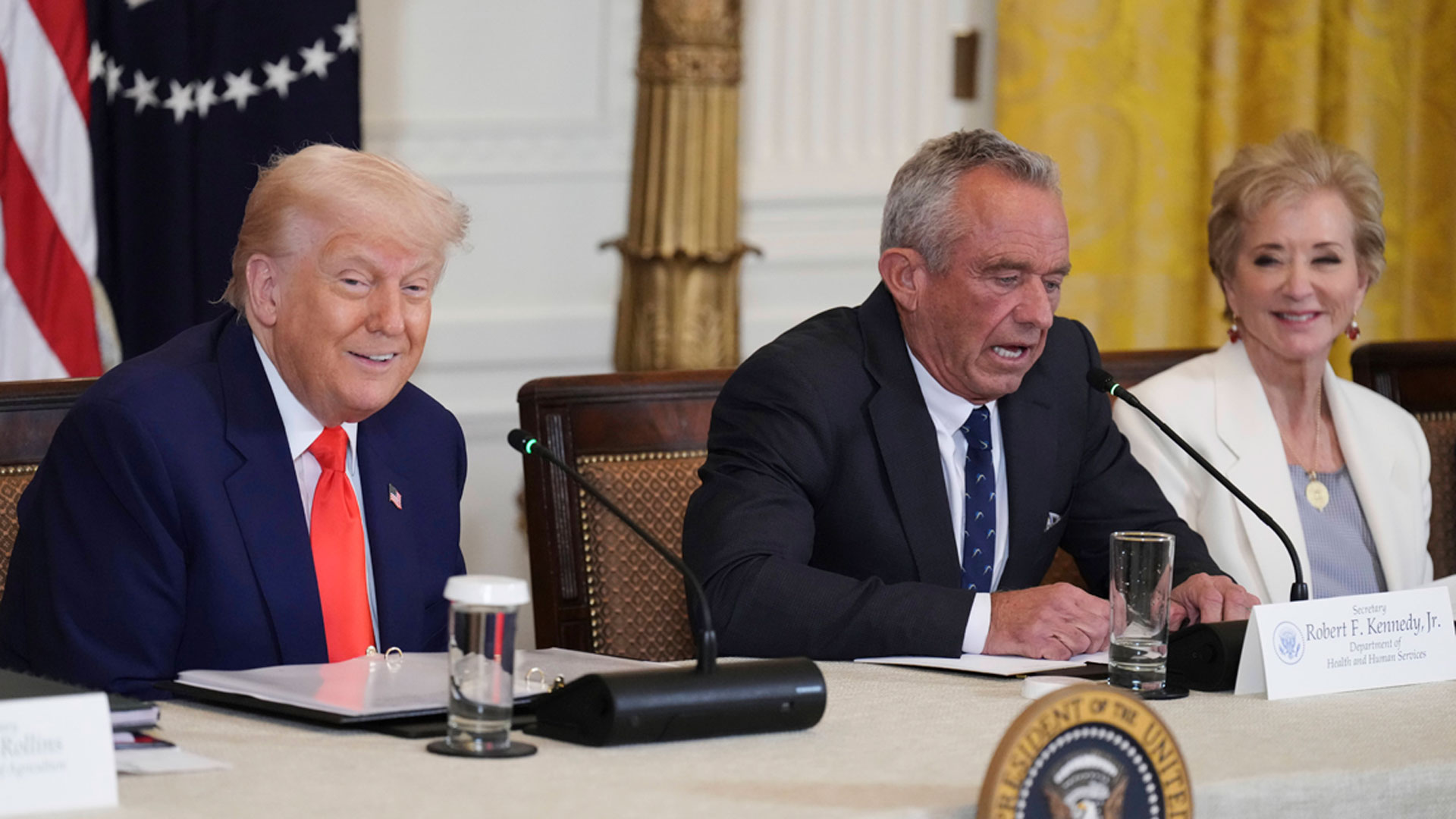
Agencies within HHS would also sustain deep cuts. Part of HHS, National Institutes of Health programs would drop 39% in funding, with resources redirected to priorities of Robert F. Kennedy Jr., the health secretary, such as $19 billion for the newly created Administration for a Healthy America, which would focus on chronic disease.
One small but popular program, the Low Income Home Energy Assistance Program, or LIHEAP, would be eliminated.
Also within that HHS bubble is the National Cancer Institute, slated for a $4.5 billion budget for the next fiscal year. That would amount to a $2.7 billion, or roughly 37%, cut.
House Republicans deliver massive bill, slashing taxes — and benefitsIf it happens, that sum would return the institute to funding levels it had two decades ago, according to the American Cancer Society Cancer Action Network. “Cuts have consequences, and those consequences are life threatening for cancer patients who could be waiting for the next clinical trial or research breakthrough,” the group said.
Some agencies within HHS, like the Office of Civil Rights, would be eliminated entirely while others, like the Substance Abuse and Mental Health Services Administration, would have their programs reorganized under new or existing offices.
Cutting and closing
One small but popular program, the Low Income Home Energy Assistance Program, or LIHEAP, would be eliminated.
The Department of Housing and Urban Development would lose more than half — 51% — of its budget, dropping from about $89 billion to $43.5 billion.
The Department of Education would receive $66.7 billion, a 15% cut. That number “reflects an agency that is responsibly winding down,” the administration said in budget documents. Trump and Education Secretary Linda McMahon are trying to close the department, though that would require an act of Congress.
The White House also called for a 25% spending cut to Amtrak’s Northeast Corridor service — that line makes several stops in New Jersey — and the cancellation of about $5.7 billion in funding for electric vehicles, through budget documents from the Department of Transportation.
More money for FAA, less for nutritional support
The Federal Aviation Administration would receive about $22 billion, a slight increase from its current $20.9 billion budget.
The aviation agency is working to overhaul the nation’s air traffic control system, including at Newark Liberty International Airport, which has seen significant safety concerns in recent weeks.
The administration also proposes cutting support to the Special Supplemental Nutrition Program for Women, Infants, and Children, commonly known as WIC, which helps low-income parents and their newborns.
‘A trillion-dollar Pentagon budget is not a sign of strength; it’s a sign of indecision.’ — Steve Ellis, president Taxpayers for Common Sense
Spending cuts to WIC would return the program to its lowest funding level since 2021, according to the National WIC Association.
“Under this proposal, breastfeeding mothers would see their monthly benefits plummet from $52 to just $13, while young children’s benefits would drop from $26 to $10,” said Georgia Machell, president and CEO of the association. “Even with current benefit levels, WIC only covers about half of the recommended daily servings of fruits and vegetables that children and mothers need for good health.”
Funding under the budget proposal, an annual process, is separate from the multitrillion-dollar Republican legislation before Congress.
More for immigrant detention, defense
That Republican bill includes $45 billion for immigration detention centers, like Delaney Hall in Newark.
Under the White House’s budget proposal, departments in line for increases include defense, homeland security, transportation and veterans affairs.
The administration wants to cut about $1.2 billion for the next park service budget, $900 million of which would be cut from operations.
One particularly eye-popping budget request comes from the Pentagon: a $1 trillion budget.
That sum would mark a 17% jump from the current military budget, as Steve Ellis of Taxpayers for Common Sense, a nonpartisan budget watchdog group, pointed out.
“A trillion-dollar Pentagon budget is not a sign of strength; it’s a sign of indecision,” said Ellis, the group’s president. “It belies an inability or an unwillingness to make strategic decisions about what we truly need to defend our nation.”
Big cuts sought at National Park Service
A smaller wrinkle of the budget proposal is playing out at the National Park Service, part of the Interior Department.
The administration wants to cut about $1.2 billion from the next park service budget, $900 million of which would be cut from operations, as a way to shift management of hundreds of federal sites to state or tribal governments.

How the GOP bill would hit Medicaid users in New JerseyOf the 433 locations the National Park Service manages, only 63 have “national park” in their formal name such as Yellowstone, Rocky Mountain or Acadia.
If the federal government were to no longer manage the non-national park sites, the duty would likely fall to the states, many of which likely do not have the financial ability, and the sites, including some nearby gems of the Colonial-era, like Independence Hall and Valley Forge in Pennsylvania and the Morristown National Historical Park, would suffer.
“New Jersey is one of the cradles of our democracy, where you learn about the Revolutionary War,” Kristen Brengel, senior vice president of government affairs for the National Parks Conservation Association, said in an interview with NJ Spotlight News. “The idea of the sites no longer being protected federally is not who we are as Americans.”
Brengel, who grew up in Essex County, recalled frequent field trips when she was in school, like to the Statue of Liberty. “You can read about our history in a textbook one day and then go visit the site the next day.”
While it lacks a park with the swaggering reputations of Yosemite in California or Zion in Utah, New Jersey has heavily-trafficked sites the federal government manages.
Across all National Park Service sites in 2024, Gateway National Recreation Area was No. 4, by visits; Delaware Water Gap was No. 20, and the Statue of Liberty was No. 24, data shows.
“What they’re proposing, essentially, is to gut them financially,” Brengel said of the non-park sites.
— Lilo H. Stainton contributed reporting.