
Empowering Change: Hackensack’s Fight Against Climate Impact
“Editor’s note: This story was produced as part of “Stormwater Matters,” a project on stormwater management solutions by the New Jersey News Collaborative.”
Over the past 200 years, the burning of fossil fuels has heated the planet. The amount of fossil fuels we actually burn and how quickly may be a topic of debate, but its impact on the human race is not.
Most scientists refer to this phenomenon caused by human activity as “climate change,” citing a rise in extreme weather events—like earthquakes, fires, or floods—as an example.
While some remain with their heads in the sand and believe that all the signs of climate change will magically disappear if its symptoms are ignored, if we deny its existence and wait for it to happen, others have taken action.
Here in New Jersey, a growing number of organizations are combining forces to find answers to some of climate change’s more severe results, including identifying stormwater and wastewater management solutions—solutions that must be found if communities like Paterson, Newark, and Hackensack are to overcome ongoing environmental problems caused by flooding.
Data from the science community reveals that time is of the essence.
In a May 2020 report, the New Jersey Climate Change Resource Center, located on the campus of Rutgers-New Brunswick University, concluded that New Jersey can expect higher temperatures, a greater frequency of heavy precipitation events, and rising sea levels.
“Climate change in New Jersey is having far-reaching impacts on the economy, the environment, and the way we conduct our everyday lives,” the report said. “Warmer temperatures are expected to produce more severe heat waves. Sea level rise and heavy rains are causing more frequent and intense flooding. These and other climate-related hazards are projected to escalate through the 21st century and fall heaviest on New Jersey’s most vulnerable populations.”
Leonardo Vazquez, the executive director of the Northern New Jersey Community Foundation (NNJCF), is one of many individuals who continue to offer his insights, expertise, and experience in identifying solutions for flooding-related problems, including the threats faced by wastewater facilities.
“I think New Jersey is trying to do a lot to avoid the mistakes of the past by requiring developers of large developments to put in systems that manage the stormwater that their developments are passing along to neighbors,” he said, adding that if there were no development on a piece of property, much of the rainwater would be captured in the land.
“Yes, the state could do more, but I know that the state recently made some changes to the stormwater management rules that increased requirements for large developments. However, having more regulations on development can increase costs, which leads to more expensive rents and purchase prices. In an area dealing with housing affordability and gentrification, finding the right balance is challenging,” he said.
Vazquez noted ways to manage stormwater, like gray and green infrastructure. He describes gray infrastructure as plumbing and draining systems that sustainably filter through the water that passes through baths, sinks, and other kitchen appliances. In contrast, green infrastructure aims to reduce stormwater flow in communities, ensuring it reaches natural water bodies.
“Green infrastructure helps gray infrastructure. Green infrastructure can also add natural beauty to an area and help with heat island issues. Heat islands are places in a community that are much warmer in the summer because there are no trees or other plants to cool things down,” Vasquez stated.
According to Vasquez, cities like Hackensack have made great strides toward progress in these areas and set a good example that the rest of the communities in the area and across the state could follow.
Still, Vazques encourages locals to stay informed about how they can minimize the impacts of climate change in their homes and larger communities.
One way for residents to become better informed is to attend a public forum on Monday, July 29, at the Hackensack High School Media Library (135 First Street) from 6 to 8 p.m.
The free event, co-sponsored by the Hackensack Environmental Justice Alliance and the Northern New Jersey Community Foundation, will focus on how green infrastructure and other strategies help address flooding, air pollution, heat islands, and other environmental issues.
Planners of the event say they want anyone who works or lives in Hackensack and would like to be involved in addressing flooding in the city or to help beautify Hackensack through additional green infrastructure to attend, participate, and share their concerns.
To find out what the City of Hackensack and community-based organizations are doing to address these issues, or for more information about the forum, contact Vazquez at leo@nnjdf.org.
To register for the forum, https://tinyurl.com/EJAJuly29.
Related Articles
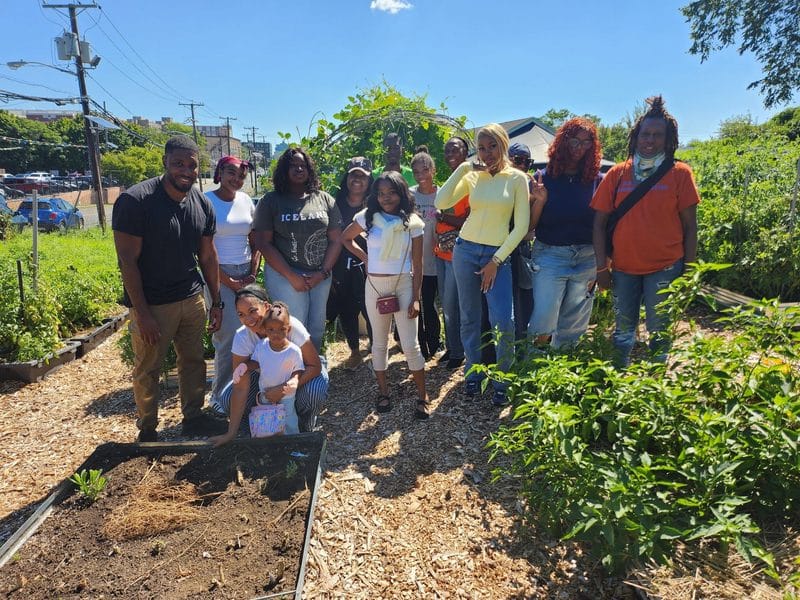
Beyond the Garden Tour: Newark Growers Cultivate Food, Wellness and Community
Newark’s annual citywide garden tour opened farms and green spaces to residents for a week, while highlighting the year-round work to expand fresh food access and keep community gardens rooted in their neighborhoods.