Actor Richard Dreyfuss Attends Local Screening of “Jaws”
Directed by Steven Spielberg, Jaws follows a police chief (Roy Scheider), a marine biologist (Dreyfuss), and a veteran shark hunter (Robert Shaw) as they try to kill a great white shark terrorizing the town of Amity Island. Though it has been almost half a century since this movie debuted, the lively turnout of the Bergen PAC’s screening proves this thrilling picture hasn’t lost its magic.
Brimming with audiences young and old, the Englewood theater was practically swimming with diehard Jaws fans, some of whom likely witnessed the film when it premiered way back in 1975. Throughout the screening, people laughed, cheered, and even sang “Show Me the Way to Go Home” along with the film’s three leads. It was nothing short of a testament to how timeless this motion picture truly is.
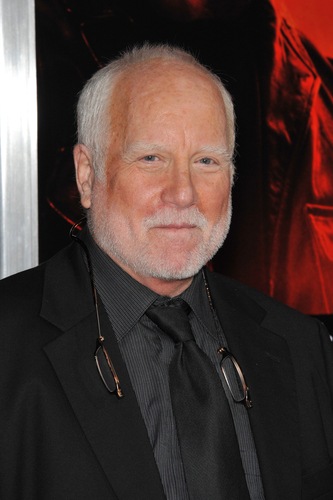
Dreyfuss took to the stage after the credits rolled for an interview about his life and acting career, answering questions about Jaws and his breakout performance as Matt Hooper. He spoke candidly about his decision to take the role, despite initially turning it down. He said he knew how difficult it would be to make such a picture, but he was convinced that Spielberg had the right vision to make it a great film.
As Dreyfuss predicted, Jaws became infamous for its troubled production, with shooting going longer than expected and the fake shark repeatedly breaking down, forcing Spielberg to film scenes with the creature hidden from sight or through its point of view. Many thought Jaws would sink in theaters just as Dreyfuss thought he would fail as an actor, only for the film to defy the odds and catapult the Brooklyn-born actor into Hollywood stardom.
Dreyfuss took the time to discuss his other performances in classics like The Graduate, American Graffiti, Close Encounters of the Third Kind, The Goodbye Girl, Stand By Me, Always, What About Bob?, Mr. Holland’s Opus, W., and Madoff. During this conversation, Dreyfuss spoke lovingly of Steven Spielberg, along with past co-workers like director George Lucas, singer/actor Barbara Streisand, and actor Audrey Hepburn.
Specifically, Dreyfuss expressed his belief that, despite Spielberg’s claims, the director wouldn’t change the ending to Close Encounters if the latter made it today. The ending in question saw Dreyfuss’s character, Roy, choose to leave Earth with the aliens he obsessively pursued, long after his wife and kids left him. “There’s no other ending for that film…,” he said. “Steven Spielberg is exactly what you think he is: the greatest director now working, and that’s that.”
The interview also highlighted how he became the youngest person to win the Oscar for Best Actor for his performance in The Goodbye Girl. Dreyfuss admitted he knew he would win the Oscar the moment he was nominated. Though he didn’t understand exactly why he won the award at first, after watching every interview he’s had, Dreyfuss claims to have realized people liked him as an actor because he could never hide how much he liked acting.
Dreyfuss added that people look to him because of his humanity, and that he stands apart from other celebrities because he is “desperately human.” And he did not shy away from expressing how human he is, which many of his fans knew from his previous scandals.
Having long been open about his bipolar disorder and drug addiction, Dreyfuss also discussed his personal struggles with depression and chronic self-doubt, joking that his “inner life should be on the Universal tour.”
In fact, the reason he accepted his role in Jaws was because he accidentally saw a test screening of the now-acclaimed film The Apprenticeship of Duddy Kravitz, hating what he feared would be his career-ending performance in it. The moral of the story is, as Dreyfuss stated, “I’m not the judge of my own work, and I saw my stupid decision-making process. And I learned a very important lesson, which is… I learned not to trust my instincts, which was a pretty hefty thing to try and do.”
Kind, witty, and humble about his humanity, the now 76-year-old Dreyfuss presented himself as a wise and honest man as he looked back on his tumultuous and scandalous past and shared the lessons he learned on the road to recovery. “The only companion you have constantly and freely is yourself…,” he said. “And you can… become friends with yourself or fight whoever it is that you are and waste your time fighting who you are.”
Related Articles

How an Afternoon in Newark Built the 25-Year Legacy of Jazz House Kids
Now in its 25th year, Jazz House Kids in Montclair continues its mission of bringing live music to students from various communities.

Newark Symphony Hall Celebrates 100 Years With Massive Restoration Project
New Jersey’s iconic Black-led arts institution is getting a high-tech facelift, including new TV studios and an arts lab by fall.