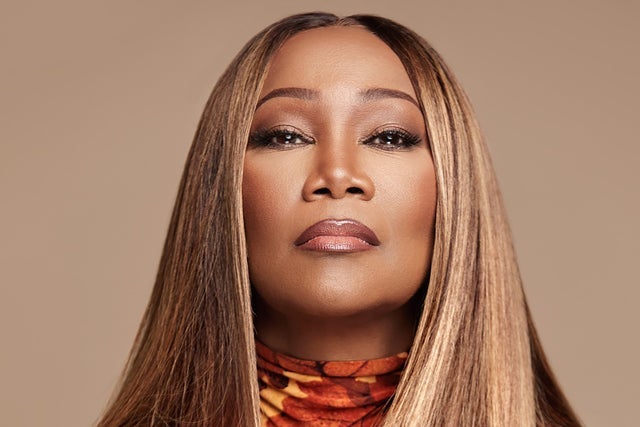
Dave Wooley, NAACP Nominee for Film: “Dionne Warwick: Don’t Make Me Over.”
A Cheryl Washington Exclusive Interview
The venerable first-time director and long-time friend of Dionne Warwick, independently produced and wrote the captivating documentary on the iconic singer’s life and activism.
In the five years it took Wooley to create it, the film encapsulates the enduring popularity and indomitable resonance of Dionne’s 60- year career – evoking a widespread depth of perfor- mance eloquence, altruistic humanity, intrepid hero-ism, and Jersey pride.
“I want Dionne to be able to smell her roses in her lifetime. She’s 83. To be at this point of her life and to be nominated, warms my heart. That was the whole purpose of doing this,” states Wooley. “It was a personal passion of mine to take it from a thought to a thing.” And with anything Wooley does, it must meet his 3P’s mantra: Passion. Purpose. Perfection.
“Do I have the passion for it? Is this my purpose? Is this what God wants me to do? And per- fection is something that is ongoing so I keep going but never repeat what I do.”
The documentary originated from Dionne’s best-selling autobiography that David Freeman Wooley co-wrote in 2010. It chronicles her humble beginnings in East Orange to her gospel music foun- dation at Newark’s New Hope Baptist Church. Along the way were magical collaborations with songwriters Burt Bacharach and Hal David with classic hits that generated, “Walk On By” “Alfie” “I Say A Little Prayer” and “Do You Know The Way To San Jose.”
Dionne’s inimitable and unique musical style garnered six Grammys, over 100 million records, and the distinction of being the first Black artist to win a Grammy in the pop category in 1968. It is an impres- sive and historic recognition that superstars Gloria Es- tefan, Snoop Dog, Carlos Santana, Smokey Robinson, Quincy Jones, Jesse Jackson, Alicia Keys, Barry Gibb, former President William Jefferson Clinton, and aunt Cissy Houston rightfully acknowledge.
Miss Warwick’s idyllic footprint that transcends musical and cultural boundaries, is characteristic of what Wooley calls a ‘transformational leader.’
“A true leader is someone who doesn’t require follow- ers. A true leader creates other leaders. There’s a dif- ference between being number one and being the first. Eventually you’ll be number two or number three. When you’re the first, that’s historical. It never changes.”
The Harlem-born director whose extensive ca- reer in the entertainment industry and sports sector captures his friend of thirty years through various stages of her eight-decade life: Faith, victory, triumph, defeat, expectation, hope, and yes, even pain. Dionne’s early encounters of rampant racism while touring the south in the 60’s was “horrible. Something I never experienced.” But the good times always out- weighed the bad with moments of grandeur. Dionne marvels each time she sets foot in the elementary school named in her honor in hometown East Orange.
There are also moments of valor for being lauded for her HIV/AIDS advocacy that sparked one of the big- gest, best-selling records of all time: “That’s What Friends Are For” with close friends, Gladys Knight, Stevie Wonder, and Elton John.
In the documentary, Elton called Dionne a ‘hero of mine for being one of the first people in the music business to speak up openly about AIDS.’ Snoop Dog added his respect for Miss Warwick after criticizing his misogynistic lyrics, “Dionne’s music is genera- tional because they just don’t do it like that any more.”
And former President William Jefferson Clinton re- marked how Dionne made him accountable for certain actions thus making him ‘a better president for it.’ He even took delight at singing one of Ms. Warwick’s bal- lads; admittedly off-key.
With the support of archival footage and actual interviews concealed from Dionne, Wooley’s unre- stricted access enabled candid conversations in the documentary that garnered critical acclaim at the Gene Sickle Film Center’s Black Harvest Film Festival, Toronto International Film Festival, and New Jersey’s Montclair Film Festival.
“In the beginning she saw maybe forty minutes of clips here and there. Kudos for her patience and trust in me. In fact, she would say, “How is the doc going?’ Never once did she put pressure on me to get it done and I have so much re- spect for her.”
But once she saw the documentary for the first time, Dionne enthused in her best Jersey ac- cent, “You put your foot in it!”
Related Articles

How an Afternoon in Newark Built the 25-Year Legacy of Jazz House Kids
Now in its 25th year, Jazz House Kids in Montclair continues its mission of bringing live music to students from various communities.
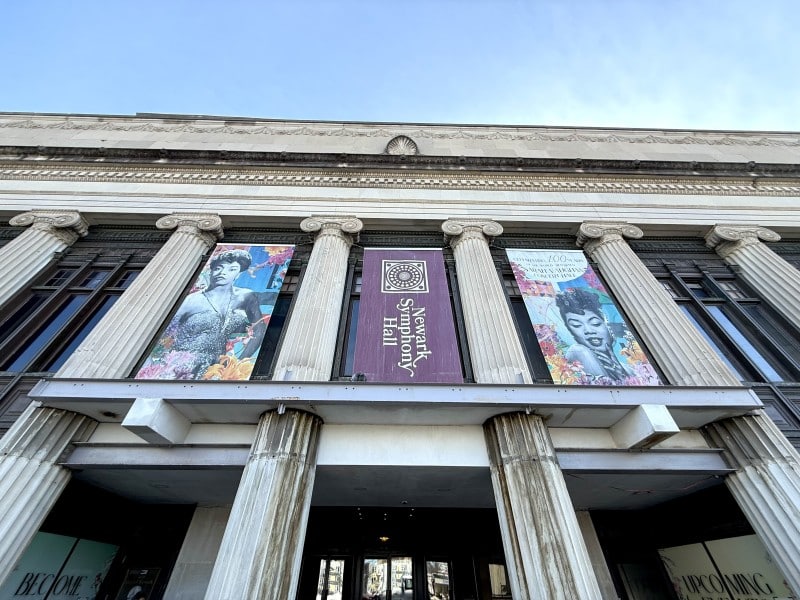
Newark Symphony Hall Celebrates 100 Years With Massive Restoration Project
New Jersey’s iconic Black-led arts institution is getting a high-tech facelift, including new TV studios and an arts lab by fall.