
“Where Are They Now?”
My older sister often came home from high school talking about a boy in her biology class who was super smart and a very good basketball player. She attended the then Eastside High School (now Paterson Eastside High School) in the mid-seventies when playing the record player and watching the Knicks, New York Mets, and of course Soul Train, were the norm while doing chores on Saturday mornings and early afternoons.
The year was 1975-76 and I remember finally going to a game with her and she immediately pointed her classmate out to me when we entered the gym. His name was Rory D. Sparrow – a product of the Alabama Hamilton Projects in Paterson, New Jersey where he was raised by his parents and the village that surrounded him.
Rory Sparrow is a special individual – an overachiever of sorts who not only succeeded in the NBA but has also made his mark as a role model, mentor, coach, husband, father, businessman and consultant, recognized for making lives better in the communities in which he has worked and lived.
I had the opportunity to talk with him about his journey from the projects to the NBA and what he’s doing now.
Where were you born and raised?
I was born in Suffolk, VA. We moved to Paterson, NJ, when I was three where I lived for the next 19 years. While in Paterson, I lived primarily in the Alexander Hamilton Projects.
Who were your major influences while growing up in Paterson?
The first influences in my life were my mom and dad, but while growing up in Paterson, the close-knit community of the projects influenced a lot of what I did and who I became. It was like having several moms and dads always looking out for you and providing guidance, support and discipline. I also had the help of the Jimmy Schilleri and his family outside the projects who exposed me to my educational potential. But it wasn’t until I met Henry Baker, the head coach of the Eastside High School basketball team, that I began to develop into the person I was to become. He challenged me to be conscious of who I was and what I represented at all times in my life. He promoted the importance of community, giving back to community and having a voice in the place where you live.
When and where did the love of sports begin?
The love of sports was introduced to me early in life by my father. He was a good athlete in his day, in both baseball and basketball. He had me catching baseballs at 4 years old and supported me in every other sport I wanted to try. I loved trying to prove to him that I could meet his challenges and that love transferred to sports in general the more I played the different sports.
Was there one sport toward which you gravitated while growing up?
Early on, I’d say from age 7 to about 13, I loved baseball. I was a good centerfielder with speed and a little pop in my bat. As a youth, I always thought I would play for the New York Mets. Playing for the NJ Bank Shorties as a little boy, I excelled and got the opportunity to be on the radio when I was 8 for hitting three triples in a single game.
Why did you decide on Villanova for your collegiate career?
Michael Fratello, then assistant coach at Villanova, who later went on to NBA fame as the head coach for the Atlanta Hawks and Cleveland Cavaliers, fast talked me into going there. He came to my house in the projects and told my parents and me everything we wanted to hear. When he and Coach Rollie Massimino left, I was a Wildcat for life. And the funny part about what he told me is that the majority of it came true. Prior to their visit, I had narrowed it down to George Washington University, Brown, Villanova and a few others with strong engineering programs. But in the end, it was the proximity to my hometown, the lure of the opportunity to start as a freshman and playing in a league that was televised that sold me on Villanova.
You played 12 years in the NBA. Discuss the challenges you faced and your triumphs.
Just being drafted was a challenge. I never felt like I played up to my potential my junior and senior years at Villanova until the NCAA tournament during which I got to compete against some of the more highly ranked guards and did well. After that, I began to believe I would be drafted. However, I soon realized the being drafted was only the beginning of the journey to being an NBA professional. I was cut three times by the team that drafted me, the then New Jersey Nets, before they eventually traded me in the offseason to the Atlanta Hawks. That trade was a blessing and curse. Fratello was an assistant coach for Atlanta at the time and they had six guards already under contract when I arrived. I was considered practice fodder. Still, I worked hard, believed in myself and took advantage of every opportunity. When the 1981-82 season began, I was the team’s starting point guard. I would start for every team with whom I played for the next 11 years of my career.
You attended Paterson Eastside High School (Paterson, NJ) in the mid-1970’s prior to Joe Clark the principal who became famous because of the film, “Lean on Me.” Talk about your experiences and they impacted you.
My Eastside High School experience was heavily influenced by my interaction with my basketball coach Henry Baker. He stressed from my very first encounter, that I was more than an athlete – I was someone’s son, brother, student, teammate, community leader and a contributing citizen. I had never looked at myself in that way before and provided me with a sense of responsibility and confidence. With the new insight into my position in school, I became an active participant in my educational plan, the basketball team and the school’s politics. Though it was not without its challenges on a social level, I really enjoyed my time at Eastside High.
Many people do not know you were one of the first Blacks to graduate from Villanova University’s School of Engineering. What led you to decide on that field of study?
Believe it or not, it was Lehigh University that got me to go to Villanova for its engineering program. During my junior year in high school, Lehigh hosted a minority introduction to engineering project where they selected 30 kids from inner-city schools to participate in a weeklong program that introduced minority youth to opportunities in engineering. Being a secret math geek, I developed a lifelong interest in engineering.
You spent over half your life in the NBA as a player and recently retired as vice president of player development. What are you doing now?
First, I am a full-time dad and I relish the opportunity to spend the time I didn’t get to do with my first set of kids. I am a proud Uber driver and homework tutor for my family. When I am off from parenting, I have a consulting company where I work with individuals and companies interested in working in the basketball and personal development space.
Additionally, I recently founded a non-profit designed to help bring green energy resources and solutions to underserved communities throughout the world.
Comments (5)
Comments are closed.
Related Articles

Can The Nets Return To New Jersey?
Governor Sherrill wants the Nets back in New Jersey. But can nostalgia and a fierce Knicks rivalry actually undo the billion-dollar reality of Brooklyn?
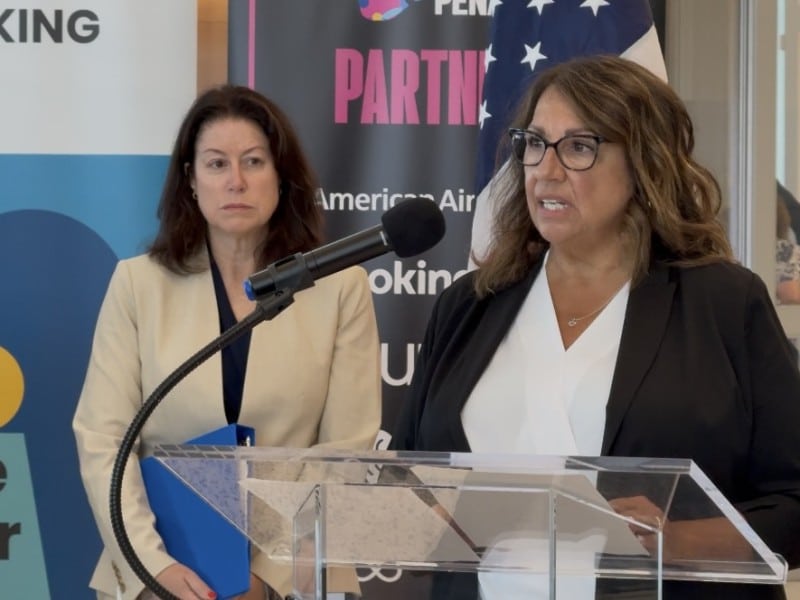
How NJ Is Racing To Prevent Human Trafficking Ahead Of World Cup
NJ leaders and human rights advocates have highlighted concerns of trafficking and exploitation risks ahead of the 2026 FIFA World Cup.
NJ Experts Warn Of Health Risks At The 2026 FIFA World Cup
Health experts are urging FIFA World Cup attendees to protect themselves from severe weather and infectious diseases this summer.
Love the article, excellent questions regarding childhood to NBA. I read the articles of the two players that I attend school with. I will read, your other articles because Murphy and Sparrow was captivating. Those were the days, excellent work.
Thank you for your support.
I loved the article very well written great job Darrell . Sparrow was one of many that made it out of the PJ and out of the ghetto but I’m sure it came with more challenges then mentioned . I want to leave you with this as young man being raised in Paterson in 5 ave PJ and later movin to AHP Here what I say to folks your success in life is not measured by money it’s measured by what you do with your life so what you are from the ghetto there is a ROAD it’s called the road to success stay on it and when you look back you will see all that you over came . Great JOB D
When I played in the heavyweight league with his father, I remember Rory out on the court shooting jumpers during halftime. He is a true testament of a home grown talent. Yes he was that kid.
We done….not on most basketball junkies radar BUT he is a true role model. The city of Paterson should be proud to call him their own. A humble man with an overachieving demeanor. Rory proves that hard work can bring positive results!