
NJ Law Now Allows Abuse Survivors To Seek Early Release & Expungement
New Jersey’s Domestic Violence Survivors Justice Act gives abuse survivors a path to reduced sentences or expungement tied to trauma.
The newly enacted Domestic Violence Survivors Justice Act (DVSJA) offers New Jersey residents who’ve endured abuse a pathway to fairer sentencing and a chance to rebuild their lives.
The law allows survivors whose trauma contributed to their criminal convictions to seek reduced sentences or expungement, marking a major step toward recognizing how intimate partner violence intersects with the justice system.
Just before leaving office on Jan. 20, former New Jersey Gov. Phil Murphy signed the DVSJA into law, advancing a legislative package sponsored by Senators Angela V. McKnight (D-Hudson) and M. Teresa Ruiz (D-Essex/Hudson). The two-bill package aims to make courts more equitable by ensuring survivors of domestic violence are not further punished for circumstances shaped by abuse.
The first bill, S4871, allows individuals who have experienced abuse to petition the state Superior Court to expunge certain convictions if the abuse significantly contributed to their offense. The second bill, S4870, establishes a history of abuse as a mitigating factor that allows individuals to receive reduced sentencing or resentencing.
“No one should be punished more harshly because the justice system failed to recognize the trauma they were trying to survive,” McKnight said in a statement. “By acknowledging how domestic violence and abuse can drive people into the justice system, these bills restore fairness, offer survivors a path to stability, and help ensure accountability without perpetuating harm.”
Now that the Survivors Justice Act has been enacted, McKnight stated that the commissioner of the New Jersey Department of Corrections (NJDOC), Victoria L. Kuhn, will be required to inform incarcerated individuals about the new legislation. Once these individuals are made aware, they will have the opportunity to decide whether or not to pursue resentencing.
After the DVSJA was first enacted in New York in 2019, McKnight collaborated with a group of formerly incarcerated women who survived domestic violence to advocate for the bill’s adoption in New Jersey. Their efforts are documented in “Set Her Free: Exposing the Trauma to Prison Pipeline.”
Dawn Jackson, one of these sexual abuse survivors who advocated for the DJSVA, expressed gratitude on LinkedIn for this law’s passing. She says this new legislation “creates meaningful pathways for justice-impacted women and men whose experiences of trauma, abuse, and survival were never fully considered at the time of sentencing.”
According to a consolidated report by the University of North Carolina School of Law, over 70% of incarcerated women in the U.S. have survived intimate partner violence, with most of their violent crimes linked to self-defense or the defense of children.
The report also stated that survivors are often involved in drug-related crimes because they are forced to sell drugs by their abusive partner or use drugs to self-medicate. Women have even been charged with failing to protect their children from their abusive partner.
“For many, [the DVSJA’s approval] means the possibility of fair review, hope where there was once none, and a system that finally acknowledges that surviving violence should not result in a lifetime of punishment,” Jackson wrote in a statement. “The Survivor’s Justice Act represents accountability with compassion, justice with understanding, and a long-overdue shift toward healing, restoration, and true second chances.”
Although the DVSJA has been enacted, Senator McKnight stated in an interview that she plans to reintroduce provisions requiring trauma-informed care for individuals upon release from prison.
Dr. Jamila T. Davis, executive producer of “Set Her Free,” explained that the legislation was delayed due to the lack of allocated funding, which was not fully approved in time. She emphasized that trauma-informed care remains a top priority, as it is essential for supporting the reintegration of incarcerated individuals into society.
“I think we have to go back to advocate for that…because we want them to come home, but we want them to be able to get free. And I think people don’t understand, not just unlocking the prison doors, many of us have been locked up in our minds, right? Going through such severe trauma, we need healing,” Davis said in an interview.
McKnight insisted that the current version of DJSVA has made a “huge impact with the recent resentencing and the expungement bill.” She expressed confidence that mandatory trauma-informed care will be approved, stating that she will continue to work with Dr. Davis and her team to have this final piece of legislation enacted.
Related Articles

East Orange Clinic Owner, Employee Charged In Medicaid Fraud Case
East Orange clinic owner and employee indicted for unlicensed medical procedures and filing false Medicaid claims, authorities say.
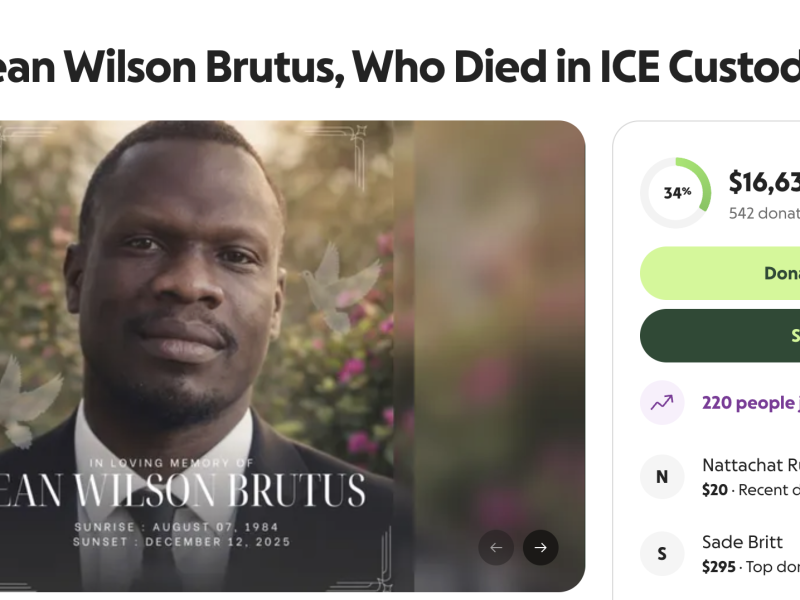
Family Of Jean Wilson Brutus Starts GoFundMe After ICE Death
A Haitian asylum-seeker died after a medical emergency while in ICE custody at Newark’s Delaney Hall, prompting a civil rights investigation.

NJ Cities See Shifts In Crime As Police, Community Leaders Look Ahead To 2026
Crime trends in Newark and Paterson are holding steady or declining, with state officials citing sustained reductions in gun violence.