
New Jersey Ranks Among Nation’s Least Affordable States For Renters
New Jersey renters must earn nearly $40/hour to afford a two-bedroom apartment, exposing a growing housing crisis and funding shortfalls.
New Jersey is facing a worsening affordable housing crisis, ranking seventh among the least affordable states for renters, according to a new report by the National Low Income Housing Coalition and the Housing and Community Development Network of New Jersey.
The report found that a renter in New Jersey needs to earn nearly $40 an hour, or approximately $83,000 a year, to afford a two-bedroom apartment at the state’s Fair Market Rent of $2,079 per month.
This stark gap leaves many families struggling to cover rent while meeting other basic needs.
“New Jersey is famous for a lot of things, but for far too many families, it’s known for housing that is out of reach. There are simply not enough places people can afford,” said Staci Berger, president and CEO of the Housing and Community Development Network of New Jersey and board member of NLIHC.
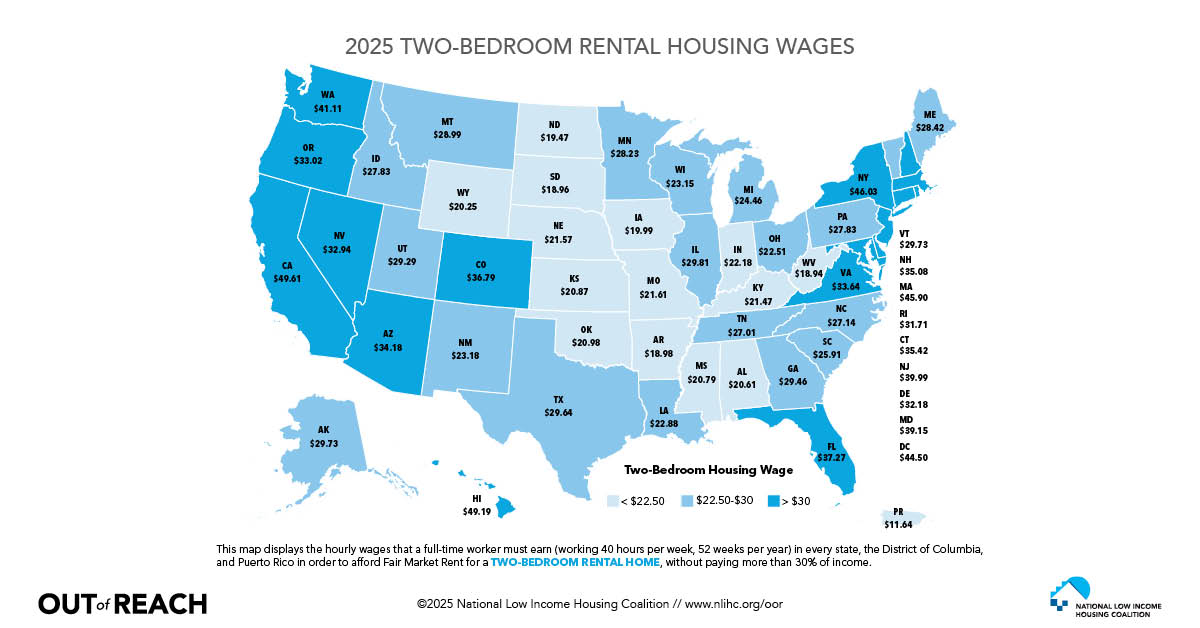
About 36% of households in New Jersey are renters, totaling more than 1.2 million families. For those earning the $15.49-per-hour minimum wage, a two-bedroom apartment remains out of reach without working multiple jobs. The report calculates that someone earning minimum wage would need to work 2.6 full-time jobs, or around 103 hours a week, to cover rent for a two-bedroom unit at fair market rent.
The affordability crisis is even more intense in certain regions. The report highlights areas, including Monmouth-Ocean, Bergen-Passaic, Newark, Middlesex-Sussex-Hunterdon, and Jersey City where renters must earn between $39.23 and $44.21 per hour to afford market rents.
New Jersey’s struggles reflect a nationwide problem. According to the report, no state, metropolitan area, or county in the U.S. offers a full-time minimum wage worker the ability to afford a two-bedroom home at fair market rent. Only 219 counties, or 7% of the nation, have one-bedroom rentals affordable to minimum wage workers, and all of these counties are in states with minimum wages higher than the federal level.
The report also reveals the devastating consequences of high housing costs for low-income renters. Those severely burdened by rent spend nearly 40% less on food and over 40% less on healthcare compared with unburdened low-income renters. The report says the widely used standard that housing costs should not exceed 30% of income often fails to capture the financial hardships faced by the poorest families.
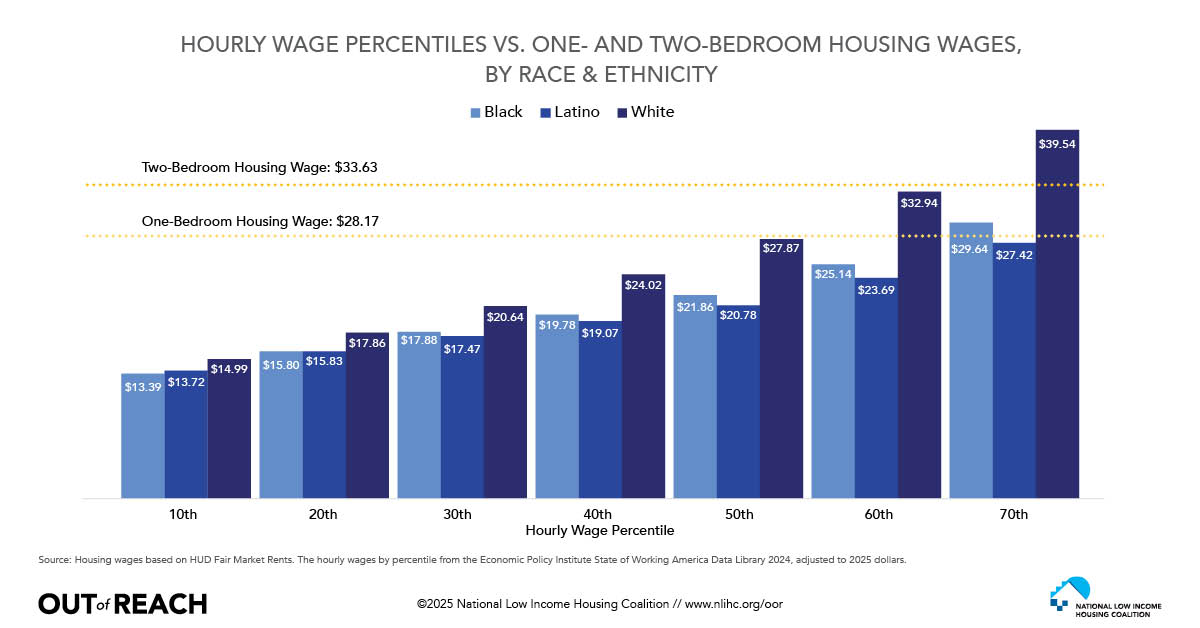
Racial disparities deepen the impact of the housing crisis. Black and Latino renters in New Jersey and nationwide face higher rates of cost burden and are more likely to live in substandard or unstable housing. Wage gaps further exacerbate the problem: Black workers earn a median of 22% less than white workers, while Latino workers earn 26% less. At the lower earners’ level, Black and Latino workers make 11% and 9% less, respectively, than their white peers.
Federal assistance falls far short of need. Only one in four eligible renter households currently receives federal housing support despite the need for more assistance. Proposed federal budget cuts threaten to slash funding for the U.S. Department of Housing and Urban Development programs by nearly half, putting thousands of New Jersey families at greater risk of homelessness.
The state’s own policies have also come under fire. At the end of June, New Jersey officials diverted $125 million from the affordable housing trust fund, leaving just $5 million available for housing development projects. Advocates say this reduction severely undermines efforts to address the housing shortage – and are urging state lawmakers to reverse those cuts and increase investment in affordable housing.
As rents continue to rise and wages stagnate, advocates warn that without significant policy changes and increased funding, more New Jersey families will face housing instability and insecurity.
“With devastating reductions in federal funding, New Jersey needs to be a leader and allocate more state resources to build affordable homes and to eliminate homelessness,” said Berger.
Related Articles

NJ Cities See Shifts In Crime As Police, Community Leaders Look Ahead To 2026
Crime trends in Newark and Paterson are holding steady or declining, with state officials citing sustained reductions in gun violence.
New Report: N.J.’s Racial Wealth Gap Tops $600K
A new report warns New Jersey’s racial wealth gap has doubled in a decade, deepening inequality in housing, income, and generational wealth.
NJ Minimum Wage Increases 43 Cents In 2026
New Jersey’s minimum wage rises Jan. 1 to $15.92, with higher pay for health-care workers and other adjusted rates statewide.