EMS Providers Demand Lawmakers Make Ambulance Services Required
Emergency responders are calling on NJ lawmakers to make EMS essential, increase funding, create a statewide plan, and offer more suitable pensions.
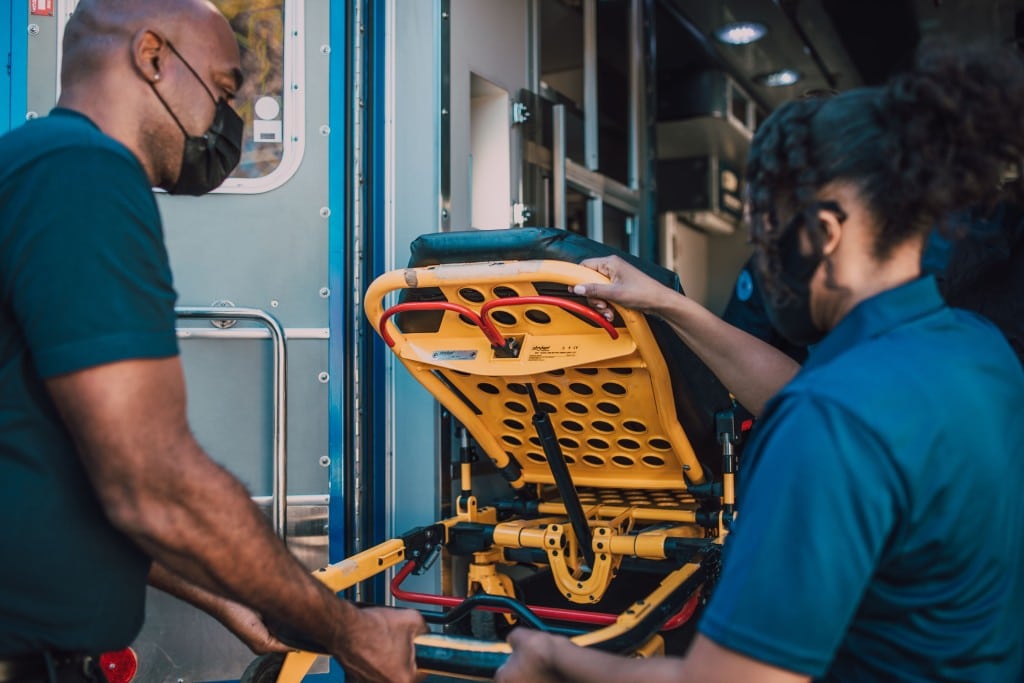
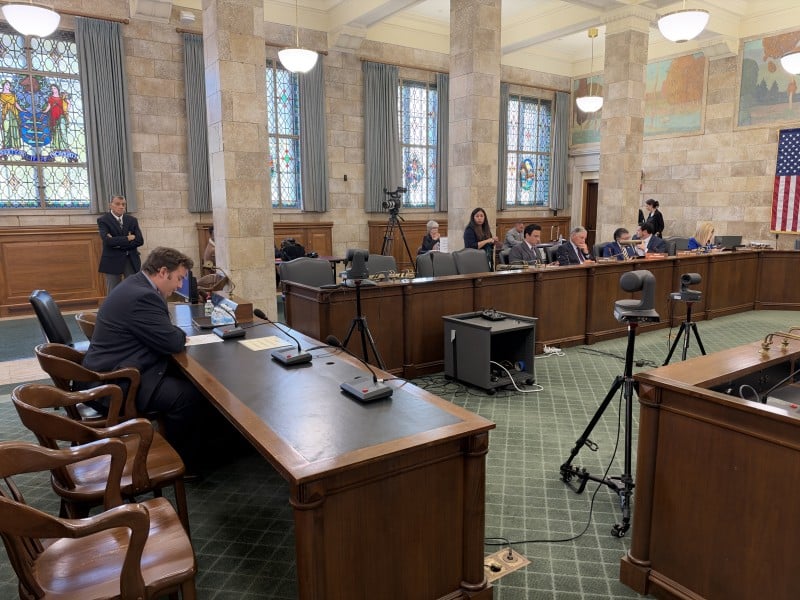
At an Oct. 8 legislative hearing, emergency responders urged local leaders to require municipalities to provide lifesaving ambulance services as an essential public service. The proposal, outlined in bill (S1421), passed the Senate Budget and Appropriations Committee with a unanimous vote in May.
The New Jersey Office of Emergency Medical Services said it has certified and licensed more than 20,000 EMTs and 1,700 paramedics. According to the state Department of Health, EMS handles over 1.5 million incidents annually.
Michael J. Bascom, state leader and nonprofit chair of the NJ EMS Task Force, supported Bill S1421. He said in an op-ed statement that emergency medical services have been treated as “extra, something not required to be funded or even provided.” Meanwhile, police officers, firefighters, and sanitation workers are considered essential.
Bascom added that while the cost of providing EMS in New Jersey has increased, the number of volunteers has decreased.
“A municipality is responsible for providing for the health, safety, and welfare of its community,” Bascom said. “So, if you’re responsible for providing for the health, safety, and welfare, how do you do so without providing EMS as an essential service?”
The EMS Task Force was formed after 9/11 to provide medical response, disaster recovery, and emergency planning for state residents. Representing more than 200 career and volunteer EMS providers statewide, the Task Force helped respond to events like Superstorm Sandy and Hurricane Irene. However, earlier this year, it experienced a severe funding crisis that brought it to the brink of closure.
Thus, along with essential status, EMS advocates called for greater funding by removing the $125,000 annual cap on local tax contributions for ambulance squads, New Jersey Monitor reported. They also demanded a statewide plan for responders that considers regional coordination of emergency response.
“There has to be a more in-depth evaluation of the overall EMS system, and determination as to what is the proper way to fund the system, to structure the system,” Bascom said in an interview. “And that should be in a way that supports all versions of how EMS is currently provided in New Jersey because…it works differently in different areas.”
Bascom also demanded a more structured, suitable pension for EMS providers similar to the Police and Firemen’s Retirement System (PFRS).
“The PFRS retirement system allows them to retire at a younger age in recognition of the type of work they’re doing, and the strain that has on a person,” he explained. “Well, EMS has the same, if not worse, type of stressors in the provision of services. Yet, if you’re a municipal EMT, you’re expected to work until age 65 before you can become eligible for it or lower retirement.”
Bascom argued that establishing such a retirement system for all EMS providers would attract and retain employees.
Though S1421 would make EMS providers essential, some expressed concern in May that the bill’s wording would threaten volunteer agencies.
News 12 reported that the bill would force licensing and operational requirements without funding or legally recognizing volunteer agencies. Mahwah EMS said this would force some volunteer agencies to shut down, resulting in longer ambulance response times, reduced medical coverage, and higher costs for taxpayers.
As Bill S1421 awaits further review, local EMS responders have emphasized the need for legislative reform to improve the quality of emergency services provided to state residents.
“It’s time the decision-makers in Trenton step up and secure funding to ensure that those of us out there this month have the resources we need to ensure someone responds every time a resident of this great state dials 911,” Bascom said.
Author