
Testimony Questions Sherrill’s Record Budget Amid Economic Uncertainty
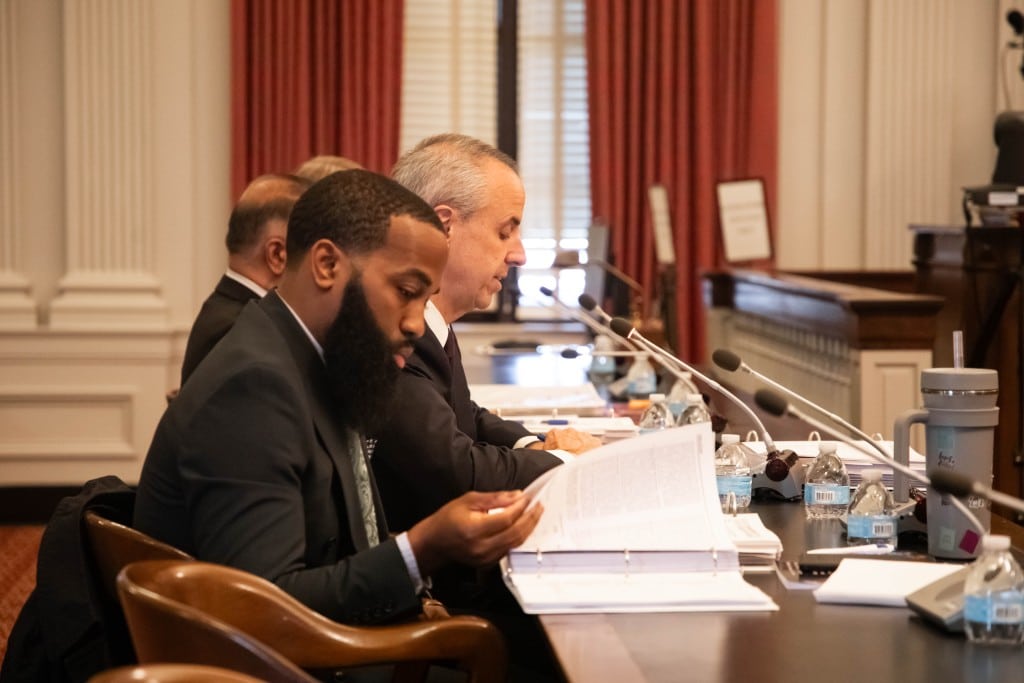
Photo credit: Andre Paras / NJ State House News Service
By Sarah Shockey | NJ State House News Service
TRENTON, N.J. — State treasury officials and staff from the Office of Legislative Services testified Monday that they expect moderate growth in the state’s revenue, but suggested international conflicts — like the ongoing Iran War — create uncertainty about Gov. Mikie Sherrill’s historic first budget.
“Geopolitical changes and concerns of the market, technological progress have added to uncertainty,” Legislative and Finance Officer Thomas Koenig told members of the Assembly Budget Committee. “As in the nation’s economic force, and this growing uncertainty provokes confidence in the consensus output, particularly over the near term, while current economic forecasts reflect cautious optimism, downside risks have become more pronounced.”
Treasurer Aaron Binder shared the same concerns.
“The global economy has changed sharply, and where things could be just a few short weeks ago, when our initial revenue protections were final, may be all the more imperative that we continue to work to strengthen that citizen state,” said Binder. “This uncertainty further underscores our responsibility to budget.”
As for more accurate numbers for the current and upcoming fiscal years, Binder said they’ll know more in May, when they appear before the committee again with updated revenue forecasts.
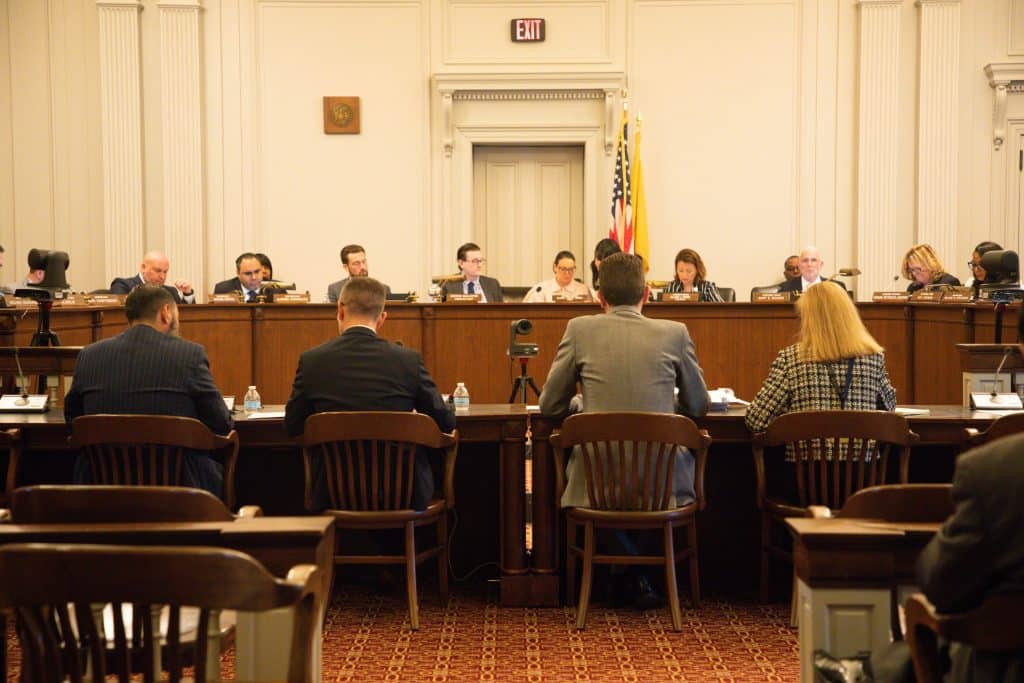
Photo credit: Andre Paras / NJ State House News Service
Sherrill’s $60.7 billion inaugural budget proposal is the largest in state history. It contains several major investments, including $7.3 billion to fully fund the pension system and a record $12.4 billion for K-12 school aid.
Treasury and OLS highlighted Sherrill’s commitment to a balanced budget in order to preserve much of the current surplus, with both offices warning that the current trajectory would drain it entirely by 2030.
Record spending in the budget comes during rough economic times. Inflation is outpacing taxpayer collection, making budget cuts more dire.
Sherrill’s budget proposes almost $2 billion in spending cuts and largely caps discretionary spending to close the structural gap. The cuts come from across multiple sectors of state grants and funding.
“As we make the hard choices necessary to close the budget gap, we must also be mindful that the easy way is rarely the best way,” said Binder. “Simply spending down the surplus to close that gap is a short-term patch at best and a luxury we can no longer afford.”
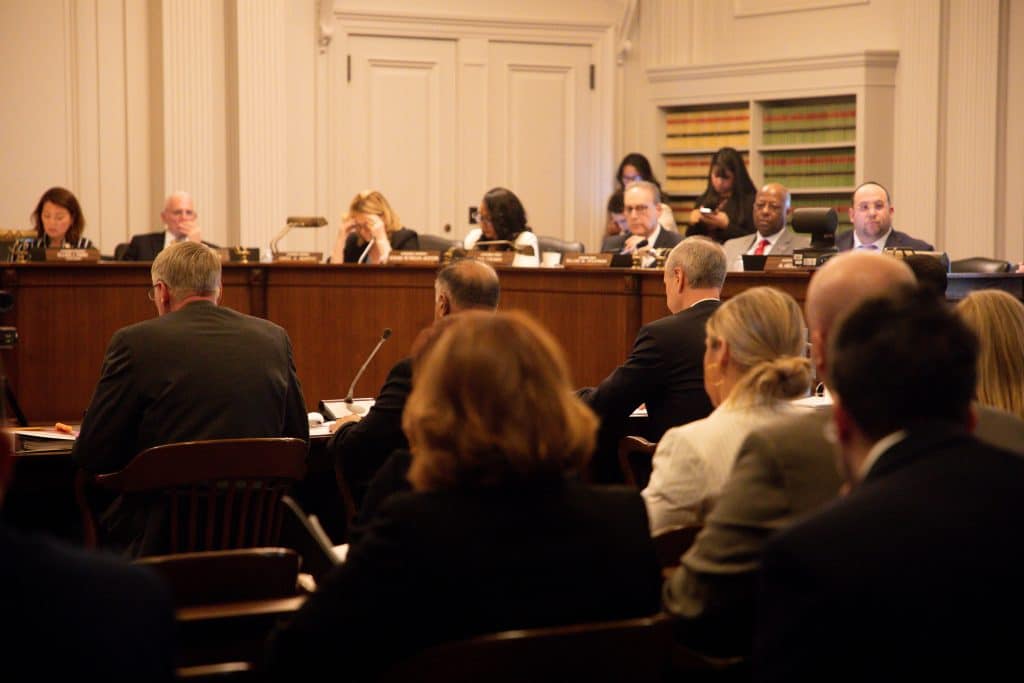
Photo credit: Andre Paras / NJ State House News Service
New Jersey’s current budget surplus totals $5.4 billion — roughly 9% of the budget, according to Binder. He said while this number towers over the state’s surplus a decade ago, it’s roughly half of the surplus from just three years ago.
“As we are all aware, reductions in spending often represent tough but necessary choices as there are hundreds of worthy programs vying for limited state dollars,” said Binder.
Democrats pressed Binder about specific cuts, including Medicaid, while Republicans focused on the tax breaks for state residents. Sherrill’s budget proposes a record $4.2 billion in relief.
“I think in terms of Governor Sherrill’s affordability agenda, things that are happening in this budget which ultimately has an impact on property taxes, utility relief, in which we’re bringing down the fees for rent, business,and new business registration,” Binder said. “So there is a package of things that are happening around affordability.”
The Treasurer and staff from the Office of Legislative Services will testify Tuesday before the Senate Budget and Appropriations Committee. The Legislature must pass a balanced budget by June 30.
Related Articles

NJ diverted $45 million in opioid funds. Advocates say the reason still doesn’t add up.
How New Jersey diverted $45 million in opioid settlement funds to hospitals — and what they plan to do with it.
Why NJ Advocates Say the New Immigrant Trust Laws Aren’t Enough
Gov. Sherrill codified NJ’s Immigrant Trust Directive into law, but advocates warn “legal loopholes” and a $42M funding gap still leave many residents at risk.
Sherrill Signs NJ’s Landmark Immigrant Protection Laws
The bills protect immigrant residents’ private information and limit how local police can interact with ICE officers.