
Philly Artist Traced Her Family Back 8 Generations. The Result Is On View At Rowan University.
NJ native Jazlyne Sabree spent three years in census records and plantation archives. Her new exhibit, “The Spectrum of Resilience,” turns that research into large-scale collage.
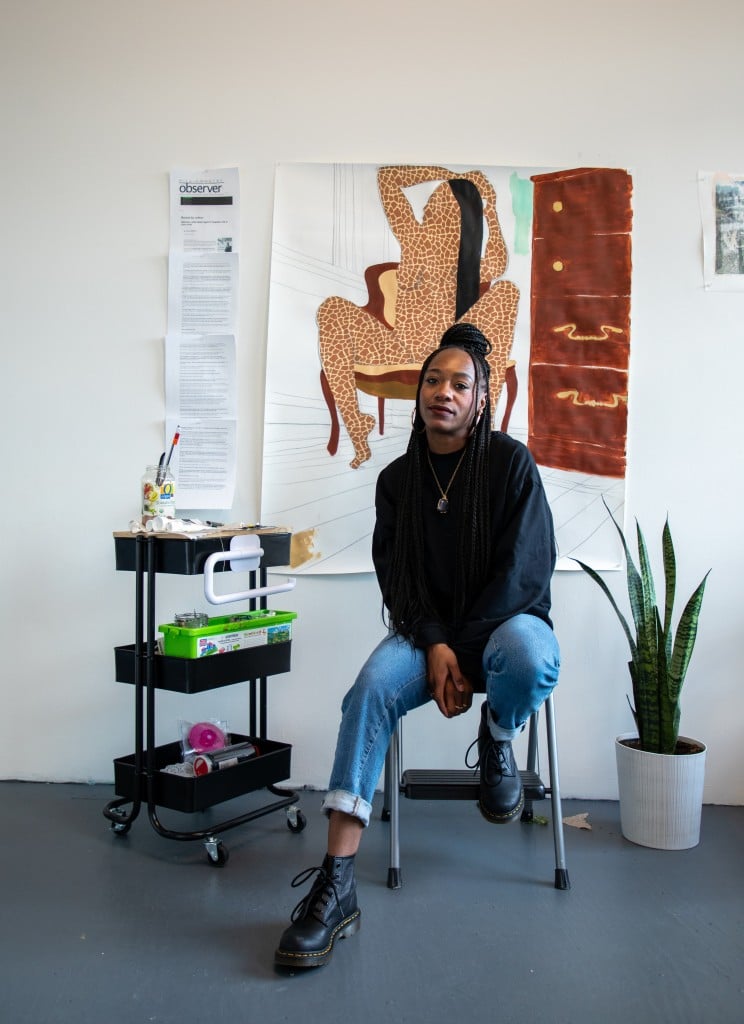
Artist Jazlyne Sabree has always seen herself as a fierce advocate and somewhat of a disruptor. After a three-year deep dive into her own ancestry, she now knows where it comes from.
That research has now coalesced into her latest exhibition, The Spectrum of Resilience, on view at the Rowan University Museum of Contemporary Art (RUMOCA) until July 30.
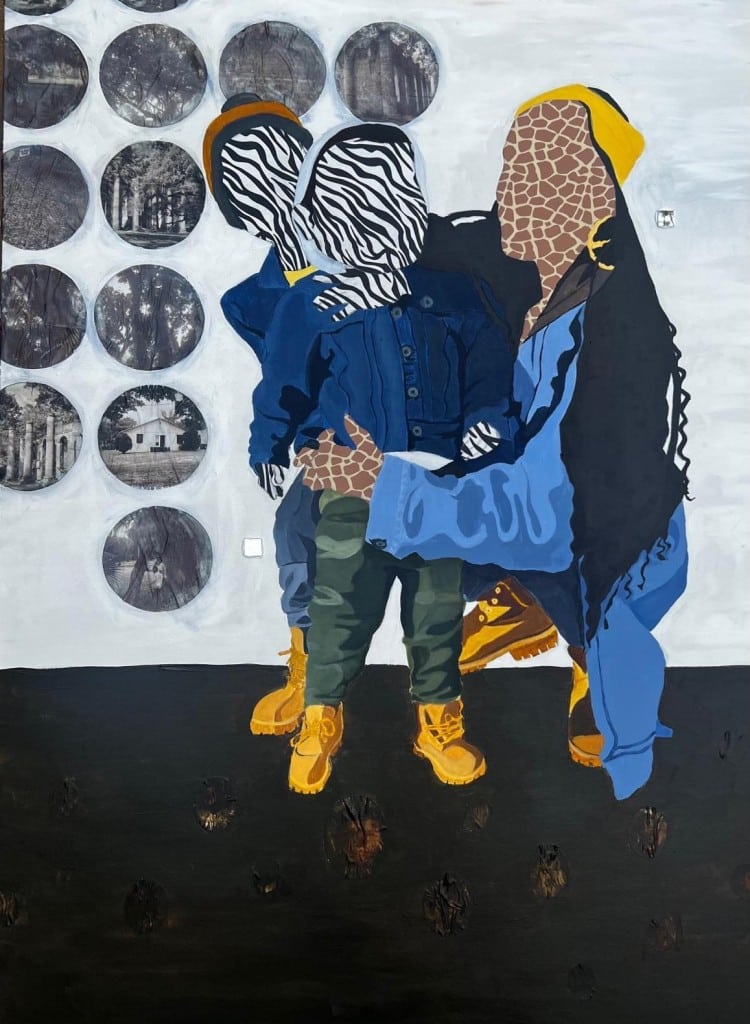
Sabree does large-scale collages that use paint, paper, and found materials that center on members of the African Diaspora as spiritual figures and vessels of memory. A great example of these works is Let My Power Within to Your Lives, which includes the actual imposed images of the ancestral lands and burial grounds of Sabree’s ancestors of eight generations.
The Spectrum of Resilience is also about ancestry, displacement, and how cultural identity endures across generations. In Sabree’s case, we’re talking about eight generations she was able to trace back when she did a deep dive into her own ancestry and family tree from 2019 to 2022.
“I wanted to make sure I knew my family’s stories,” said Sabree. “That path called to me and I felt destined to follow it.”
Born in Willingboro, Sabree is currently based in Philadelphia and also serves as the executive director of Camden FireWorks, a multidisciplinary arts incubator in Camden. Sabree made discoveries across her family line through late nights scouring through census records, birth and death certificates, marital records, and even plantation records.
“That branch of my family made a real effort to document themselves and ensure that they were archived,” she says.
All of Sabree’s research put her in touch with many places associated with slavery, particularly in the South, as a large part of her family comes from Georgia, Florida, and South Carolina.
“I’m constantly surrounded by these very deep ancestral lands. I always say this quote that ‘the land always remembers,’” Sabree said.
“I remember traveling down to these states, and for a long time, we’ve just driven these trips. But I always felt this spiritual glimmer that would arise during these trips. I would stare into the woods and see these images of my ancestors and all they endured,” she added.
Tracing her genealogy to West African countries like Mali, Nigeria, and Ghana, Sabree’s work began to develop into more layers.
Going back five generations, she found one great aunt who was traded up and down the southern East Coast when enslavement was in practice. Dwelling on it, Sabree saw parallels with her own rebellious spirit and wondered what could have caused her ancestor to have to be moved around continuously.
“I had to wonder what kind of tenacious spirit this woman must’ve had and how she was not only able to survive and endure, but what was she doing that made so many people want to get rid of her,” she laughed. “She was somehow protected enough to endure and persist in being continuously traded.”
She credits spirituality with finding these connections for her works. It’s also why she situates these works as spiritual messengers: Each one starts with a photograph of herself or someone she knows, but in the process of the work, the subject becomes a spirit and no longer an identifiable person.
“I want people to see themselves in the work,” she said. “It’s one thing I get feedback for from people who are able to connect the work to themselves or their own children, etc. People from all walks of life as opposed to being sat down and thinking that somehow, someway, they don’t fit into these narratives.”
Through these themes and finding their place in the narrative, The Spectrum of Resilience calls for the acceptance of African descendants and their history — a question Sabree sees as urgent today.
“In not wanting to tell the truth about what happened over the course of history, you get away with it without having to repay or contend,” says Sabree. “I like to view my work as a first step in raising awareness towards documenting these stories and retelling them so that no one can silence these histories and stories.”
RUMOCA is located at 301 High St W, Glassboro, and is open to the public with free admissionMonday to Friday from 10 am to 5 pm and Saturday from 11 am to 5 pm.
Author

Related Articles
Proposed Paterson Charter School Puts Entrepreneurship At The Center
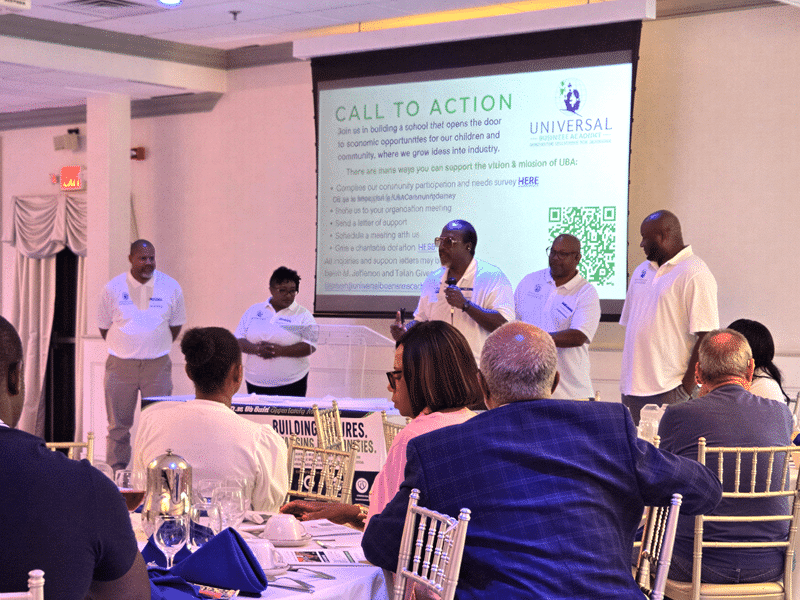
Universal Business Academy plans to open with 120 ninth-graders in 2027, combining traditional academics with business education, financial literacy and career preparation.