
Newark Nonprofit Will Turn Vacant Lots Into Year-Round Urban Farms
Urban Seeds Grow will build hydroponic greenhouses and affordable housing on two vacant Newark lots, aiming to produce 50,000 pounds of fresh food annually.
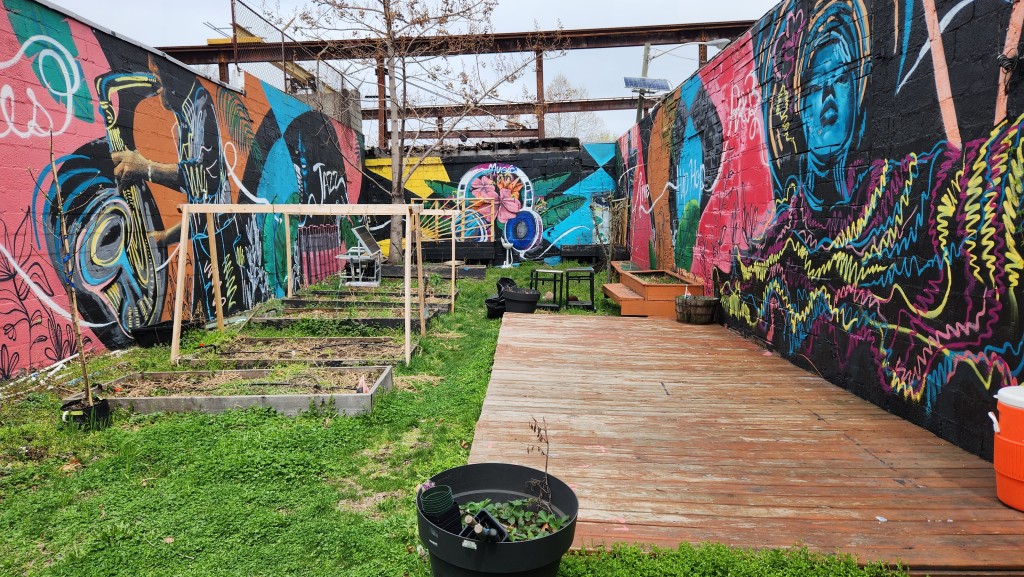
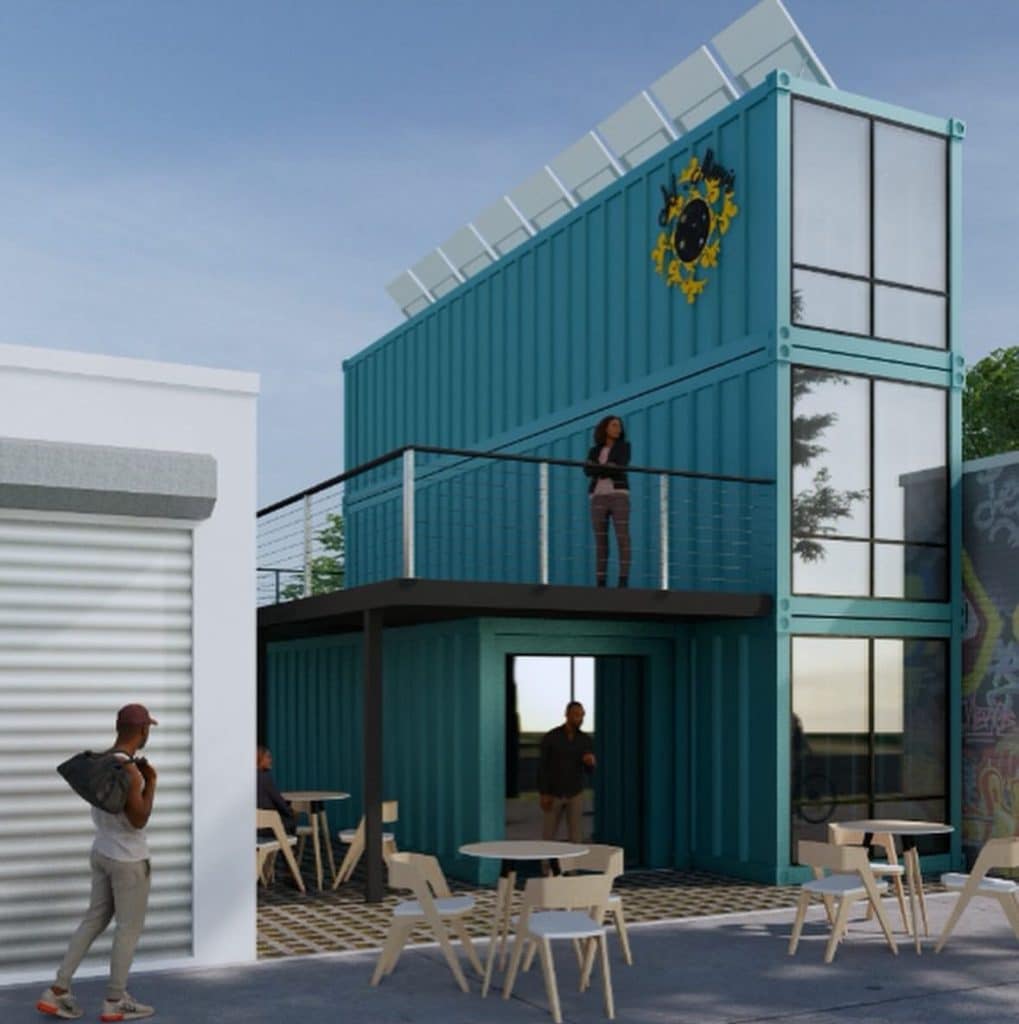
29 Grafton Avenue in Newark’s North Ward, left, alongside a rendering of what the space could become. Left photo credit: David Mosca for NJ Urban News. Right image credit: ISOPARM.
A Newark-based nonprofit is turning vacant lots into year-round sources of fresh, locally grown produce, aiming to reduce food security in a city where 64% of residents report being food insecure.
Urban Seeds Grow plans to build hydroponic greenhouses, aquaponics facilities, and workforce training centers alongside affordable housing on two vacant properties in the North and South Wards, bringing thousands of pounds of fresh produce to residents in need.
“These are underserved neighborhoods that deserve and need the resources the most. They’re where food insecurity is high, there are Title 1 school districts, and you find underemployment and lower home ownership,” said Bilal Walker, chief program officer of Urban Seeds Grow.
From Vacant Lots to Food Production
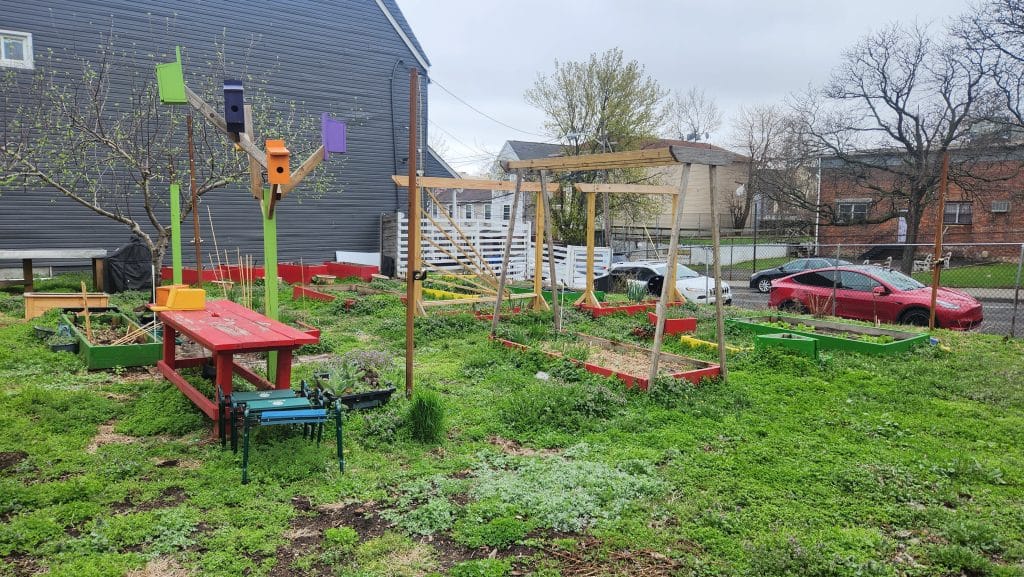
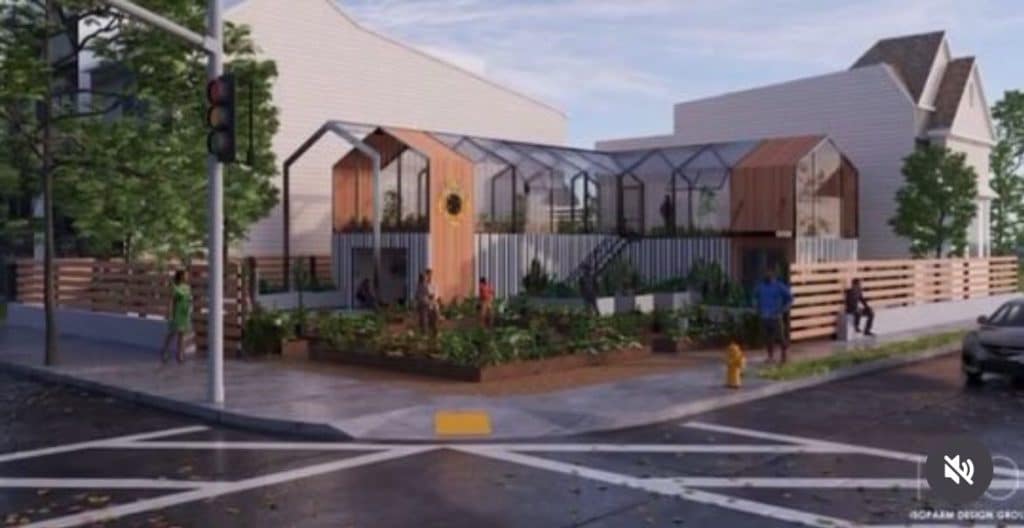
42-44 Elizabeth Ave in Newark’s South Ward, left, and a rendering of proposed updates to the lot, right. Left photo credit: David Mosca for NJ Urban News. Right image credit: ISOPARM.
The two mixed-use sites are located at 29 Grafton Ave. and 42-44 Elizabeth Ave. The site at 29 Grafton Ave. will be used for housing, a greenhouse facility, community wellness center, and workforce hub. The site at 42-44 Elizabeth Ave. will also have housing and will include an aquaponics facility, educational center, and agritourism space.
The project is led by Black and brown residents born and raised in Newark — a distinction that Walker says matters.
“We are an organization that is led by people from this city who have worked advantageously as educators, scientists, and business owners,” he said. “We are equipped with the skills necessary to lead this work and we do not need a face for the work. We simply need support and connections.”
A Pipeline for Youth and Jobs
The project was originally conceived in 2020 when Walker leased two parcels of vacant property through Newark’s Adopt a Lot program via Al Monir, LLC. This allowed them to cultivate the properties into public space where community members could gain access to urban agriculture, jobs, food access, and education.
The organization hopes to grow 10,000 pounds of produce in a given quarter, totaling 50,000 pounds annually, while employing more than 20 Newark residents and servicing over 3,000 youth within the city. The nonprofit already employs over 50 young people a year through youth development programs and services, Walker said.
“We want to create a pipeline of young people, from the North Broadway to South Broadstreet neighborhoods and the various schools surrounding them,” said Walker, “so they can have access to and maintain apprenticeships and internships throughout the year making them members of our organization and contributing to the rehabilitation of their neighborhoods.”
Although Newark is the largest and most densely populated city in New Jersey, the city has plots of land that have remained vacant for a decade or more. Programs like Adopt a Lot, Invest Newark, and Newark Land Bank Process have allowed the City and its residents to activate these empty spaces and land.
“We’re helping community members gain access to urban agriculture, jobs, food, access, and teaching and learning,” said Walker. “We started this nonprofit to carry out the work we are doing in a more systemic manner.”
Growing Food Where It’s Needed Most
Food will be grown at both Grafton and Elizabeth Ave. sites and distributed to the community members within the neighborhoods, as well as those who work at the sites for Urban Seeds Grow. It will also be sold “wholesale,” and raw materials will be provided to schools as well as grassroots and nonprofit organizations.
“This ensures that food production happens in Newark all year around at maximum capacity,” says Walker. “We’re growing via hydroponics and the produce grown from that is turned into products that bring additional nutritional value and sustenance to people’s dietary needs and plans. It’s making food more affordable, subsidized, locally grown, and pesticide free.”
Food produced will include herbs and leafy greens that can be grown hydroponically. Raw fruits and vegetables will also be turned into juices, salves, and tonics. Teachers and students will also be able to visit the sites to learn about food production and the supply chain.
Currently, food production for Urban Seeds Grow is outsourced from rural areas in New Jersey and sourced hyperlocally from gardens and farms that grow seasonal produce. Urban Seeds Grow hopes to create year-round jobs and access to locally grown food once the project launches.
“There’s not a project yet quite like this,” says Walker. “I believe the strategies we have in place will ensure that our food goes to the most needy families. Our production, processing, and distribution will all happen in Newark as opposed to having to go outside the city.”
The Reality of Urban Farming
Urban areas like Newark also deal with issues like blight, soil contamination, and water quality. The work of Urban Seeds Grow is meant to be an act of remediation to combat the systemic issues in growing crops and maintaining urban farms and gardens.
“While rural areas deal with storm runoff, spillage from a factory, or cross contamination, they don’t have to deal with it on the scale and concentration that we experience here in Newark,”
says Walker. “Urban agriculture for us is the vacant lots, rooftop gardens, or utilizing cisterns and stormwater capture to gather the water and nutrients necessary to keep our crops nice and vibrant. It’s not as simple and straightforward that most people might believe at face value.”
Other challenges at play include violence and crime in the neighborhoods surrounding the urban farms, theft, harassment, illegal dumping, and lack of funding.
“There isn’t a lot of funding that supports the efforts and outcomes that we really work hard for to ensure that our community members have access to,” says Walker. “There are a lot of concurrent issues and it makes it more challenging for people to want to get into urban agriculture in general.”
Construction on the two vacant properties is expected to begin in May.
Related Articles

Essex County Prosecutor Urges Court To Dismiss NJ Man’s Bid For Exoneration
Essex County prosecutors are fighting the exoneration plea of a man whose life sentence ex-Gov. Phil Murphy commuted in January.

Fewer people released from NJ jails are committing new crimes, report says
Corrections officials credit work-release and other rehabilitative programs for reducing recidivism rates among those freed from New Jersey prisons.