
Why NJ Advocates Say the New Immigrant Trust Laws Aren’t Enough
Gov. Sherrill codified NJ’s Immigrant Trust Directive into law, but advocates warn “legal loopholes” and a $42M funding gap still leave many residents at risk.
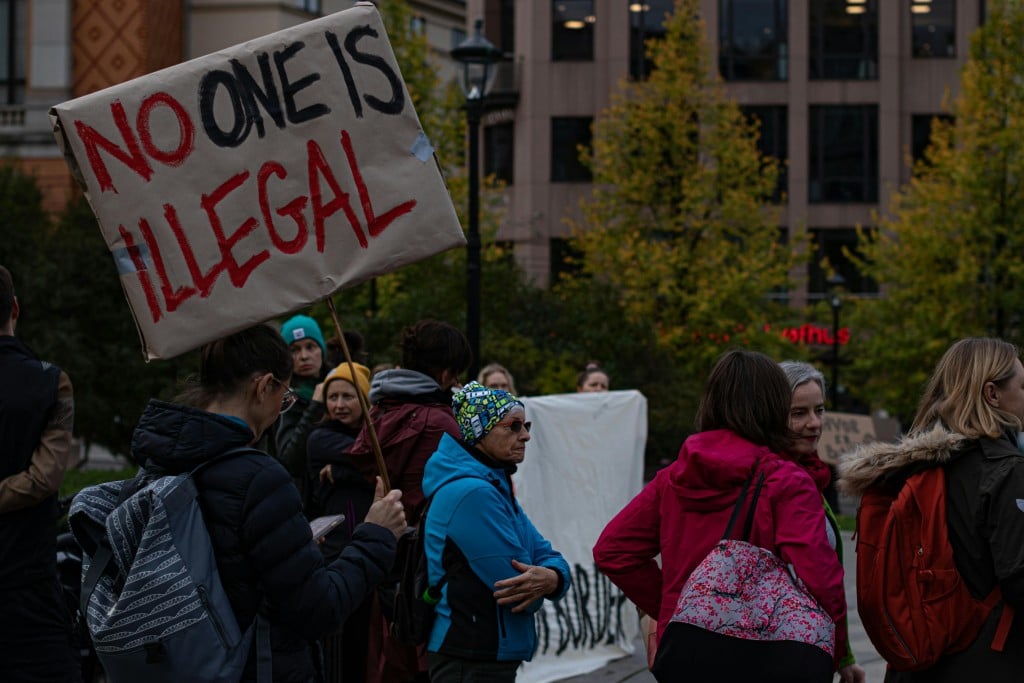
New Jersey’s immigrant communities now have permanent legal safeguards against federal overreach, but local advocates warn that there are still loopholes that leave the most vulnerable residents at risk.
Gov. Mikie Sherrill (D) signed two landmark bills last week called the “Privacy Protection Act” (S3522/A4070) and the “Strength Between Law Enforcement and Immigrant Communities Act” (S3521/A4071), also known as the Immigrant Trust Directive.
These laws will codify protections that were previously subject to the whims of whoever held the Attorney General’s office. The move also prevents state agencies from collecting citizenship data and strictly limits how local police can assist federal immigration enforcement.
“These bills underscore that here in New Jersey, we still follow the Constitution and uphold the rule of law…,” Sherrill said in a statement. “As we’ve seen across the country, Donald Trump’s untrained, unaccountable, masked ICE agents are putting people in danger. That’s why in New Jersey, we are protecting our communities – strengthening our protections…and protecting residents’ privacy from federal overreach.”
A version of the proposals was pocket-vetoed by former Gov. Phil Murphy (D) on the morning before he left office, citing concerns that the bills would open the state up to federal scrutiny. Those legal frameworks were already broken down from the larger Immigrant Trust Act, which did not have full legislative support to pass.
Social justice advocates call these newly signed immigrant protection laws a “good start,” but say more needs to be done to defend state residents.
Marleina Ubel, a senior policy analyst at the nonpartisan think tank New Jersey Policy Perspective (NJPP), said that the Immigrant Trust Directive fails to close legal loopholes that would exclude individuals from receiving protections against immigration enforcers. Even if these individuals weren’t convicted of a crime, an accusation of one would make them ineligible for protection under the Directive.
“So I feel that the legislation and the directive don’t really go far enough in affording people protections because being accused of a criminal offense is not the same thing as being convicted of a criminal offense…,” Ubel said in an interview. “We have criminal courts and laws and the structure of our criminal legal system in place for a reason. And we don’t need to involve ICE or immigration in that system at all.”
Ubel also demanded that the state prohibit federal enforcers from collecting people’s license plate numbers and purchasing private information from data brokers. With this information, federal agents can track individuals seeking reproductive health care, gender affirming care, or immigration services that, while legal in New Jersey, are illegal in other states.
“This is important for all vulnerable communities. There are other populations that are being targeted by the federal administration…There are a lot of people who are at risk if we are not doing what we can to protect their Constitutional rights,” said Ubel.
Similarly, the ACLU of New Jersey released a statement on Mar. 25 calling on the state to increase funding for access to counsel in immigration proceedings.
According to ACLU-NJ political director John Butler, the state currently provides $8.2 million for lawyers and legal services for people facing deportation, and that the amount spent on those services remains “static.” He said the ACLU-NJ will advocate and push the state to make greater investments in providing these services to immigrant communities in the next fiscal year.
“Our estimates, along with our collaborators and colleagues, [are] that you probably need closer to $50 million to actually serve the need here in New Jersey,” Butler said in an interview. “We’re asking for a very reasonable $20 million, so that $8.2 million allocation gets raised… to just help provide those supports to people.”
So far, New Jersey has made progress in providing protective laws and services to immigrant communities. But as local advocates have shown, they will continue to push for more legislation needed to defend state residents.
“I think that this was a good first step. This legislation was a first step, but we’re not done yet.
There’s more to do to protect the people of New Jersey,” said Ubel.
Related Articles

Sherrill Signs NJ’s Landmark Immigrant Protection Laws
The bills protect immigrant residents’ private information and limit how local police can interact with ICE officers.

Gov. Mikie Sherrill: Ethnic And Community Media Shed Light On ‘Untold Local Stories’
U.S. Sen. Andy Kim, NJ Sen. Raj Mukherji highlight the need for truthful, reliable news media at the 2026 NJ Excellence in Community Media Awards.

In Rare Bipartisan Burst, Congress Close To Historic Housing Law
With the nation short millions of residential units, bill may stall because Trump says he’ll sign nothing unless voting curbs are passed