
Paterson Police Tout New ‘Real-Time’ Crime Center And Citywide Drone Expansion
Paterson launches a Real Time Operations Center and expands police drone use as part of a tech-driven public safety push.
Paterson officials say they are entering a new phase of tech‑driven policing with the launch of a Real Time Operations Center and a major expansion of the police department’s drone fleet, described as an achievement of the state’s ongoing oversight of the force.
State Attorney General Matt Platkin called the move a “turning point for public safety,” arguing that city officers are finally being equipped with the kind of tools long used in larger departments.
“This is what meaningful investment in public safety looks like, and it reflects the lasting progress made in Paterson,” Platkin said in a press release.
The new Real Time Operations Center (RTOC) will function as the department’s central nervous system, pulling together live camera feeds, gunshot detection alerts, license plate reader data and analytics from body‑worn cameras into one command hub.
Supervisors and officers will be able to monitor developing incidents in real time, with the goal of getting better information to the field more quickly and coordinating responses across units and neighborhoods.
Alongside the RTOC, Paterson is broadening a drone program that began five years ago in its Emergency Response Team and was previously focused on search‑and‑rescue and tactical deployments.
The expanded fleet will now be available to multiple units, offering aerial views during emergencies, large‑scale incidents and investigations, while also documenting crash and crime scenes and generating three‑dimensional maps that can shorten road closures and keep responders out of harm’s way.
Officials say the technology rollout is part of a wider reform effort that has emphasized training, supervision and data‑driven enforcement since the state assumed control of the department. The city has also promoted a platform that lets residents and businesses voluntarily share surveillance footage with police, further extending investigators’ reach ahead of officers arriving on scene.
Recent internal crime data, the department says, show shootings and shooting victims down sharply over the past year, which leaders attribute in part to tighter coordination and real‑time intelligence.
“These tools fundamentally change how we operate,” said Officer in Charge Patrick Murray in the press release.
Related Articles

Essex County Prosecutor Urges Court To Dismiss NJ Man’s Bid For Exoneration
Essex County prosecutors are fighting the exoneration plea of a man whose life sentence ex-Gov. Phil Murphy commuted in January.
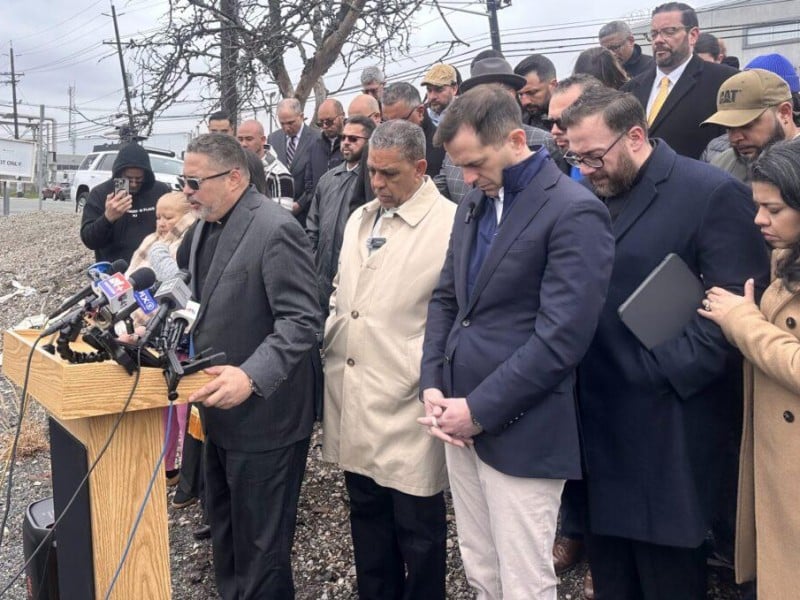
Advocates Gather Outside Newark Migrant Jail For Pastor Detained By Ice
Pastor Yeison Cortes Vasquez, 46, was detained by U.S. Immigration and Customs Enforcement Agents in Newark on March 20.
Fewer people released from NJ jails are committing new crimes, report says
Corrections officials credit work-release and other rehabilitative programs for reducing recidivism rates among those freed from New Jersey prisons.