
‘Set Her Free’ Fuels Push for NJ Domestic Violence Sentencing Reform
A new documentary examines how courtrooms treat survivors and spotlights an urgent call for change.
A new documentary follows freed domestic violence survivors as they rally behind a New Jersey bill that would allow judges to reduce sentences for women whose abuse led to their crimes.
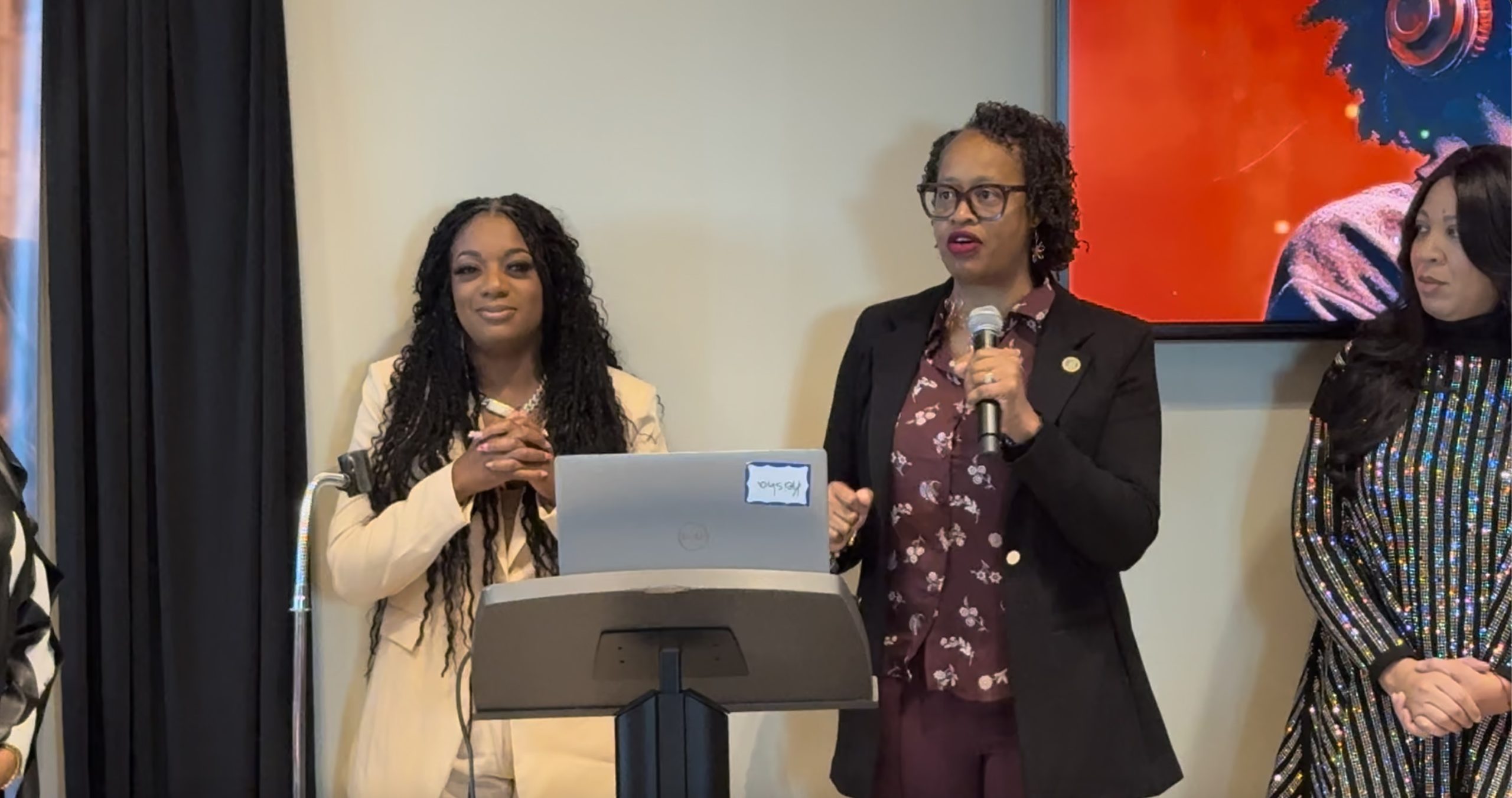
On Saturday, Kean University held a private screening of “Set Her Free: Exposing the Trauma to Prison Pipeline,” executive produced by Dr. Jamila T. Davis. This documentary centers on the stories of women who have survived abuse, served time, and are now pushing for policy change.
The women in “Set Her Free” are now urging New Jersey lawmakers to pass the Domestic Violence Survivors Justice Act into state law, which would let judges reduce sentences for women whose abuse was a major factor in their offense.
Introduced to the New Jersey Legislature in June by State Sen. Angela McKnight (D), this bill allows judges to consider factors such as domestic violence, restraining orders, and trauma when sentencing defendants. It would also provide for trauma-informed reentry support services to help survivors of domestic violence receive the counseling and aid that they need to adjust to life after incarceration.
In 2023, about 75% of women who have been or are incarcerated are survivors of domestic violence, according to the Safety and Justice Challenge. In some cases, these women were arrested after using self-defense against their abusers, kidnapping their children for their protection, or after being coerced into committing crimes by their abusers. They may even develop addictions due to trauma resulting from domestic violence.
After serving 12.5 years in federal prison for bank fraud, Davis, who had survived domestic violence herself, set out to make the film and push for reforms that address how the justice system treats women.
In “Set Her Free,” audiences hear the experiences of Donna Hylton, Denise Staples, Nafeeshah Goldsmith, Myrna Diaz, Cass Severe, and Dawn Jackson. The documentary explores how these women and their history of sexual assault and domestic violence, many of which began in childhood, led them to kill their abusers and serve time in prison.
For example, in a panel for the film screening, Jackson discussed how multiple men in her life, particularly her step-grandfather, sexually abused her repeatedly since the age of 5. Having killed her step-grandfather, Jackson spent 30 years in prison. However, Gov. Phil Murphy released Jackson in late 2024 after Kim Kardashian’s petition to have her freed received widespread support.
During her incarceration, Jackson continued her education, earning her high school diploma and an Associate’s Degree in Liberal Arts and Science. She claimed that she is currently pursuing a Master’s Degree.
Through this education, Jackson learned how common it is for women like her to survive sexual abuse and end up in prison, calling it “universal abuse” during the panel discussion. She also realized that her running away from her trauma led her down the path to incarceration.
“This journey has been very long. It has not been easy,” she said. “But again, I’m here. I’m here, and I want to let you all know, start paying attention. Let’s do this collectively as we look at our little girls and boys and girls who are still serving time incarcerated.”
The film also highlights the case of Natasha White, an East Orange woman who remains imprisoned after killing her boyfriend, Zachary Sanders, by driving into him in 2007. Superior Court Judge Garry Furnari, who sentenced Natasha, said “alcohol and [her] uncontrollable anger” toward Sanders over their breakup led to his death. However, “Set Her Free” portrays Natasha in a more sympathetic light.
The documentary argues that she was in an abusive relationship with Sanders and was attempting to escape him when she drove into him. She was incarcerated in 2009, and her son, Orin, was forced to grow up with his mother behind bars for over 15 years.
“At times, it’s been lonely. Very lonely,” said Orin. “Of course, I am surrounded by my family and friends. A lot of love. But it’s just not the same, not having my mom there with me.”
Audiences at Kean University were moved by “Set Her Free,” applauding as they watched the incarcerated women receive clemency and walk out of prison. Some audience members even shared their experiences they have had with domestic violence, inspired by how the women in “Set Her Free” discussed their experiences and healed together.
Following their jail time, the women in “Set Her Free” have united to make the Domestic Violence Survivors Justice Act part of New Jersey law. This bill was passed in New York in 2019, allowing judges to reduce sentences for domestic violence survivors whose abuse significantly contributed to their offense.
“Set Her Free” shows how these women received the support of Senator Angela McKnight (D), whom Davis met through a mutual friend. Inspired by Davis’s cause, McKnight became a lead sponsor for the Domestic Violence Survivors Justice Act in New Jersey.
“Not everyone who commits a crime should be punished to the extent where you’re not looking at them to find out what exactly happened. ‘How did you get here? What traumas are you facing? How can we help you face those traumas?’ And, yes, you have to go do some time, but maybe you don’t have to do so much time,” McKnight said in an interview.
“I want people to look at domestic violence with a fine lens,” McKnight added. “Some people are quick to judge. They need to have some empathy because there are some things that happen behind closed doors that we don’t understand, and be open to helping your fellow neighbor, because you just never know what someone is going through.”
Although there was a recess in the legislature due to this year’s election, McKnight said she does not foresee any further challenges in getting the bill signed into law.
“I want fellow states to follow as well, just as well as any other piece of legislation…because we want to make the world a better place,” McKnight told New Jersey Urban News. “Again, domestic violence does not discriminate against any zip code, any state, any household.”
“Set Her Free” aims to demonstrate the importance of understanding why and how someone committed a crime, arguing that “survival shouldn’t be a life sentence.” Davis now plans to showcase the documentary at locations nationwide to inspire other states to sign the Domestic Violence Survivors Justice Act into law.
“I just want to charge you that we are the change makers,” said Davis. “Make it right. The legislators are simply vessels that are in position. But we are the change makers. So if we want action, we gotta do something.”
Related Articles
Jersey City Officials Slam ICE After Weekend Raids
A viral confrontation at a light rail stop following a new executive order as Jersey City fights to maximize sanctuary protections.
‘I Can’t Tell You’: Attorneys, Relatives Struggle To Find Hospitalized ICE Detainees
Hospitals and ICE face scrutiny over blocking family and attorney access to immigrants hospitalized while in federal custody.

East Orange Clinic Owner, Employee Charged In Medicaid Fraud Case
East Orange clinic owner and employee indicted for unlicensed medical procedures and filing false Medicaid claims, authorities say.