
NJCU Launches New Spanish-Language Website For College Applicants
NJCU launched a bilingual website to help Latino and first-gen students navigate college admissions, financial aid, and resources.
New Jersey City University (NJCU) has unveiled a new bilingual website designed to help Latino, first-generation, and international students navigate the U.S. college system.
YesYouCanGoToCollege.org, is offered in both English and Spanish, with additional languages such as Portuguese and French set for the future of the institute. The Spanish version of the site is called SiSePuedeLaUniversidad.org.
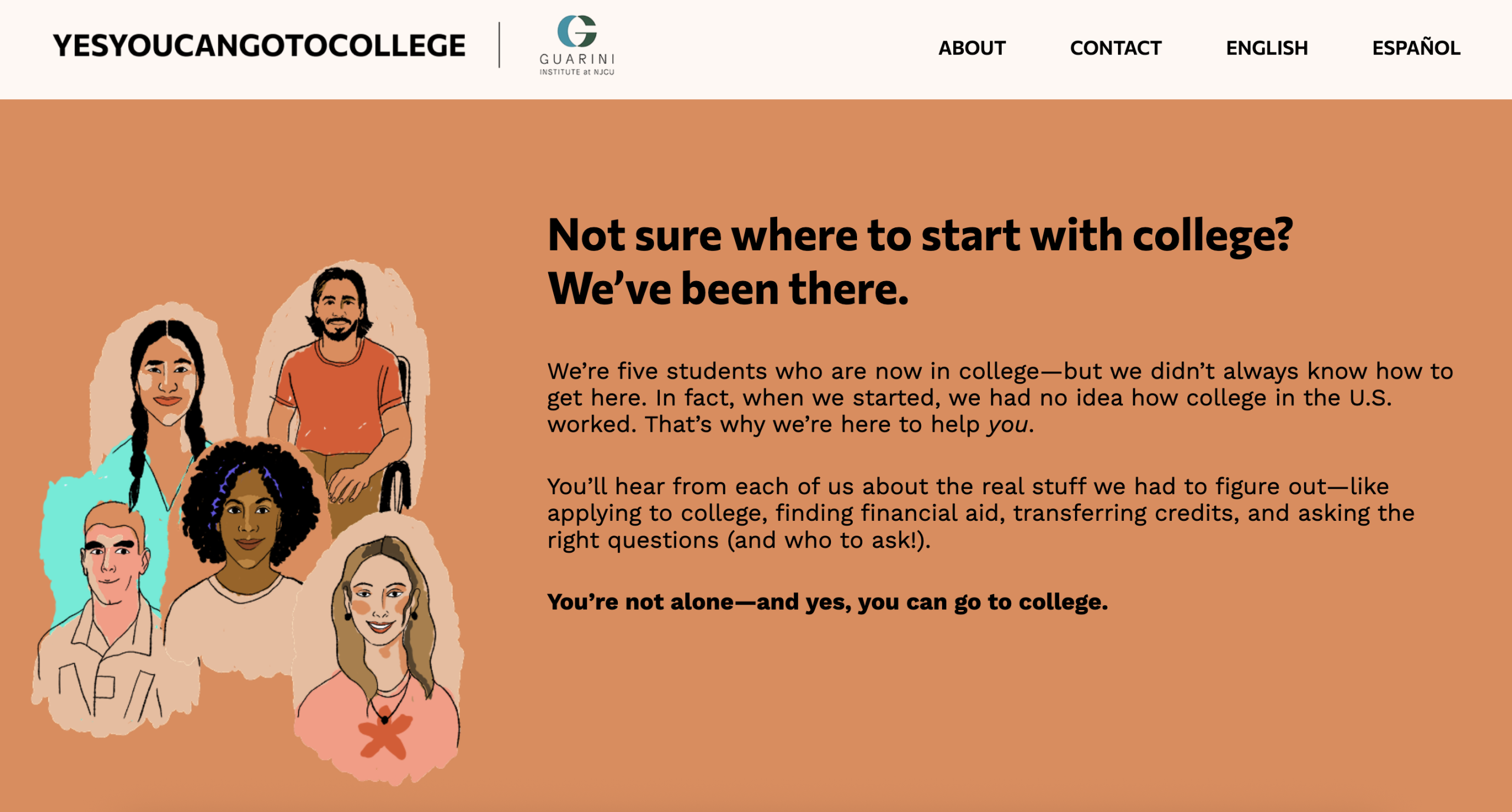
The platform provides step-by-step information on admissions, financial aid, and transferring credits–all presented through avatars that respond to real-life experiences.
The project, launched earlier this month, aims to provide accessible information and resources to first-generation and international Latino students. It was developed in collaboration with Latin American consulates in New Jersey and features interactive avatars and FAQs.
“Our mission with our site is essentially to create tools that connect underserved communities, students, and families with information resources that can help them advance their economic mobility,” said Dr. Adrian Franco, a professor and executive director of the Frank J. Guarini Institute for International Studies.
Developed by NJCU’s Guarini Institute for International Education and Economic Mobility, the initiative stems from a 2023 Memorandum of Understanding with the Group of Latin American Consuls in New Jersey, referred to as GLACO. Franco told New Jersey Urban News that the intended goal for the site is to facilitate economic mobility for financially vulnerable communities.
“Once you get to know the higher education system in the United States, you realize that it is quite complex,” he said.
The site acts as a pocket guide for college-bound students, featuring five avatars—Maria, Natalie, Jonathan, Zoe, and Andre—each with a distinct background to help guide users through the application process.
Interactive prompts under each profile pose real-world questions and provide more information on the college admission process, finding a job in college, or advice tailored for international students entering the U.S. higher education system.
In one instance, the avatar Natalie greets users by saying, “Hi! I’m Natalie. I came to the U.S. when I was a kid, and when it was time for college, I had no idea where to start.” Questions under her profile include “How can my previous achievements help me in college?” or “How do I pay for college?”
Representatives from Latin American consulates in New Jersey and New York, alongside community leaders, university faculty, and students, attended the website’s launch event earlier this month. Officials from Kean University were also in attendance, just weeks after the two Hispanic-serving institutions formalized a historic merger agreement earlier this month, set to be completed by July 2026.
“For generations, NJCU has been the gateway to opportunity for Latino students and their families,” said NJCU President Andrés Acebo at the event. “This new initiative builds on that legacy by offering families a trusted and accessible guide to pursuing higher education in the United States.”
Research shows that Latino students often face higher rates of unmet financial need, family obligations, and must work while attending college. Despite rising enrollment, Latinos continue to encounter structural barriers to meaningful access to higher education. The data reveal that only about half of Latinos aged 25 and older hold a bachelor’s degree compared to their White peers.
The share of Hispanic high school graduates enrolling in college right after graduation has declined sharply over the past decade. The college-going rate for Hispanic graduates fell from 70% in 2012 to 58% in 2022, indicating that those who do enroll are also more likely to leave college rather than completing the degree.
The Guarini Institute said it plans to strengthen partnerships with consulates, universities, and community organizations to make the portal more accessible to families both in the U.S. and overseas, according to the presser.
A digital version of the NJCU campus is being recreated in Minecraft, giving students a way to explore the university and engage in an interactive online environment. Franco said the project will move forward through future university collaborations.
Related Articles


Two-thirds Of School Districts On Track For More Aid In Sherrill Budget
Tens of millions of dollars added in places like Newark and Paterson, while scores of other systems can project less than their current share

Mayor Baraka Launches Newark Literacy Event for March 17
Join the #Newark Reads Symposium on March 17 to access free tutoring, professional workshops, and expert-led literacy strategies