Pipeline Proposal Revives Debate In NJ And NY Amid Environmental Concerns
A proposed pipeline through New Jersey and New York faces strong opposition over environmental and health risks, sparking community protests.
A pipeline inching closer to approval in New York has brought on renewed strife amongst residents and activists in New Jersey, as the project has long been criticized for its environmental and public health risks.
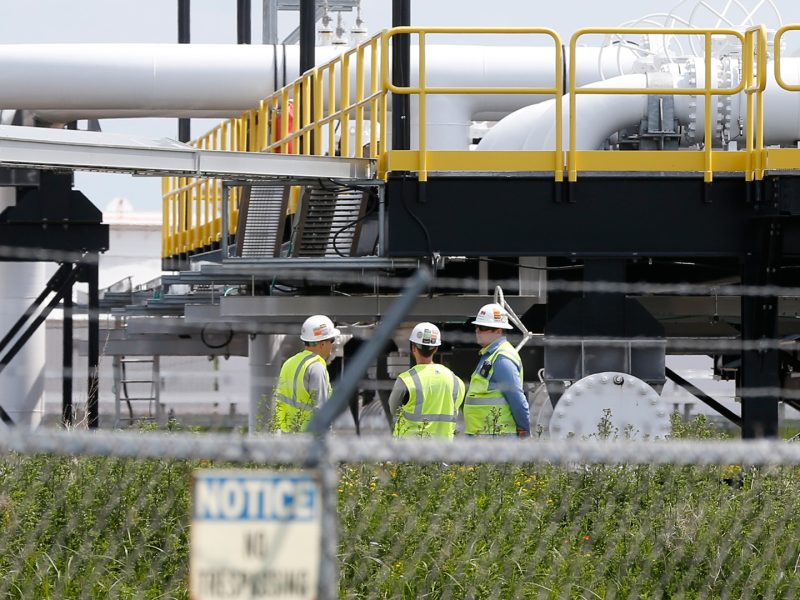
The Northeast Supply Enhancement (NESE), if approved, would move fracked natural gas from Pennsylvania through New Jersey and into New York, via a pipeline across the Raritan Bay.
On Saturday, demonstrators in both New York and New Jersey staged rallies opposing the 37-mile pipeline, underscoring ongoing community concern over the resurrected plan. Organizers reported robust turnout from the Sierra Club, Princeton Manor and Food and Water Watch, Climate Revolution Action Network, and Central Jersey Safe Energy Coalition.
“These companies are contaminating our water through their business practices,” said Rachel Davis, an advocate who works at Waterspirit, focusing on public policy and environmental justice, in an interview with New Jersey Urban News. “We have less water than we have ever had in this heat-intensive weather.”
Project Plans Call for Compressor Station and Undersea Link
The project is registered under the developer, fossil-fuel giant Williams Transco, and is pressing on regulators to reissue a federal permit for the same $1 billion pipeline plan for both New Jersey and New York rejected years ago.
The additional segment would connect to the Rockaway Delivery Lateral in Queens, transferring 400,000 dekatherms of natural gas per day, according to the project’s application listing on the New York Department of Environmental Conservation (DEC) site.
The plan includes building a 32,000-horsepower twin-turbine on a 52-acre site in Little Rocky Hill, near Route 518 in New Jersey and Route 27, Kendall Park and Franklin Township.
Construction of the gas-power compressor station would be built next to an active quarry and a federal Superfund site contaminated with industrial waste near Franklin Township, mounting fear from residents in nearby neighborhoods over quality of life and public health concerns.
A History of Permit Denials in NJ and NY
The permits for the NESE project proposed in 2016 were denied by environmental regulators from both the New Jersey Department of Environmental Protection (DEP) and the New York DEC, which deemed the proposal an “unnecessary and unacceptable risk to water quality.”
The Federal Energy Regulatory Commission (FERC), an independent entity, initially approved the project in 2019, but it was met with opposition from environmental groups, local communities, and elected officials.
The NJ DEP has received new permit applications from Transco for land use and air permits associated with the NESE pipeline.
However, numerous historical environmental reports from NJ DEP have found that the pipeline would discharge significant amounts of methane and carcinogens into the air that would destroy critical wetlands and habitats. The New York State DEC rejected the NESE proposal three times and NJ DEP twice, both in 2019 and 2020, citing risks to water quality and public health, as the two-year permit extension for the NESE Project is expected to boost methane emissions and damage the seafloor in the Raritan Bay region.
These decisions effectively halted the project.
Supporters Cite Energy Reliability, Critics See Only Risks
In an emailed statement to New Jersey Urban News, a spokesperson for the Williams Company said that it takes “community questions seriously and are committed to transparent engagement with local communities as we develop the Northeast Supply Enhancement (NESE) project.”
“Williams has executed commercial agreements with two of National Grid’s New York utilities for the Northeast Supply Enhancement (NESE) project, and we are working closely with our customers and the regulatory agencies to advance this clean energy infrastructure project responsibly,” said the spokesperson.
Supporters of the pipeline note that the closure of coal-fired power plants across New York and New England over the past two decades has left the region increasingly dependent on natural gas, which now generates half of its electricity. However, some NJ reports say that there’s enough natural gas for the region through the next decade, according to an analysis under the purview of the New Jersey Board of Public Utilities, a state-run body.
When contacted for comment, the Murphy administration referred New Jersey Urban News to the NJDEP, which declined to respond.
On the municipal front, the South Brunswick City Council passed a resolution urging FERC to deny all NESE Permits, citing threats to Raritan Bay’s ecosystem located in the southern region of the New York Bay.
“There is too much impact to a state that will receive no direct benefit from the completion of the proposed Project, as all of the natural gas conveyed through the proposed pipeline will be provided solely to New York,” cited one report by Princeton Hydro, an environmental consulting firm assessing the construction of the NESE pipeline back in 2018.
The pipeline’s timeline has unfolded amidst the Trump administration’s effort to roll back regulations under the Environmental Protection Agency–a recent proposal to revoke the 2009 “Endangerment Finding,” classifying greenhouse gases as pollutants threatening public health and welfare, has been contested under the current administration, which has taken a pro-fracking, pro-fossil fuel stance.
“It is the same dangerous proposal we fought off before, only now they want to push through with even less public oversight” said Carol Kuehn, a resident of Franklin Township and a participant of the Saturday rally, told New Jersey Urban News that if the project moved forward it would be bordering the back of her home where she has lived for 47 years. “We have a Buddhist temple outside of the area, and the compressor sounds have been likened to the sound of a jet engine.”
Key Deadlines for Public Comment
Public comment is set to wrap up for the pipeline for New York on Friday. In New Jersey, a public hearing is scheduled to take place on September 10, from 6 p.m. through 9 p.m. by NJDEP on the Northeast Supply Enhancement Project. Advocacy groups say the regulatory deadlines underscore the need for swift action if the project is to be stopped before construction begins.
“We know from these past project plans that it will absolutely disturb the underwater ecosystem at the bay, turning up decades of pollution,” Ben Dziobek, the executive director of Climate Revolution Action Network, a community-based organization in New Jersey advocating for environmental justice. “It was denied twenty years ago by the Department of Environmental Protection for a reason. We are just genuinely locking in higher utility bills in the future.”
Related Articles

‘Forever Chemicals’ Could Soon Be Banned From Period Products In NJ
New Jersey advances a bill to ban PFAS “forever chemicals” from menstrual products to protect public health and the environment.