
Gubernatorial Hopefuls Attend Black Economic Summit to Discuss Wealth Disparity
For its 18th year since its inception, the AACCNJ held its annual State of Black NJ Economic Summit to discuss the economic inequalities experience by New Jersey’s Black residents in the present day.
Taking place at the Princeton Marriott at Forrestal, Black leaders and business owners gathered to hear the AACCNJ’s annual report on how Black people in New Jersey has faced “structural barriers” that have limited them in terms of finding employment, growing their businesses, receiving sustainable income, and receiving housing and education.
As attendees heard from multiple speakers, including municipal leaders and diversity advocates, they also heard from the candidates running in the 2025 New Jersey gubernatorial election during a panel discussion.
“This is the defining moment of our coexistence in America and our coexistence in New Jersey,” said John E. Harmon, AACCNJ’s Founder, President, and CEO. “There’s a lot of conversation about what’s going on in Washington. I get that, but we cannot lose sight of what’s not going on in New Jersey as it relates to Black people.”
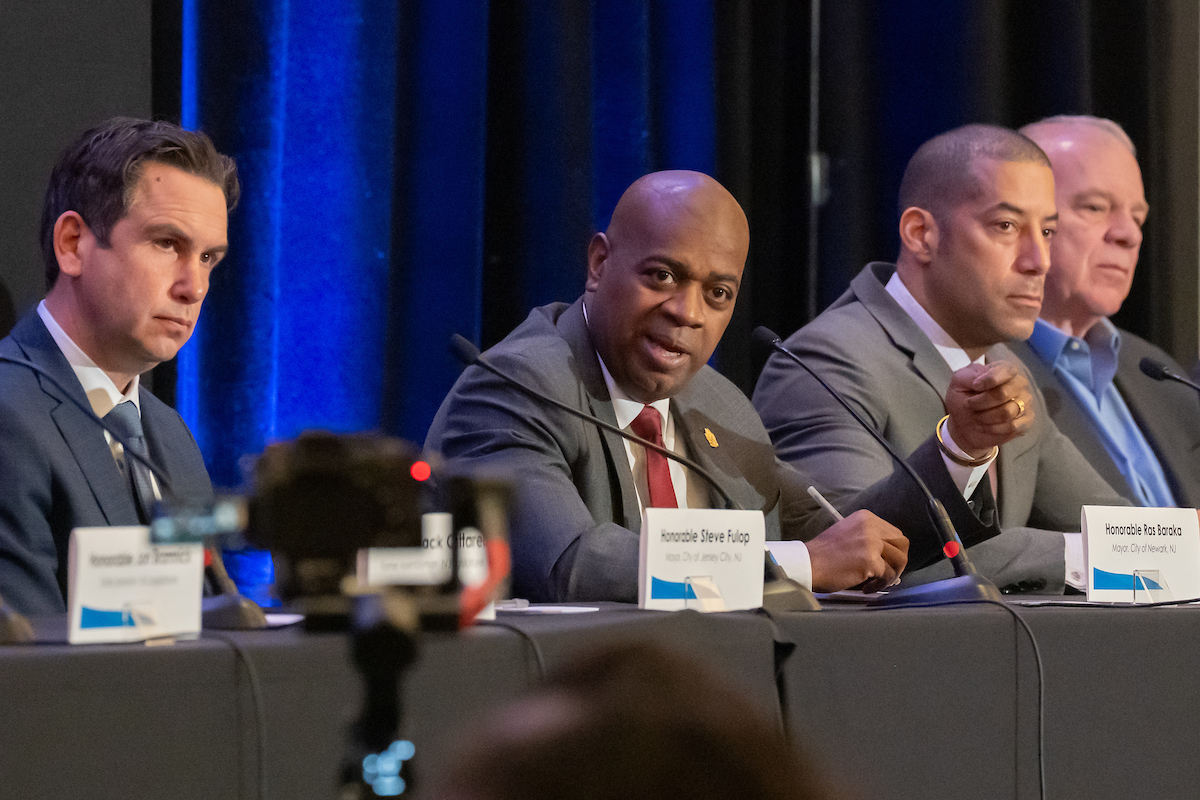
The panel featured Newark Mayor Ras J. Baraka, Senator Jon Bramnick, former Assemblyperson Jack Ciattarelli, former Senators Steve Sweeney and Ed Durr, who has ended his bid for Governor, Jersey City Mayor Steve Fulop, former Montclair Mayor Sean Spiller, and radio personality Bill Spadea.
According to the AACCNJ’s disparity study from 2024, amongst New Jersey’s 1.2 million Black residents (roughly 12.9% of the state’s populace), there are 88,000 Black-owned businesses.
Such businesses received 1% or less of state contracts in all industries between the fiscal years of 2015 and 2020.
Specifically, Black-owned businesses reportedly received $3.3 million in construction contracts, while White-male-owned businesses received $10.8 billion in the same category. Likewise, AACCNJ reported that the median net worth for Black households is $17,000, while the median for White households is $322,000.
The AACCNJ also found that 16.1% of Black individuals live below the poverty line in New Jersey, which is more than double the percentage for White individuals. Similarly, the study found consistently higher unemployment rates for Black individuals than White individuals.
The AACCNJ cited “discriminatory lending practices, limited generational wealth, and unequal access to high-paying jobs” as contributing factors to this disturbing inequity.
With the second Trump administration’s sweeping executive orders and DOGE’s massive federal spending cuts, the Summit explored how New Jersey’s Black wealth disparity could be exacerbated by DOGE and recent policy changes concerning diversity, equity, and inclusion (DEI).
Thus, these pressing issues were tackled by New Jersey’s gubernatorial candidates during their panel discussion, which was moderated by John Bailey of the Bailey Consulting Network.
“If I had to paraphrase gaining ground in the Black community… research says that the era of social progress, housing, economic development, education, business development, we are further behind now than we were in the Civil Rights Movement,” Bailey said to the audience.
The panel showed the candidates discussing how the state’s Black communities would benefit from their being elected to Congress. Specifically, the speakers shared how they would approach issues like labor shortage, the housing crisis, public procurement policies, and DEI in New Jersey.
Many of the candidates received applause for desires to increase economic opportunities for Black people in New Jersey by promoting workplace diversity, upholding DEI, and raising public procurement thresholds.
“We’ve all faced discrimination because some people vote differently than others,” said Sweeney. We’ve all faced it. I faced it in a different way. The people in this room have always faced it. Diversity is important. Advancing and making sure that people are giving people opportunities is important.”
Likewise, the audience praised the candidates who criticized systemic economic discrimination that has supposedly held back Black communities and Black-owned businesses in the state.
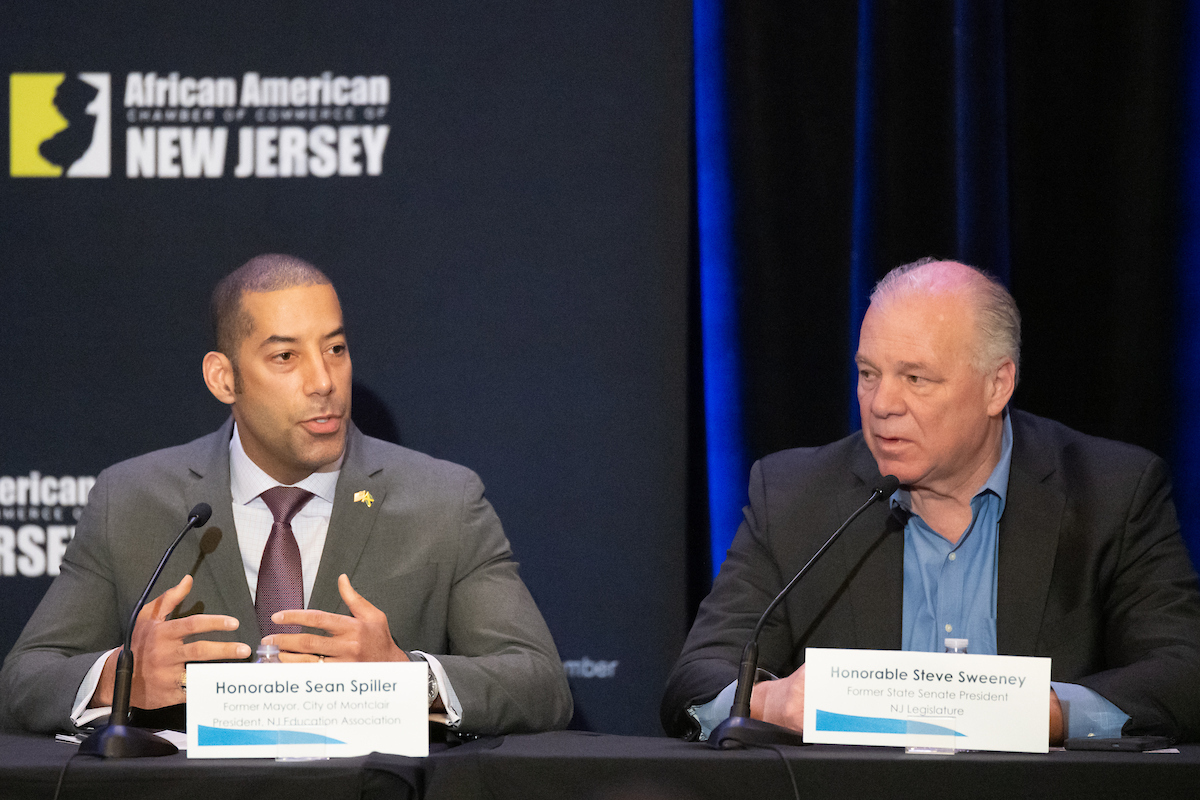
Sean Spiller, in particular, claimed that New Jersey must change the way they judge business proposals, saying it has systemically favored white male-owned business, contributing to economic disparity. He argued that business owners should instead be judged based on qualifications and how their businesses contribute to their communities and support other businesses owned by women and racialized persons.
“These are the ways we change the system, and when we focus on that, we can move away from… [thinking that] somehow it’s you to blame. We’re the ones to blame in this too. Here’s how we change that system. Because I appreciate the disparity study, but as a Black man growing up in this country, I didn’t need that study to tell me what that thing said,” Spiller said, receiving a round of applause.
On the other hand, Spadea received a considerable amount of “boos” from the audience for his proposals.
He claimed he wants to give local communities greater access to education and capital. However, he received backlash when he stated that, on his first day as governor, he would end sanctuary cities for immigrants in New Jersey, as well as the current DEI to broaden the definition to “empower our suffering communities” and bring in companies and hire “local and legal” workers.
Also, in contrast with the other candidates, Spadea stated that he would bring DOGE to New Jersey and “rip the guts out of this government and return some money back to the people.” Meanwhile, the candidates still present received praise for refusing to have DOGE make spending cuts in the state.
Overall, the AACCNJ’s Black NJ Economic Summit showed severe inequalities that Black New Jerseyans face, and how they could be made even worse in the near future.
At the same time, it showed how the state’s 2025 gubernatorial election could significantly impact the futures and livelihoods of state residents. Whatever the outcome, the Summit has proven that so much more needs to be done in order to bridge the disparity of wealth that has affected Black individuals and communities.
Related Articles

NJ diverted $45 million in opioid funds. Advocates say the reason still doesn’t add up.
How New Jersey diverted $45 million in opioid settlement funds to hospitals — and what they plan to do with it.
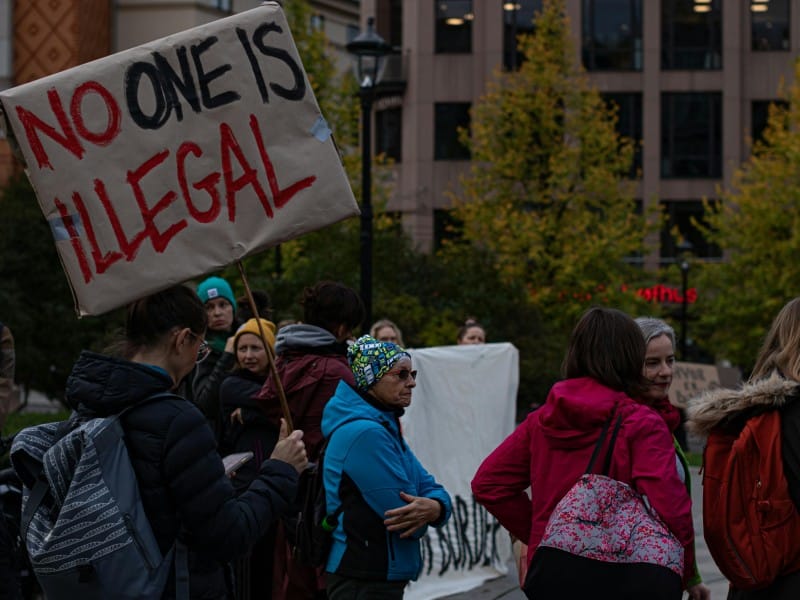
Why NJ Advocates Say the New Immigrant Trust Laws Aren’t Enough
Gov. Sherrill codified NJ’s Immigrant Trust Directive into law, but advocates warn “legal loopholes” and a $42M funding gap still leave many residents at risk.

Sherrill Signs NJ’s Landmark Immigrant Protection Laws
The bills protect immigrant residents’ private information and limit how local police can interact with ICE officers.