
Why Congress was once ‘The Last Plantation’
By David Mosca
NJ Urban News
While “The Last Plantation: Racism and Resistance in the Halls of Congress” may be the name of Dr. James R. Jones’ new book, he acknowledged the metaphor known as “The Last Plantation” was not invented by him – but by members of Congress.
The term goes back to 1978 when U.S. Senator John Glenn used it to describe how Congress was exempt from federal workplace laws, which allowed the use of practices that were discriminatory.
During a live stream at noon on Tuesday, March 25, Dr. Jones spoke as a part of Rutgers University’s Democracy and Ethnonationalism Lecture Series, hosted by the Rutgers Center for Security, Race, and Rights.
The series, which began in 2024, brings diverse perspectives and the experiences of minorities collectively harmed by ethno-nationalism in North America, Europe, India, and Israel.
During the lecture, Dr. Jones addressed the current political climate, the challenges facing racial democracy, and his findings for his book and how they show Congress as a racialized workplace.
“There are so many significant challenges facing multiracial democracy right now, and they seem to be coming from all sides of the political spectrum, but what I think remains unnoticed is the people in the room when policies are being made,” Jones said.
“It’s not necessarily our elected officials or unelected billionaires, but the staffers who are doing the work. Racism shapes the day-to-day activities of our nation’s law-making institutions. It determines who can participate in American politics and underscores how White supremacy operates as a political system.”
In his findings, Dr. Jones found that in Congress, it matters who is in the room, why it’s important to have Black staffers in policy-making rooms, and how they make a difference and ensure that our laws are as representable, equitable, and fair as possible.
The Civil Rights Act of 1964 prohibited discrimination based on race, sex, religion, and national origin in employment opportunities, voting, and public accommodations.
The law was applied to public schools and businesses across many spectrums, including hotels, theaters, and restaurants.
However, it did not apply to Congress or the legislative branch. In the 1970s, the media reported on discrimination in the workplace, and “The Last Plantation” was a term that referred to Congress.
In 1995, the metaphor disappeared, making writing the book difficult for Dr. Jones since it was now exempt from many reporting requirements.
“‘The Last Plantation’ is not a term you will find in the news covering Congress today, but it’s still helpful to understand how Congress operates,” says Dr. Jones. “For decades, it was widely known as this.”
In his book, published by Princeton University Press, Dr. Jones uses the plantation metaphor on how race and racism are drawn upon in the workplace.
He also mentions how Black staff members in Congress have engaged in inclusive policymaking. He would even speak to some of these staffers, from interns to chiefs of staff, who revealed how they got their start and their own experiences challenging racist legislation.
“I see Congress as an incredibly complex social institution,” he says. “Studying Black workers is important because they’ve been some of the loudest activists on Capitol Hill for the longest time.”
As he continued to research racism in Congress, Dr. Jones found that in the 1970s, media outlets reported on Congressional exemption and widespread racial and gender discrimination.
These included the Fort Worth Star Telegram’s 1974 report of 20 Capitol Hill offices showing discrimination in the hiring process, the Wall Street Journal’s 1978 article referring to Congress as “The Last Plantation,” and a 1979 Los Angeles Times article on how governments were fighting bias for jobs while still practicing it.
These were not only racial bias but gender bias as well. And they came from both Democrats and Republicans, the record shows.
“One Democrat job announcement sought a woman to fill a temporary typist position and demanded ‘white, no pantsuits,’” said Dr. Jones. “Republicans advertised for a woman staffer who ‘doesn’t have to be a looker but should be attractive, smart, young, no Catholics, and no water signs. Sorry if you’re an Aquarius, but you can’t work on Capitol Hill in this office.’”
“These are prejudices from both sides that are very telling,” Jones maintained. “They reveal beliefs and biases about who should work and hold certain positions in a higher congressional workplace. Today, most senior positions in Congress are overwhelmingly held by whites and men.”
Toward the end of the lecture, Dr. Jones would address how Diversity, Equity, and Inclusion don’t exclude White people, which seems to be a popular theory under the current presidential administration.
“I think to understand this moment, it’s important to understand the power that these people have in the federal government, and I mean power in the most diverse way,” he said. “It is power not necessarily to do whatever you want with laws, but to make sure these laws are working as intended. The government has long been a refuge for Black workers in both professional and service positions.
Related Articles

She Thought She Was an Ordinary Tween. Then an Ancient Royal Curse Found Her.
A girl discovers she is a real-life princess with a hidden past and an ancient curse in Destiny of the Diamond Princess.

10 Best Books Of 2025: The Ultimate Year-End Reading List
Our Best of 2025 roundup features ten must-read fiction and nonfiction books to inspire, challenge, and entertain in the new year.
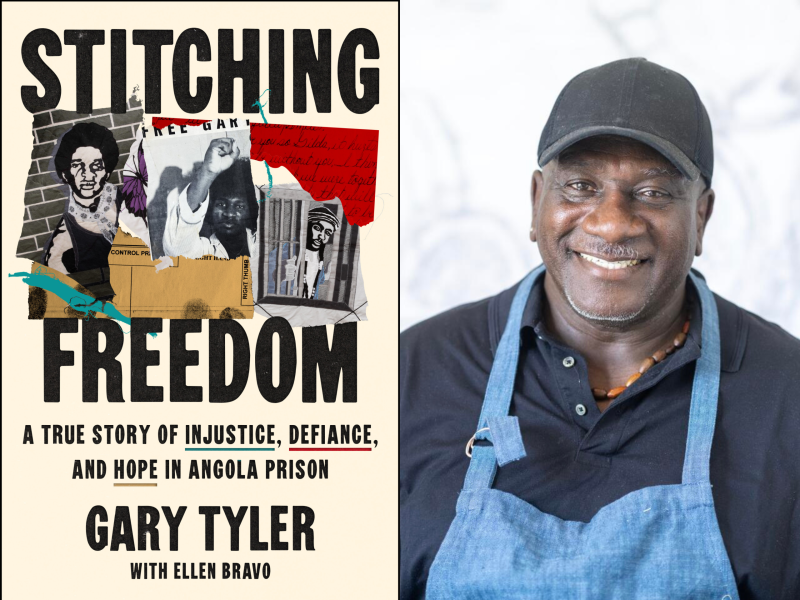
Gary Tyler Threads Racism, Resilience And Redemption Into One Powerful Memoir
Gary Tyler recounts his wrongful conviction and 41 years in Angola Prison, exposing racism, resilience, and hope in Stitching Freedom.