
Vivian Cox Fraser’s Mission to Fight Economic Disparity
Vivian Cox Fraser, the president of the Urban League of Essex County, has a lot on her plate.
Earlier this month, she returned from the 60th anniversary of the March 7, 1965,
“Bloody Sunday” march for civil rights in Selma, Ala.
Waiting for her was a mountain of Urban League work that was part of a strategic plan to overcome economic disparity in the Fairmount neighborhood of Newark.
But Cox Fraser wasn’t frazzled. She’s determined to stay the course even as cuts are made by the Trump administration.
“Generally speaking when I go somewhere I might ask, ‘How many people have heard of the Urban League?’” Cox Fraser said. “Everybody raises their hand. And I say, ‘Well, how many people know what we do?’ And a far fewer number will say they know.”
Fraser, who has been president of the league’s Essex County chapter for 20 years, described the Urban League as a “comprehensive community and social development organization.”
After Whitney M. Young took over the national organization in 1961, Young expanded it and made it more of a driving force for civil rights.
“(Young) did a lot of work in opening pathways of employment for people,” Cox Fraser explained.
“This Urban League chapter was founded in 1917 by William Ashby, the first Black social worker in New Jersey; and it was founded at a time when people were migrating from the South, and they needed help with housing, employment, education, so that’s the work of the Urban League. We’ve been doing that work for over a century.”
What does that work look like now?
The day-to-day things haven’t changed, and those are largely dealing with the result of systemic inequities, Cox Fraser said.
“I would say for the last 10 years we’ve been doing more work around economic development,” she said.
“How do we eliminate the racial wealth gap? We have programs for infants and toddlers all the way to seniors that focus on the idea that we’re preparing people in our community – as well as being a bridge for people in our community – to advance economically.”
A reminder of why there’s a need to advance economically came from a NorthJersey.com report this week about the New Jersey Builders Association (NJBA) filing legal challenges against 159 municipalities that have filed complaints in attempts to lower state-mandated affordable housing quotas.
The quotas are mandated because of the state constitution’s Mount Laurel doctrine, which exists to support zoning that allows for low- and moderate-income homes.
“That’s been like a 40-year fight, trying to get these affluent communities to take on their fair share of affordable housing, and they’ve been making some progress about that,” Fraser said.
“It’s not either/or, it’s both/and. How many families can be absorbed by putting affordable housing in affluent communities? It’s not going to be all families. You’ve got to be almost like whack-a-mole.
“There’s systemic things that have resulted in this wealth gap not related to anything to do with your individual drive and or my individual drive or our individual intelligence,” Cox Fraser said.
She pointed to a status quo that leaves a lot of people in crisis, and she said the Urban League’s job is to meet people there without judgment.
“Whatever brought you to our doors, you’re part of a family now and it’s our job to help you navigate the situation you’re in,” Cox Fraser said. “Most people have some sort of barrier they need to overcome. Some young people have learning disabilities that were never diagnosed, and maybe they’re an adult now and they’re not literate.”
Fraser knows the offerings the Essex County chapter of the Urban League has for them intricately.
In her role, on an institutional level, Cox Fraser can do something she said is invaluable – listening – and seeing how a changed real estate value landscape in New Jersey means she can tell legislators that the old model of affordable housing doesn’t help people who need affordable housing build wealth.
“The whole point is to build an ecosystem around how we not only help people find jobs but (the notion of) ‘how do we start to create our own jobs?’”
“The central feature of Urban League is a financial opportunity center,” Cox Fraser said. “Everybody who comes to the Urban League – we want you to come through the financial opportunity center.”
Cox Fraser’s goal is for everyone to own something – a home, a local business.
“People who come in are paired with a financial coach. and that coach’s job is to help you get your finances in order. Most times people … it’s not that they’re mismanaging money so much. It’s just that they don’t have enough money. The cost of an apartment is so much, how do you ever save for anything?
“They’re also paired with an employment coach,” Fraser continued. ‘It’s often not that people are mismanaging the money, it’s that they don’t have enough money, so how can we help them? Better job, support services, child care … We do what’s called a benefits plan<” she added.
“We want to make sure everything your family is entitled to receive, you get it. When you’re in a place (be it emotionally or literally) where you’re always reacting, you can’t really plan. Many wealthy people have coaches – maybe an executive coach for finances or at their job. But we find that families of not-as-high means have the same challenges (which coaches help with), and they really need that support so much more.”
Fraser used to go to local community meetings and say “Education, education, education.”
“People would say, ‘Abandoned properties, the trash, the crime, no jobs,” she said; and they’d talk about the conditions of the housing they were living in.
“So I said let’s start building houses, let’s start addressing the priorities,” Cox Fraser said. “Sometimes the things that we think are significant, when families are going through crises, those things are not important.”
Learn more about the Urban League of Essex County, its services, and how you can utilize or support them at ulec.org. Their office is located 508 Central Ave., Newark.
Related Articles
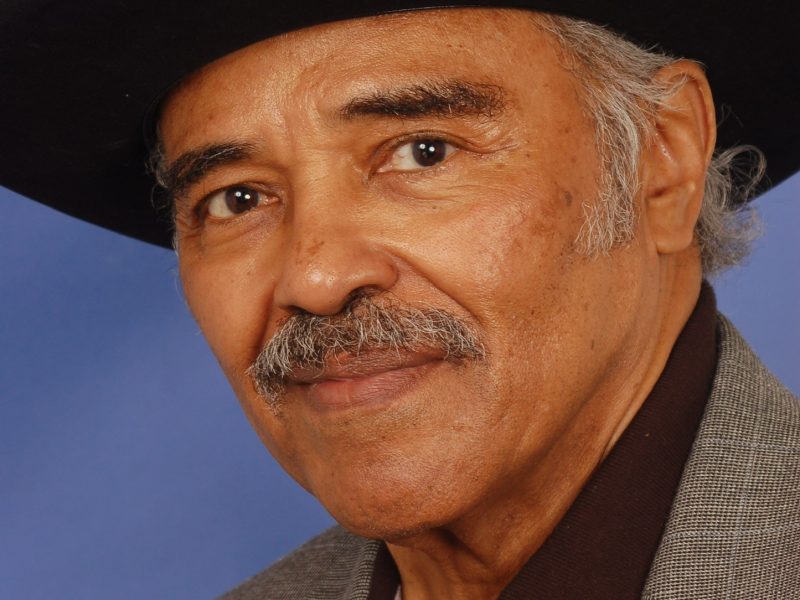
Founder Of NYC’s First Black Daily Newspaper Dies At 88
Thomas H. Watkins, pioneering founder of NYC’s first Black-owned daily, has died at 88, leaving a lasting impact on the Black Press.

Once A Patient’s In Custody, ICE Can Be At Hospital Bedsides — But Detainees Have Rights
ICE can monitor detained patients in hospitals, but detainees still have rights to privacy and legal access.