Filmmaker Margie P. Hollins Debuts her Historic Film at SIUE on the Demolished Hadley Township in Missouri
Margie P. Hollins’ sister called her hysterical and in tears. “They’re tearing down the church,” cried Marlene D. Peters. Hollins’ account of the heartbreaking scene is described in the story of the historic community in the documentary film, “WE BEAR WITNESS: The African American Legacy of Hadley Township, Mo.”
Southern Illinois University Edwardsville hosted the debut of Hollins’ “WE BEAR WITNESS” in the Lovejoy Library on Thursday, Feb. 6, at Dunham Hall Theater on the Edwardsville campus as part of SIUE’s Black Heritage Month events.
A discussion with guest panelists followed the screening: Dr. John A. Wright Sr., notable historian/Fulbright Scholar/author of “St. Louis: Disappearing Black Communities;” Gwen Moore, historian/Curator of Urban Landscape and Community Identity of the Missouri History Museum; the Honorable Mayor Reginald Finney, first African American Mayor of the City of Richmond Heights; and
Hollins. Serving as moderator was WSIE 88.7 The Sound’s Robin Boyce, associate director of underwriting.
“Being on-site as they tore down Mount Zion Missionary Baptist Church, other structures and homes with a bulldozer on a beautiful sunny day in May 2014 was devastating,” said Hollins. “It reminded me of a war-torn place, similar to pictures I’ve seen of Beirut!”
Hadley Township was established in 1907 by Evens and Howard, a local brick-making company, to address its labor needs by recruiting African Americans during the Great Migration, who were seeking to escape lynchings and Jim Crow oppression in the south, according to Hollins. Historians claim the town was a prime target for elimination during 1945-1951 when it faced a $750,000 bond issue that sought to turn it into a park and playground. According to Hollins, the bond issue failed – twice – due to the leadership of Rev. James E. Fiddmont, pastor of Mount Zion Church, and Mildred Rusan.
Hollins addressed the audience before the screening of the 30-minute film that she wrote, directed, and produced.
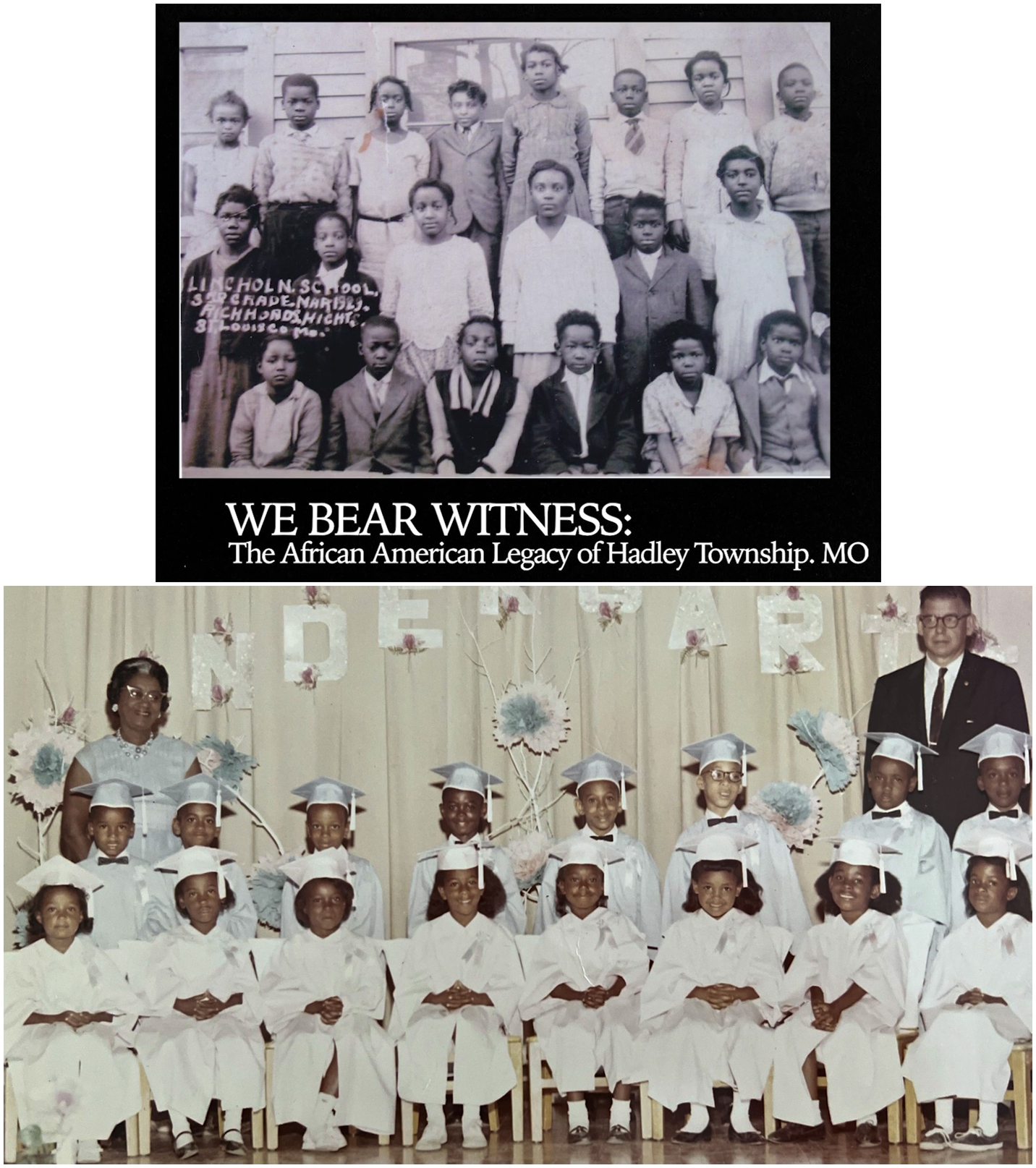
“We were a small African American community that thrived because we were nurtured, talented, and close-knit,” shared Hollins. “We were encouraged by Black teachers, and the African American community raised us. And when it came to achieving, we did. So, I stand here today to bear witness, and there are others in this room from the Hadley Township who can also attest to the greatness and legacy of our community.” Hollins’ family members were among the early residents. Her mother was five years old when she came to Hadley Township in 1922.
The film features former residents, business owners, and members of the community who were interviewed, such as Helen Abron, gospel singer Doris Fiddmont Frazier, daughter of Rev. Fiddmont; Carol members were Sho and Melvin Martin. Footage of buildings and structures where people once lived, shopped, and thrived was also included. Many of those interviewed on camera also discussed the importance of preserving the history of Black communities.
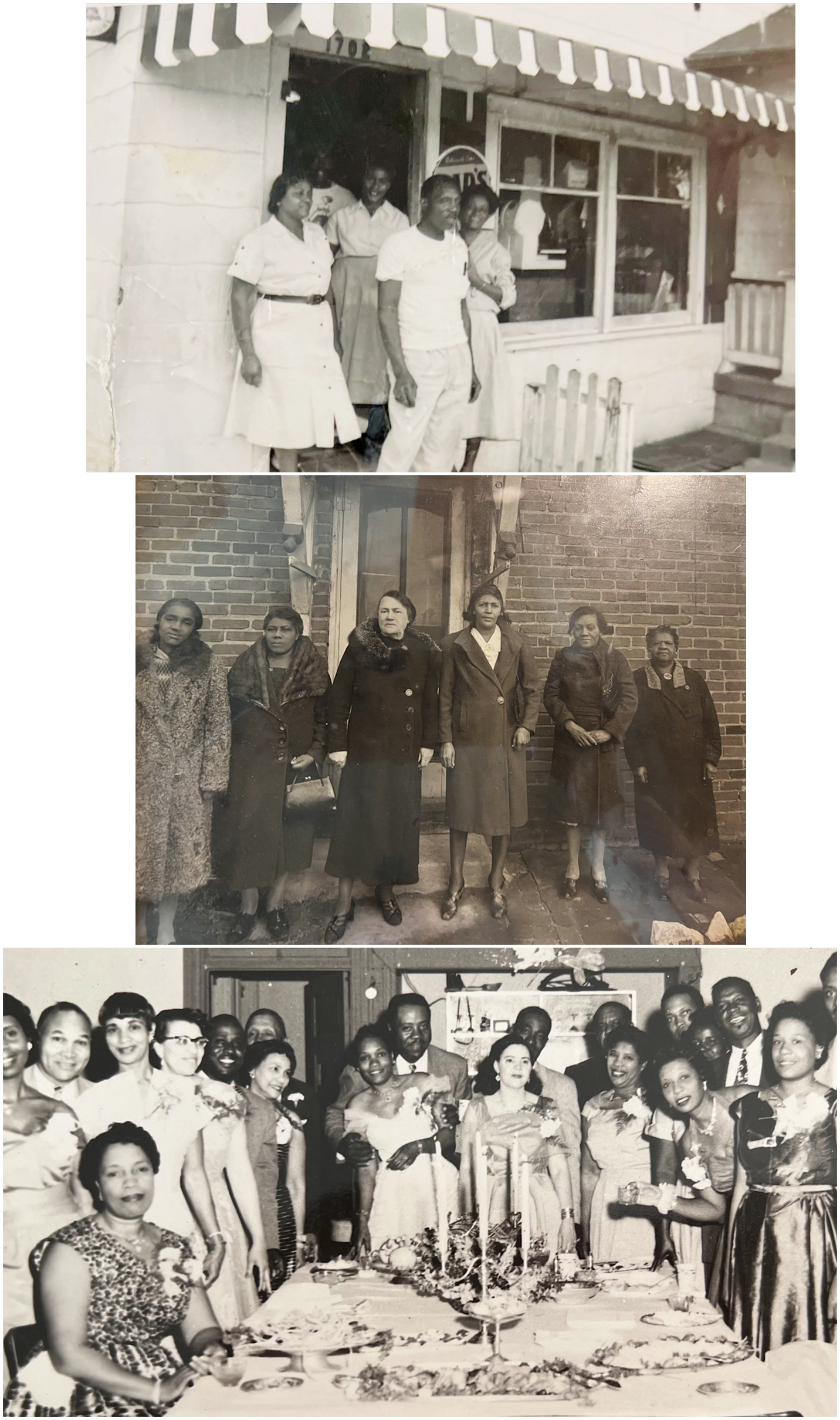
“Without a written and/or recorded history, future generations will never know the truth,” said Hollins. “Hadley Township has become one of the disappearing African American communities nationwide.”
Hollins would like a significant virtual historical marker at the corner of Dale Avenue and Hanley Road that identifies the area as a former historic African American community site.
Hollins recited a poem by the late Marthenia Bates Johnson Bonham, her seventh-grade English and art teacher at the former New Lincoln School in Hadley Township.
Portions of the poem read:
“I watched them tearing a Building Down
A gang of men in a Busy Town
With a Ho-Heave-Ho
And … a lusty Yell
They struck a Beam
And a Side Wall Fell …
I asked myself as I went my way
Which of these roles have I tried to Play
Am I a Builder who works with Care …
Or, Am I a Destroyer who walks through town
Content with The knowledge of
TEARING DOWN.”
(Marthenia Bates Johnson Bonham – 1955)
Southern Illinois University Edwardsville provides students with a high-quality education that powerfully transforms the lives of individuals seeking something more remarkable. As a premier metropolitan university, SIUE is creating social and economic mobility while also powering the workforce of the future. Built on the foundation of aerial education and enhanced by hands-on research and real-world experiences, the academic preparation that SIUE students receive equips them to thrive in the global marketplace and improve ourme to a diverse student body, SIUE is situated on 2,660 acres of beautiful woodland atop the bluffs, overlooking the natural beauty of the Mississippi River’s rich bottomland and just a short drive from downtown St. Louis. broad-based lib communities. Ho