
Powerful Images to Celebrate During Black History Month
The column, On the “A” w/Souleo, covers the arts, culture, entertainment, party, and philanthropy scene in Harlem and beyond and is written by Souleo.
A new exhibition at The New York Historical, debuting just in time for Black History Month, showcases numerous photographs that highlight the life and spirit of New York City’s Black population during the late 20th century. Although Picture Stories: Photographs by Arlene Gottfired is not solely focused on the Black experience, it features a significant and powerful representation.
Gottfried, a White woman, noted in a 2015 interview how living in Crown Heights in the 1980s influenced her decision to document the Black community. “At that time (the 80s), in my neighborhood, a lot of people moved out – the white flight syndrome. When I went to school, I noticed a moving truck every day, going to the suburbs. Then, it became African-American and Puerto Rican, which were the main groups at that time. So my neighborhood influenced me very much. Being able to connect with certain subject matter that had I not lived in that environment, might’ve felt distanced or disconnected.”
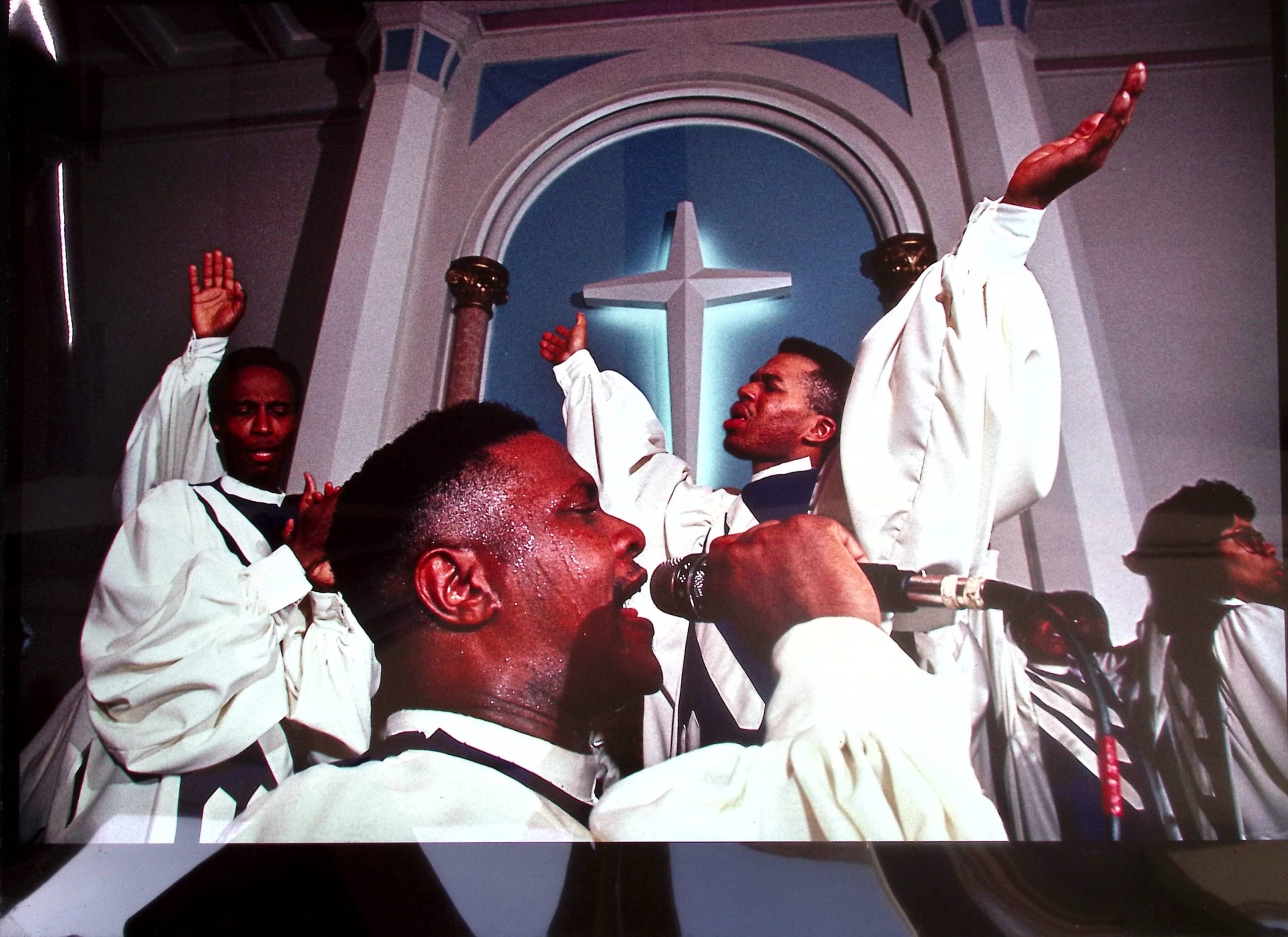
Gottfried’s connection to her Black subjects was palpable during the exhibition’s opening reception in photographs such as Eternal Light Choir Performing. After discovering the choir at a Gospel Fest in an abandoned gas station in New York City’s Lower East Side, Gottfried eventually joined the choir and documented them in her book The Eternal Light. In other photographs, such as Boy with Afro on Bicycle in front of Trash Cans, she captures everyday life for Black New Yorkers.

Exhibition curator Marilyn S. Kushner hopes the show makes underrepresented aspects of New York City’s history more accessible and engaging for audiences. “Some people read history, and some people look at history,” she said. “Arlene Gottfried has us looking at history that some words can’t describe, and that’s the beauty of what she did. She showed us a part of New York that some people don’t know but that she knew intimately and that she loved and it loved her.”
Gottfried, the older sister of the late comedian and actor Gilbert Gottfried, passed away in 2017. The exhibition marks the recent acquisition of nearly 300 of her photographs by The New York Historical, ensuring that her legacy—and the stories of the Black people she documented—will live on.
Elizabeth Catlett, a Highlight at The Winter Show
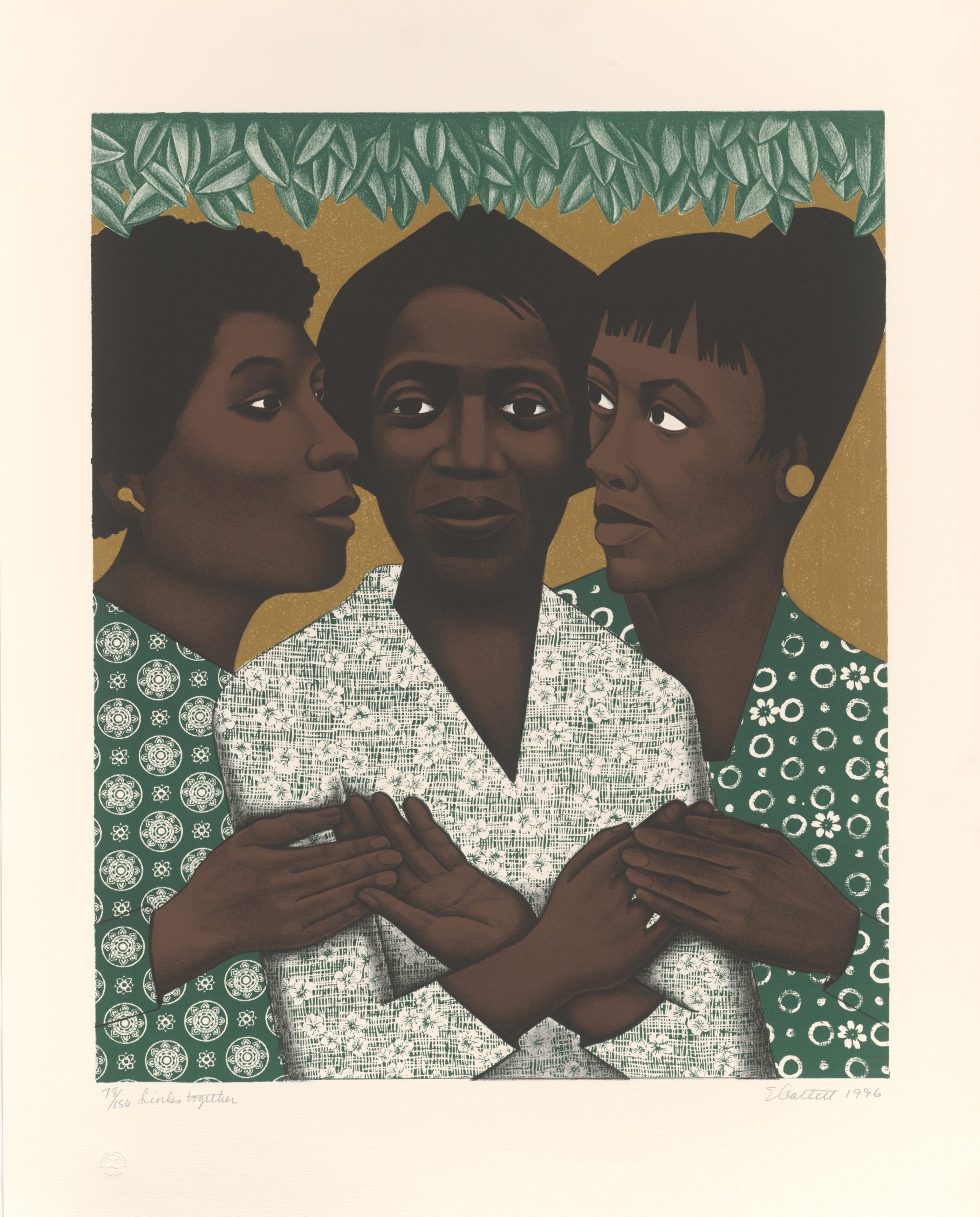
Another artist who powerfully captured the Black experience is the legendary sculptor and printmaker, Elizabeth Catlett (1915-2012). At last month’s The Winter Show, the Dolan/Maxwell booth presented several of her works. This showcase comes as Catlett experiences a resurgence, with a retrospective that recently closed at the Brooklyn Museum and is set to open on March 9 at the National Gallery of Art in Washington, D.C.
Ron Rumford, director of Dolan/Maxwell, finds the renewed interest in Catlett’s work to be long overdue. “I’ve been saying that for years,” he said. “I could never understand why she wasn’t given the full scholarly treatment, [but] finally she has it.”
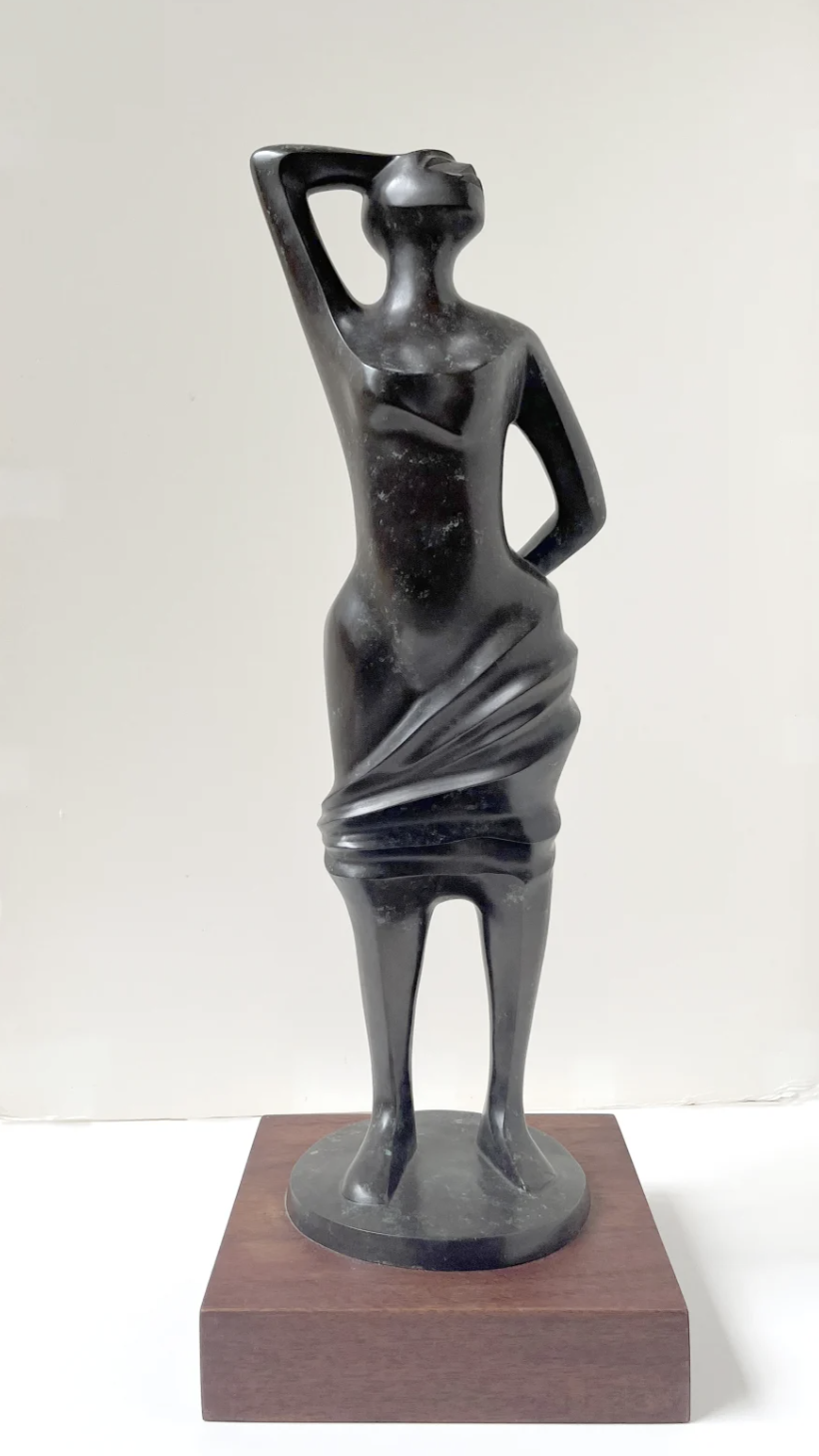
In works such as Standing Strong which Rumford exhibited at the prestigious fair, Catlett’s commitment to creating uplifting images of Black women is on full display. A regal bronze figure stands tall with one hand behind her back and the other on top of her head, as her face is proudly turned upward. Catlett’s role as both an artist and activist was shaped by her life experiences with racial, gender, and economic inequities. The granddaughter of formerly enslaved people, she grew up during the Great Depression, and became a key figure in the Black Arts Movement (BAM). According to the Museum of Modern Art, “Her leftist political involvement led the US to label her an ‘undesirable alien,’ and for over a decade, she was barred from entering the country of her birth [her US citizenship was not reinstated until 2002].”
Despite these challenges, Catlett remained dedicated to using her art as a tool for social justice. In 1970, at the Conference on the Functional Aspects of Black Art (CONFABA), a historic event for BAM, she delivered a speech and stated, “For I have been, and am currently, and always hope to be a Black Revolutionary Artist, and all that it implies!”
As a new generation is discovering Catlett’s work, Rumford hopes that her message of empowerment resonates deeply. “There’s a very strong social message. She looks to uplift…I think that’s at the core of what she’s about is that if we don’t value ourselves, no one will value us. And she’s valuing women because she recognizes that they’re the ones doing a lot of the heavy lifting and not getting quite the credit for it.”
The column, On the “A” w/Souleo, covers the arts, culture, entertainment, party, and philanthropy scene in Harlem and beyond and is written by Souleo.
Related Articles
Sing Along With Whitney Houston At The American Dream On Feb. 7
The NJ Hall of Fame celebrates Whitney Houston’s 40-year legacy with a free, immersive capstone exhibit at American Dream Mall.
Harriet Tubman Descendant To Headline Black Heritage Celebration In Middlesex County
East Jersey Old Town Village hosts an Oct. 11 celebration of African American history with author Michele Jones Galvin.