
Sports and Social Justice Take Center Stage at Kean University’s Human Rights Week
Kean’s panel discussion included speakers like Brooks Meek, NBA Vice President of Basketball Operations; Daniel Van Norton, NFL Director of Football Development; Alexa Canas, New York Jets Manager of Corporate Partnership Activation; and Tonilynn Taranto, New York Red Bulls Community Relations Manager.
When discussing this Human Rights Week event, Kean University president Lamont Repollet expressed his desire to use this opportunity to promote sports as “the great equalizer.”
“It’s an awesome week to be able to celebrate the differences. To understand the world that’s going on right now,” said Repollet. “I think every once in a while, you need to pause for a second and really just say, “Look, differences, we should appreciate differences. Respect one another.”
The guest speakers talked to Kean students and staff about how their organizations promote unity, diversity, and equity. They elaborated on their work guiding and collaborating with athletes to reach out to communities and advocate for and create social change.
In doing so, they showed how sports can go beyond mere entertainment and tackle significant issues on and off the field. Though they addressed how some athletes don’t use their status to tackle social issues, they encouraged those in attendance to acknowledge their voices and speak out against the problems they see in the world.
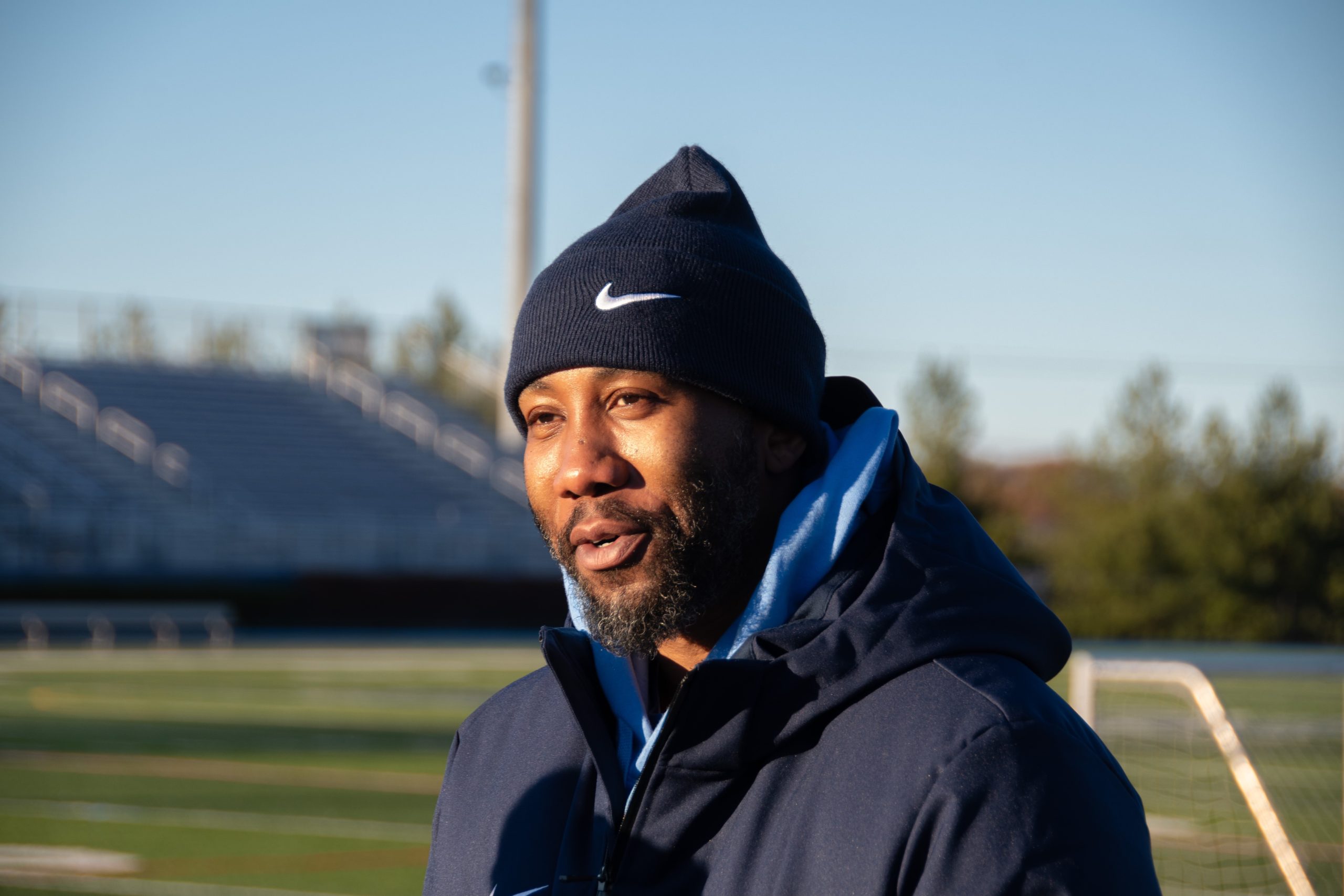
The panel welcomed an especially notable moderator: Ndaba Mandela. He is a renowned author and activist, the founder of the Mandela Project, the co-founder and chairman of the Africa Rising Foundation, and a global ambassador for the Joint United Nations Programme on HIV and AIDS. He is also the grandson of South Africa’s first president, Nelson Mandela.
Mandela discussed the challenges that people face in the present day, such as poverty, discrimination, and people being marginalized in their community for their sex, gender, and sexual orientation. Mandela explained how, because of sports’ unique ability to bring people of different backgrounds together, it can serve as a powerful opportunity to get important social issues to the forefront of audiences’ minds.
“Sports are a very important part of our life, and sports [are] very special because [they are] a universal language, right?” said Mandela. “And it has a much bigger role to play when it comes to influencing people [and] highlighting certain issues in the world we live in.”
Mandela’s use of sports as a political platform to create an impact reflects how his grandfather used South Africa’s rugby team, the Springboks, to unify the country. At the same time, he was president during the 1995 Rugby World Cup. However, Mandela identified a particular challenge when attempting to do the same with American audiences, claiming they do not have “honest conversation[s] to talk about the past.”
“I feel like Americans still need to have their own sort of reconciliation similar to South Africa,” Mandela added. “I mean, a couple of years ago, you had Colin Kaepernick, who was protesting against the National Anthem, and of course, that was a very sort of controversial time because a lot of people supported him, but also a lot of people didn’t support him. So we need to find a way for the sports world to be able to have those difficult conversations.”
After the panel discussion, Mandela joined Kean’s students for a field day outside the Alumni Stadium. Local youths also joined the college’s students for an evening of lacrosse and soccer drills. The students even taught Mandela how to play lacrosse.
Mandela described the children as “future leaders,” making it clear that he and the staff and speakers at Kean sought to help students realize their potential not just as athletes but also as activists. This made for a unique and inspiring celebration of Human Rights Week that should pave the way for the next generation to create change.
“On the record, I just want to encourage young people to dream and to dream big and to say, “If your dreams don’t scale, you are not dreaming big enough,” said Mandela. “So go out there, find the leader inside of yourself, find the Nelson Mandela inside of you, and unleash him onto the world.”
Related Articles

Assembly Committee Passes Key Bills To Protect Kids From Social Media Harms
NJ lawmakers move to shield children from social media risks, including screen addiction and privacy concerns.
Three Ways Sherrill Can Show She’s Serious About Improving NJ Schools
As Gov. Mikie Sherrill takes office, advocates urge bold action on school accountability and student performance.