
Local Leaders and Experts Unite to Empower Communities at “Newark Future Forum: Building Together”
This one-day conference welcomed several experts, philanthropists, and community leaders to discuss ways to empower youth and their communities and promote economic justice and racial equity. Held at the Paul Robeson Campus Center in Rutgers, this event was overseen by Victoria Foundation’s Vice President Sharnita Johnson and Executive Director Craig Drinkard.
The forum began with Vincent Mann, the Turtle Clan Chief of the Ramapough Lenape Nation, acknowledging the history of the Indigenous land beneath Rutgers. “This land has many terrible stories,” said Mann. “Those are memories that live in the soil beneath these buildings, beneath these streets, not just of our ancestors, but the Indigenous people who were enslaved and brought here from their own countries.”
Newark Mayor Ras J. Baraka then took to the stage to address the many organizations in attendance supporting the forum, specifically the now 100-year-old Victoria Foundation. During his speech, Baraka shared and emphasized the collaborative spirit that the forum continues to promote in the communities they aid.
“One thing I’ve learned as the mayor is the secret sauce is collaboration,” said Baraka. “If you don’t know how to collaborate, you’re never going to win. And everything we do well, we do together. And that’s really the key, and I want to thank Victoria for 100 years of commitment to the city of Newark.
Following remarks from Rutgers Chancellor Jeffrey Robinson, Sheila Epps sang a stirring rendition of the Black National Anthem. This performance set the stage for the forum’s main events geared towards advancing racial and social justice.
The first panel revolved around strengthening communities and finding solutions that advance equity and racial and social justice. Moderated by Craig Drinkard, this panel featured Jennifer Ching of the North Star Fund, Lisa Owens of the Hyams Foundation, and Nyoka Acevedo of the Youth Organizing and Culture Change Fund. Collectively, these organizations work to train and support young leaders, provide grant resources, and harness arts and culture to create change.
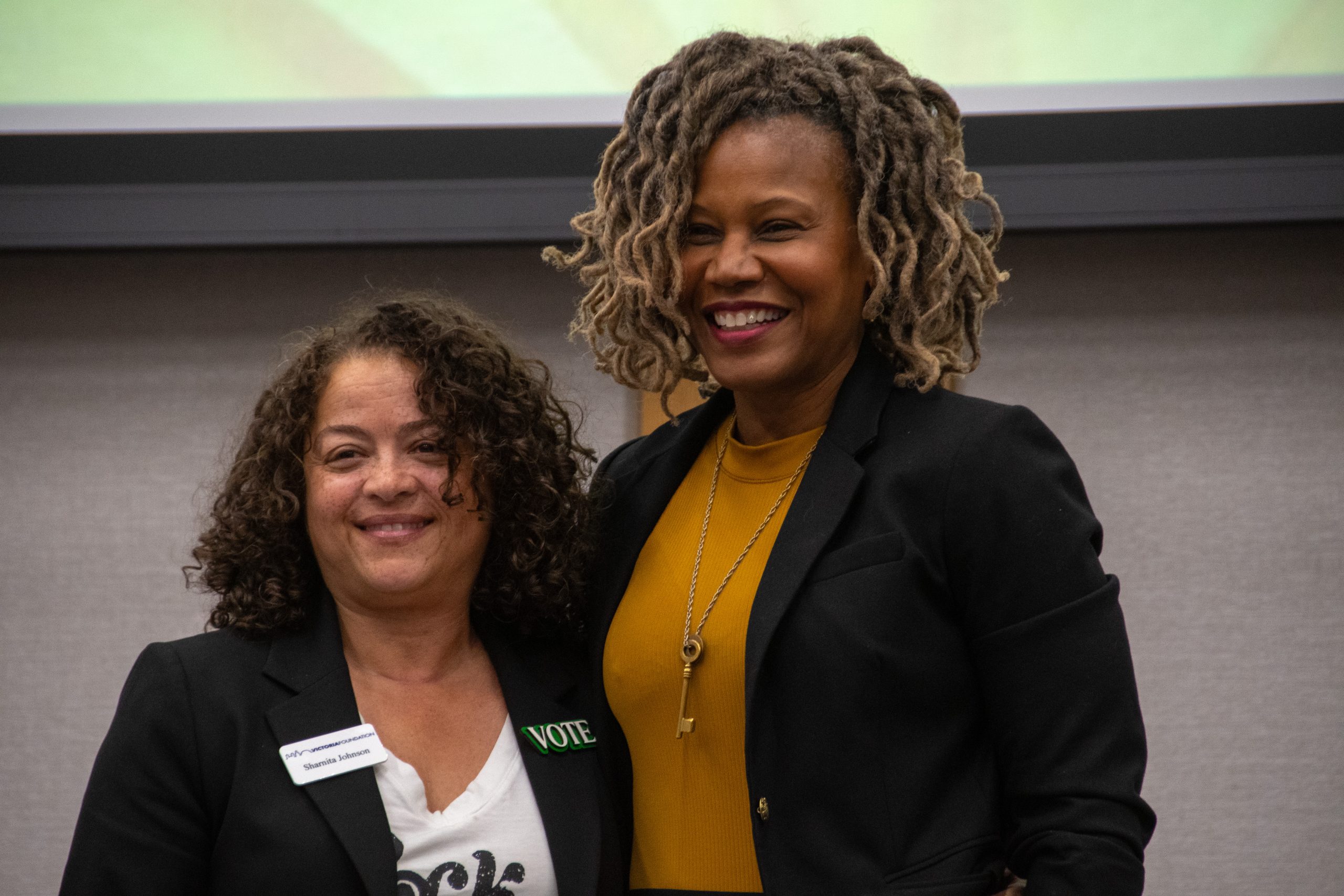
Following a brief lunch, Sharnita Johnson welcomed speaker Majora Carter, a real estate developer, urban revitalization specialist, and bestselling author. Carter shared her ideas and strategies for talent retention in community development, which emphasize creating more business opportunities, natural environments, and quality housing.
Referencing her upbringing in a “low-status neighborhood” in the Bronx, Carter saw how such communities, particularly those predominantly of color, have been burdened by the concentrated presence of waste facilities, power plants, and sewage treatment plants. However, she argued that poverty shouldn’t be conflated as a cultural attribute and that members of such communities should aspire to transform them into the environments they desire instead of leave them.
Seeing the potential of her community, Carter turned a run-down crackhouse in her neighborhood into the Boogie Down Grind cafe. Despite accusations of gentrification, Carter portrayed this establishment as a shining example of how to revitalize a community. Having garnered support from local investors, Carter created a profitable, quality business that showcases the true value of her community and caters to those who live in it.
“I would argue that gentrification actually starts to happen when we don’t believe in the value of our own communities and our place in them,” said Carter.
The second half of the day saw audiences break out into different panels where various experts shared their knowledge and experiences in promoting youth leadership, battling systemic racism, garnering and sharing community wealth, and increasing economic opportunities. The speakers represented organizations like the Sadie Nash Leadership Project, the New Jersey Institute for Social Justice, the Latino Action Network Foundation, and the Urban League of Essex County.
By the end of the day, the Newark Future Forum proved itself an enlightening and empowering experience that helped its audience realize the true potential in themselves and their communities. As Craig Drinkard said, the conversations held at the Newark Future Forum showcased the “power of community-led solutions,” as well as the many changes happening in Newark and the state of New Jersey.
Related Articles
Founder Of NYC’s First Black Daily Newspaper Dies At 88
Thomas H. Watkins, pioneering founder of NYC’s first Black-owned daily, has died at 88, leaving a lasting impact on the Black Press.

Once A Patient’s In Custody, ICE Can Be At Hospital Bedsides — But Detainees Have Rights
ICE can monitor detained patients in hospitals, but detainees still have rights to privacy and legal access.