Newark Flooding: A Chronic Issue for Brick City
“Editor’s note: This story was produced as part of “Stormwater Matters,” a project on stormwater management solutions by the New Jersey News Collaborative.”
Brick City has had to bear the brunt of the damage caused by modern flooding, which has damaged homes and businesses and limited people’s access to living necessities. Unfortunately, it appears this problem will only get worse without proper solutions.
According to a study by First Street, 15,298 properties in Newark are at risk of flooding in the next 30 years. This data accounts for 32.9% of all properties in the city, putting Newark at a tremendous risk.
Though this problem may seem far in the future, Newark’s flood risk is already pressing. First Street claims that 31.9% of Newark properties are at risk of flooding, an even higher threat level than neighboring cities like Paterson, with an estimated 28.1% risk. With such numbers painting a picture of urgency, one can’t help but wonder, “Why is Newark facing these dangers, and what is being done to prevent them?”
The Factors of Newark’s Flooding
Talk to the Newark Water and Sewer Department, and they’ll say that the city’s flooding has been exacerbated by multiple instances of combined sewage overflow (CSO). As explained by the Department, CSO events occur when “a combined sewer system, present in some parts of Newark, has too much stormwater runoff than the system can handle, which can result in the flow of untreated wastewater into nearby waterbodies and flooding.”
Many other factors have contributed to Newark’s flooding epidemic. ClimateCheck claims that the rise in global sea levels due to climate change has increased the chances of extreme precipitation, leading to severe flooding in coastal municipalities like Newark.
Another element to consider is the Passaic River. This 80-mile river runs through multiple counties in New Jersey, including Essex, with Newark sitting on its banks as it runs into Newark Bay. The overflowing of the Passaic has caused numerous floods in New Jersey in the past century, with Paterson facing a disastrous deluge last March.
The river may have less of a direct impact on Newark, as the latter is located beyond the Paterson Great Falls. Nevertheless, it still suffers from heavy rainfall from the Passaic River; when it enters Newark Bay, the water adds to the tidal waves that pound their way into the city.
The Stormwater Solutions
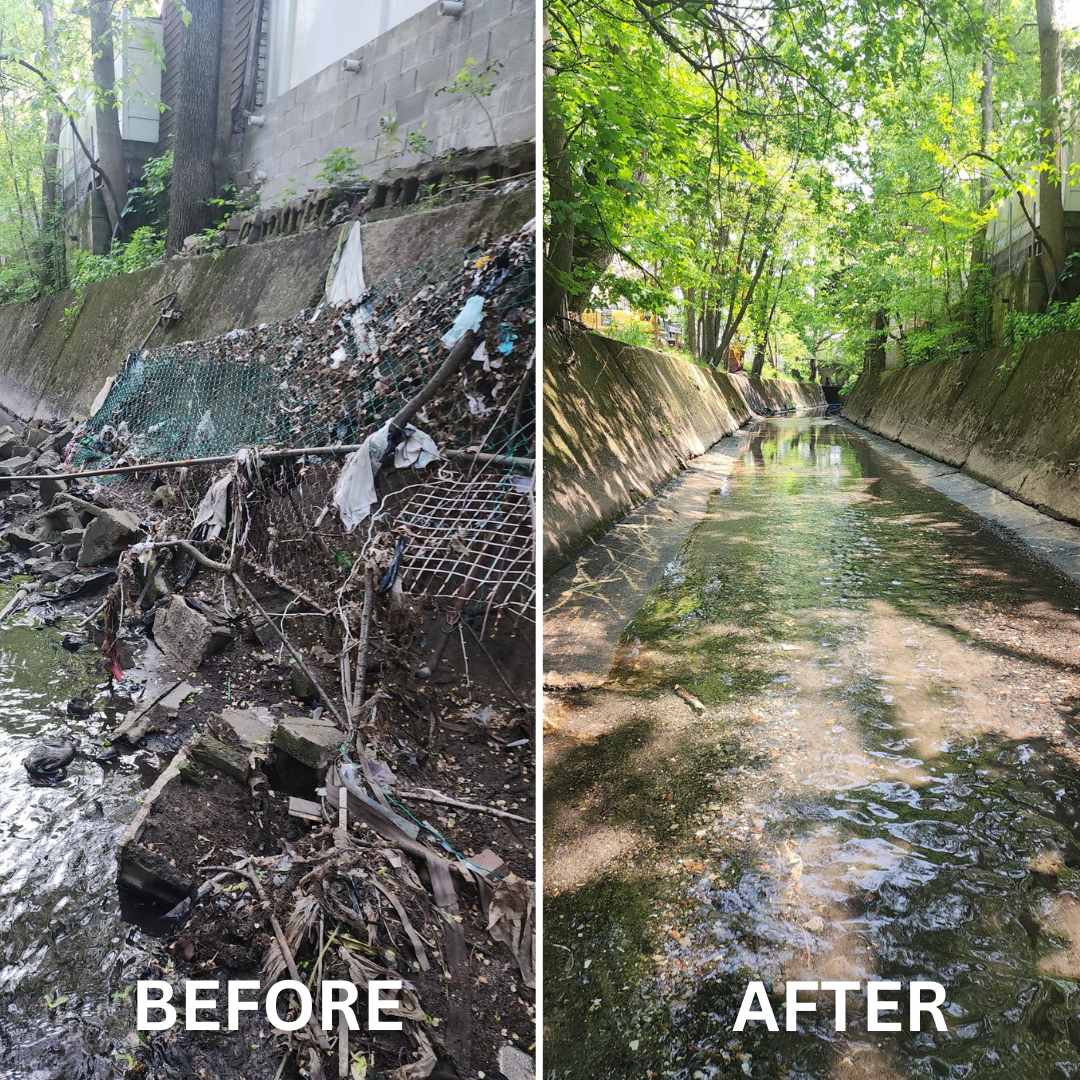
Newark Mayor Ras J. Baraka has long been committed to repairing and preventing flood damage. As far back as 2021, Baraka has worked with nearby county leaders and technical experts in the Resilient Northeastern New Jersey initiative, a coalition formed to find ways to reduce flood risk in their area by May 2022.
Since then, the Newark Department of Water & Sewer Utilities has worked with the Mayor and his Municipal Council and tackled multiple projects to inspect and improve the city’s water and sewer system. For example, CDM Smith stated that Newark repaired and improved the Queen Ditch in South Ward, completed in 2018, and built to reduce flooding by gathering water and diverting it to Newark Bay.
In April 2024, the Department announced RainReady Newark, a Green Infrastructure program designed to improve the city’s management and collection of stormwater runoff. Specifically, RainReady Newark will target runoff in urban areas, thereby reducing CSO cases in the city. The program also aims to increase green spaces and improve Newark’s air and urban heat quality.
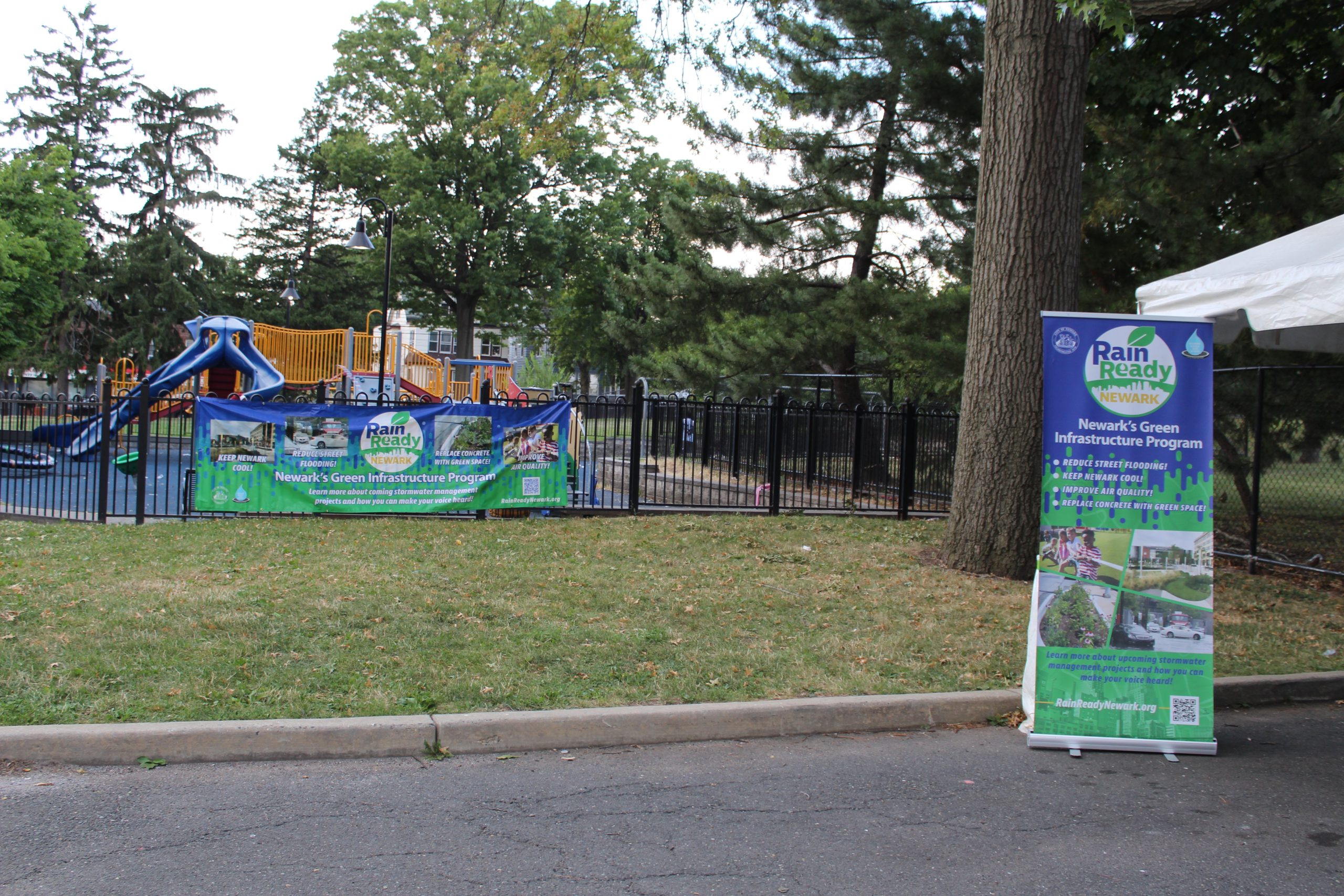
At this point, RainReady Newark is still in Phase 1, which the program claims will capture between 159,000 and 198,750 gallons of stormwater in a typical two-hour rainfall of 1 to 1.25 inches. Twelve potential green space sites are already scheduled for design and construction, and RainReady Newark expects them to capture 85% of runoff in Newark’s CSO areas.
Newark’s string of heavy flooding has shown that this disastrous threat will not disappear anytime soon. While it may seem like the damage will only get worse, Mayor Baraka and his administration’s initiatives have better prepared the city for future flooding. How much these actions will reduce the risk remains to be seen.
Related Articles

NJ Utility Bills Went Up 20%. New Report Says Data Centers Are To Blame.
New Jersey Policy Perspective found that data centers are behind spiked utility costs.

Camden Is Burning: EMR And The NJ Political Machine
Behind the toxic smoke at European Metal Recycling lies a $6.7 million deal and a network of political influence that leaves Camden’s Black and Latino residents in the line of fire.