
Governor Murphy, Attorney General Platkin Announce $12 Million in Funding for Community Crisis Response Teams
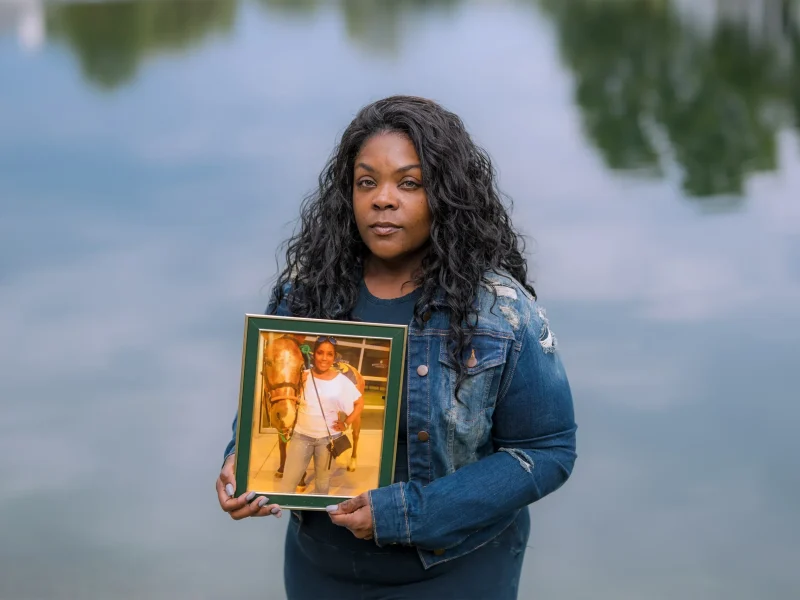
In January 2024, Governor Murphy signed the Seabrooks-Washington Community-Led Crisis Response Act, A5326/S4250, into law. The bill, named for Najee Seabrooks and Andrew Washington, who were killed during encounters with law enforcement while they were experiencing a mental health crisis, established the Community Crisis Response Pilot Program and appropriated funding to support grant recipients from six eligible counties: Camden, Essex, Hudson, Mercer, Middlesex, and Passaic.
“Community Crisis Response Teams have the potential to play an integral role in connecting those suffering from mental health crises with the services they need. These teams, in partnership with programs like ARRIVE Together and 9-8-8 mobile response, will continue strengthening the continuum of response for individuals in mental distress,” said Governor Murphy. “This funding will see that Community-Led Crisis Response Teams are able to continue to provide their services while safely and efficiently expanding in communities throughout our state.”
CCRTs are intended to add to and complement the spectrum of response options currently available in New Jersey through the support of the Department of Law and Public Safety, the Department Health, and the Department of Human Services. These models help ensure that the most appropriate type and level of response to a call for assistance is available and utilized. Current programs like the ARRIVE Together initiative, now operational across all 21 counties and available to 50% of New Jersey’s population, Community-Based Violence Intervention and Hospital-Based Violence Intervention Programs, which contribute to the establishment of a statewide network for violence prevention, and Mobile Crisis Outreach Response Team program (MCORTS) which sends a team of mental health professionals and peers to calls originating via the 988 system, are already contributing to this global effort.
The Department of Human Services’ Department of Developmental Disabilities also recently released a Request for Proposals for the new Systemic, Therapeutic, Assessment, Resources, and Treatment (START) Model Program, which will offer crisis prevention and intervention services for individuals with intellectual and developmental disabilities and mental health concerns in the community.
CCRTs will expand these approaches by utilizing trusted and trained community partners to de-escalate situations or connect individuals to needed resources. CCRTs will be designed to provide expert in-person interventions, outreach services, de-escalation, stabilization support, resource linkage, and personalized follow-up assistance tailored to the unique needs of individuals.
“Thanks to the support of Governor Murphy and the Legislature, our department has made great strides in improving and expanding the state’s public safety infrastructure and in doing so has saved lives,” said Attorney General Platkin. “With today’s announcement of $12 million in funding for the Community Crisis Response Teams, we are bolstering community-led, trauma-informed services and empowering individuals at the ground level. This follows our existing initiatives like the ARRIVE Together and Community-Based Violence Intervention programs, which underscore the potency of data-driven, community-informed strategies to foster resiliency in underserved populations.”
CCRTs will bring localized support from community partners with specialized training to those who need it. Existing alternative response programs have successfully utilized traditional law enforcement and emergency medical response systems, but some individuals may be reluctant to call for help due to a lack of trust in these systems. CCRTs will address this gap. CCRTs will allow those reluctant to call for the help and support they need via existing pathways, to receive and accept it from a trusted community messenger.
“The addition of CCRTs to the ecosystem of alternative responses that the Department and the Office of Alternative and Community Responses supports is another step in our effort to re-envision public safety as an innovative and shared responsibility,” said Tiffany Wilson, Director of the Office of Alternative and Community Responses. “The addition of community partners to the currently available response options, provides another pathway to needed resources while reducing burdens on law enforcement agencies and improving public safety and health outcomes.
Pursuant to the program’s enabling legislation, municipalities or community-based organizations to develop and implement CCRTs in Camden, Essex, Hudson, Mercer, Middlesex, and Passaic counties. There is a total ceiling of $12 million, and the amount awarded to applicants cannot exceed $2 million per eligible municipality.
Funding decisions will be made based on a variety of considerations, including but not limited to the quality and strength of the applications submitted, the type of initiatives to be planned and implemented, the scope of the project, and the applicant’s demonstrated capacity to achieve the project goals.
This program is supported by a fiscal 2024 budget allocation.
CCRTs Grant Opportunities
To be eligible to receive a grant pursuant to the pilot program, an applicant must be from an eligible municipality. Eligible municipalities must be a municipality of the first class in Essex, Hudson, and Passaic counties; a municipality of the second class having a population of more than 70,000 and density of 8,000 to 12,000 according to the 2020 federal decennial census in Camden and Mercer counties; and a municipality of the second class having a population of more than 55,000 and density of between 10,000 and 11,000 according to the 2020 federal decennial census in Middlesex County; and have an entity that operates as a violence interrupter community street team within its boundaries.
Additionally, applicants are required to demonstrate an established relationship with a State-approved harm reduction center, be a State-approved community violence intervention program, or both.
The NOAF and associated grant documents can be accessed here: https://www.nj.gov/oag/grants/2024-0412_Community-Crisis-Response-Teams_NOAF.pdf
The deadline to apply for funding is May 21, 2024.
Comments (1)
Comments are closed.


As a New Jersey resident and an Advocacy Corps Organizer for the Friends Committee on National Legislation (FCNL), I am thrilled to hear that Governor Murphy has announced $12 million for community crisis response teams. This will undoubtedly prevent violence in New Jersey communities before it occurs. However, New Jersey Congressional members must supplement this action by supporting the FY2025 Commerce, Justice, Science, and Related Agencies Appropriations Bill on March 8 in Congress, which would include $60 million in federal funding for the Community Violence Intervention (CVI) Programs.
The Center for Gun Violence Solutions of Johns Hopkins University found in their research that Safe Streets—a violence interrupter program in Maryland similar to New Jersey Community Crisis Response Teams—reduced homicides and nonfatal shootings overall from 2007 to 2022 in Baltimore. These kinds of programs can truly keep the communities in New Jersey safe. This is a bipartisan issue as everyone benefits from living in safer communities. Therefore, I call on Senators Cory Booker and Bob Menendez as well as my Congressional Representative, Andy Kim, to collaborate with other Members of Congress across the political spectrum to discuss the importance of funding for these programs.